![[등록] 2026-09-01 15:48:31](/support/_updata/banner2/tl181982910_6749.png)


SEOUL — In a major validation of its localized production strategy, LG Energy Solution (LGES) has clinched a massive contract to supply energy storage systems (ESS) for a landmark clean energy infrastructure project spearheaded by global tech giant Google.
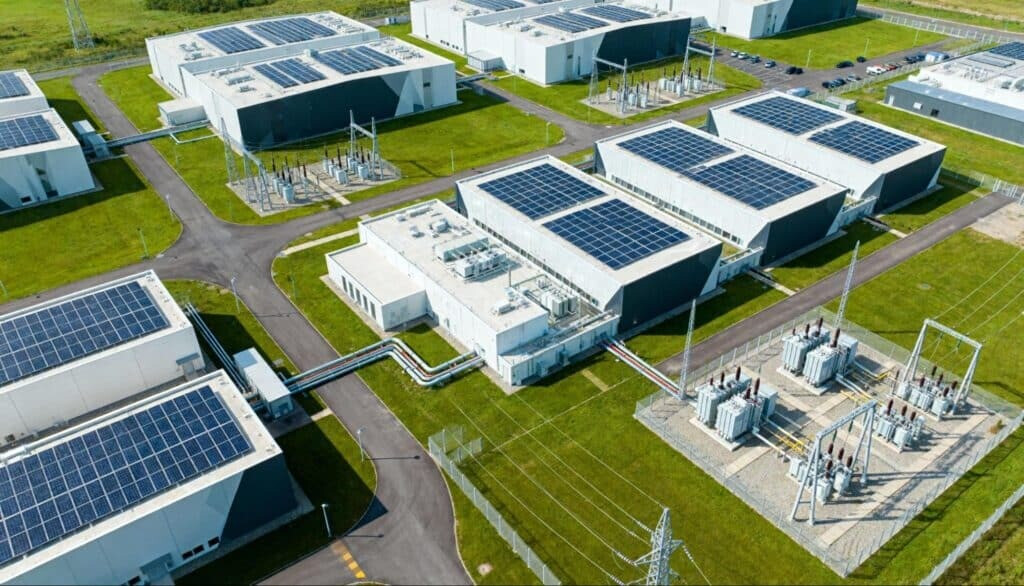
According to industry sources on July 15, Google, alongside leading independent power producer (IPP) Cypress Creek Renewables (CCE), officially announced the launch of the "Steel River Energy Center" project in the United States. Designed to feed power directly into Google's skyrocketing AI data center network, the facility will initially deploy a 2 GWh ESS infrastructure, with plans to scale up to 2.9 GWh by its scheduled commercial operation date in 2029.
While the precise financial details remain confidential under mutual agreements, industry analysts estimate the deal to be worth several hundreds of millions of dollars (hundreds of billions of Korean won), marking it as one of the largest single ESS battery procurement agreements in North American history.
Riding the AI Power Demand Surge
The contract represents a consecutive victory for LGES in the North American tech infrastructure arena. It closely follows a major deal secured in May to supply batteries for the DTE Energy data center project, which supplies power to tech giant Oracle. This rapid sequence of high-profile wins underscores how the AI boom is transforming from a software gold rush into a heavy infrastructure and energy procurement race.
As generative artificial intelligence demands unprecedented computational power, tech giants are facing an acute power crunch. Google's electricity consumption surged by 37% last year alone, while rival Microsoft saw a 24% spike. According to data from BloombergNEF (BNEF), electricity consumption by U.S. data centers is projected to more than double from 180 TWh in 2025 to 391 TWh by 2030.
To offset their massive carbon footprints, tech giants have become the primary drivers of the renewable energy market. Google, Meta, Amazon, and Microsoft combined accounted for 49% of all global corporate power purchase agreements (PPAs) signed last year.
Securing the Supply Chain: LGES's 'JF2 DC Link'
For the Steel River project, Google and CCE will deploy LGES’s state-of-the-art "JF2 DC Link" system, a highly optimized, containerized Lithium Iron Phosphate (LFP) ESS solution tailored for utility-scale applications. LFP chemistry has emerged as the preferred choice for stationary storage due to its superior safety profile, longer lifecycle, and cost competitiveness compared to nickel-based chemistries.
A decisive factor behind LGES's victory was its aggressive localization strategy. Amid tightening U.S. regulations designed to isolate Chinese battery manufacturers from critical domestic infrastructure, Google and CCE explicitly highlighted their commitment to sourcing key components—including batteries, solar panels, and structural steel—from robust North American supply chains.
A Massive Footprint to Lead the Market
LGES currently operates four world-class manufacturing bases across North America, including Holland (Michigan), L-H Battery Company (Ohio JV with Honda), Ultium Cells (Tennessee JV with GM), and NextStar Energy (Ontario JV with Stellantis). To meet the exponential growth of the utility market, the company is set to begin production at its new Lansing, Michigan plant, raising its total global ESS production capacity past 60 GWh, with over 50 GWh strategically concentrated in North America by the end of the year.
Moreover, LGES is rapidly transforming its business model from a pure-play manufacturer into an end-to-end energy solution provider. The company was recently designated by the Ministry of Climate, Energy, and Environment as the official operating partner for its "AI-powered ESS Infrastructure Support Project," signaling its expansion into sophisticated, software-driven energy asset management and operations.
[Copyright (c) Global Economic Times. All Rights Reserved.]