• 2026.11.23 (Mon)
  • All articles
  • LOGIN
  • JOIN
Global Economic Times
한인동포뉴스(상단)
  • Synthesis
  • World
  • Business
  • Industry
  • ICT
  • Distribution Economy
  • Well+Being
    • Pet Life
    • Halal Horizon
  • Travel
  • Eco-News
  • Education
  • Korean Wave News
  • Opinion
  • Arts&Culture
  • Sports
  • People & Life
    • International Student Report
    • With Ambassador
  • Column
    • Cho Kijo Column
    • Cherry Garden Story
    • Ko Yong-chul Column
    • Kim Bong-seon's Photo Column
    • Kim Seul-Ong Column
    • Lee Yeon-sil Column
    • Professor Lee Soo-young’s Life Essays
  • Photo News
  • New Book Guide
MENU
 
Home > World

UN Talks on Binding ‘Killer Robot’ Treaty Collapse Amid Pushback from Major Military Powers

Eugenio Rodolfo Sanabria Reporter / Updated : 2026-11-23 07:42:10
  • -
  • +
  • Print

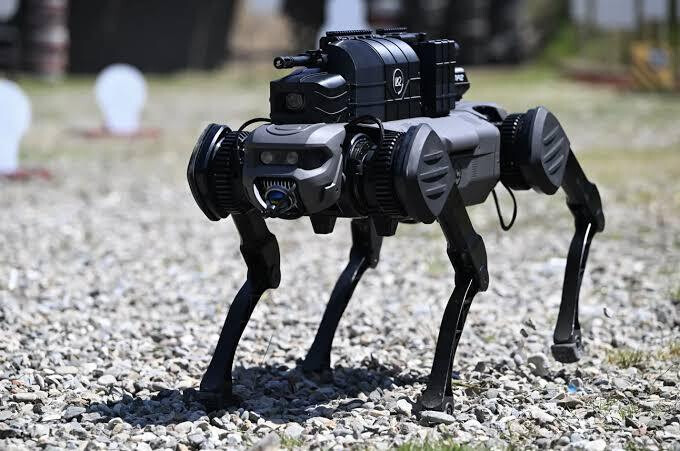
GENEVA — International efforts to impose legally binding restrictions on artificial intelligence-driven weaponry have stalled once again, as key military nations resisted calls for strict oversight during United Nations disarmament talks in Geneva.

Following five days of deliberations that concluded on the 21st, member states of the UN Convention on Certain Conventional Weapons (CCW) failed to launch negotiations for a binding treaty on Lethal Autonomous Weapons Systems (LAWS). Rather than committing to enforceable rules, participating nations opted to extend discussions until 2028, aiming to draft a non-binding international framework grounded in existing humanitarian law.

Diplomatic sources attributed the deadlock to deliberate stalling tactics by Moscow and a broader reluctance among technologically advanced militaries. Negotiators noted that Russian delegates relied on prolonged, filibuster-style interventions to slow progress. Meanwhile, nations heavily investing in military AI—such as the United States, South Korea, Japan, the United Kingdom, France, Germany, and Türkiye—showed little appetite for legally binding constraints.

"The political determination required to enact meaningful regulation simply wasn't there," a European diplomat remarked, noting that the response fell short of the issue's urgency.

The outcome casts doubt on the timeline championed by outgoing UN Secretary-General António Guterres, who had pressed member states earlier this year to finalize binding rules by the end of 2026. UN disarmament chief Izumi Nakamitsu offered a measured assessment of the Geneva talks, describing the agreement to continue working toward a 2028 document as a notable step forward, while acknowledging the outcome could be viewed as "half full or half empty."

Humanitarian advocates and disarmament campaigners warned that diplomatic delays are failing to keep pace with rapidly evolving battlefield realities. Nicole van Rooijen, head of the global coalition Campaign to Stop Killer Robots, emphasized that autonomous targeting technologies are already active in modern warfare, arguing that postponing enforceable regulations leaves civilian populations dangerously exposed.

Advocacy groups point to the growing deployment of autonomous drones and AI-assisted targeting platforms across active conflict zones, citing their use by Israeli forces in Gaza, U.S. operations involving Iran, and ongoing drone warfare between Russian and Ukrainian forces.

The impasse highlights the structural hurdles within the 128-nation CCW, which requires unanimous consensus to pass new measures—a rule that has prevented the body from adopting any new binding weapons bans for three decades. Despite a concerted push from a seven-nation bloc comprising Austria, Belgium, Brazil, Ireland, Mexico, New Zealand, and Panama to initiate treaty talks within the next year, military superpowers successfully steered the process toward a slower, non-binding track.

[Copyright (c) Global Economic Times. All Rights Reserved.]

  • #Cherry Garden
  • #HalalFood
  • #Halal
  • #Petlife
  • #Halalhorizone
  • #Hormuz Impasse
  • #Joseon
  • #globaleconomictimes
  • #micore
Eugenio Rodolfo Sanabria Reporter

Popular articles

  • At a Crossroads: Robotaxis Caught in the Crossfire of Job Security and Innovation

  • Seibu Prince Hotels Unveils 'Villa Prince' to Capture the Luxury Resort Market

  • From "Kneeling" Suppliers to the AI Era: Will Long-Term Agreements Redefine Tech’s Power Dynamics?

I like it
Share
  • Facebook
  • X
  • Kakaotalk
  • LINE
  • BAND
  • NAVER
  • https://globaleconomictimes.kr/article/1065566492876856 Copy URL copied.
Comments >

Comments 0

Weekly Hot Issue

  • Offline AI Raises New Cheating Alarms Ahead of Next Year’s College Entrance Exam
  • South Korea Leads OECD in Gender Pay Disparity Despite Gradual Progress
  • Seongbuk District Accelerates Urban Renewal and Transit Projects Following Presidential Visit
  • Massive Cyberattack on South Korea’s State Utility Exposes Data of 1.52 Million People
  • South Korea’s Small Businesses Face a Double Squeeze as Borrowing Costs Climb and Spending Stalls
  • South Korea Readies Market Stabilization Fund to Ward Off ‘Black Monday’ Panic

Most Viewed

1
South Korea and Ethiopia Sign Trilateral MOU to Introduce Liquid-Based Cytology (LBC) Technology for Cervical Cancer Diagnosis
2
South Korean Burger Chain Lotteria Expands Singapore Footprint with Halal Certification and New Teriyaki Lineup
3
AI Semiconductor Stocks Plummet: Philadelphia Index Drops 5.28% and Micron Plunges 7.59% Amid Executive Shakeup and Export Restrictions
4
"Stay Out, Get Paid, or Have Police Stay With You": Shenzhen Imposes Strict Security Ahead of APEC Summit
5
AI Music Tops Melon Chart: Is the K-Pop Production Formula Changing?
체리가든 스토리
nutri huevos
로타리
동포저널

Hot Issue

Delta Air Lines Experiences Nationwide Flight Delays Following Automated System Glitch

Mexican Forces Capture Wanted Cartel Boss ‘El Chapo Isidro’ in Deadly Sinaloa Raid

UN Talks on Binding ‘Killer Robot’ Treaty Collapse Amid Pushback from Major Military Powers

Fashion Runway Show 2026

Let’s recycle the old blankets in Jeju Island’s closet instead of incinerating them.

Global Economic Times
korocamia@naver.com
CEO : LEE YEON-SIL
Publisher & Editor : KO YONG-CHUL
Registration number : Seoul, A55681
Registration Date : 2024-10-24
Youth Protection Manager: KO YONG-CHUL
Singapore Headquarters
5A Woodlands Road #11-34 The Tennery. S'677728
Korean Branch
Phone : +82(0)10 4724 5264
#304, 6 Nonhyeon-ro 111-gil, Gangnam-gu, Seoul
Copyright © Global Economic Times All Rights Reserved
  • News K
  • 반달곰 프로젝트
  • 광고문의
Search
Category
  • All articles
  • Synthesis
  • World
  • Business
  • Industry
  • ICT
  • Distribution Economy
  • Well+Being 
    • 전체
    • Pet Life
    • Halal Horizon
  • Travel
  • Eco-News
  • Education
  • Korean Wave News
  • Opinion
  • Arts&Culture
  • Sports
  • People & Life 
    • 전체
    • International Student Report
    • With Ambassador
  • Column 
    • 전체
    • Cho Kijo Column
    • Cherry Garden Story
    • Ko Yong-chul Column
    • Kim Bong-seon's Photo Column
    • Kim Seul-Ong Column
    • Lee Yeon-sil Column
    • Professor Lee Soo-young’s Life Essays
  • Photo News
  • New Book Guide
  • Overseas Koreans
  • Multicultural News