![[등록] 2026-09-01 15:48:31](/support/_updata/banner2/tl181982910_6749.png)


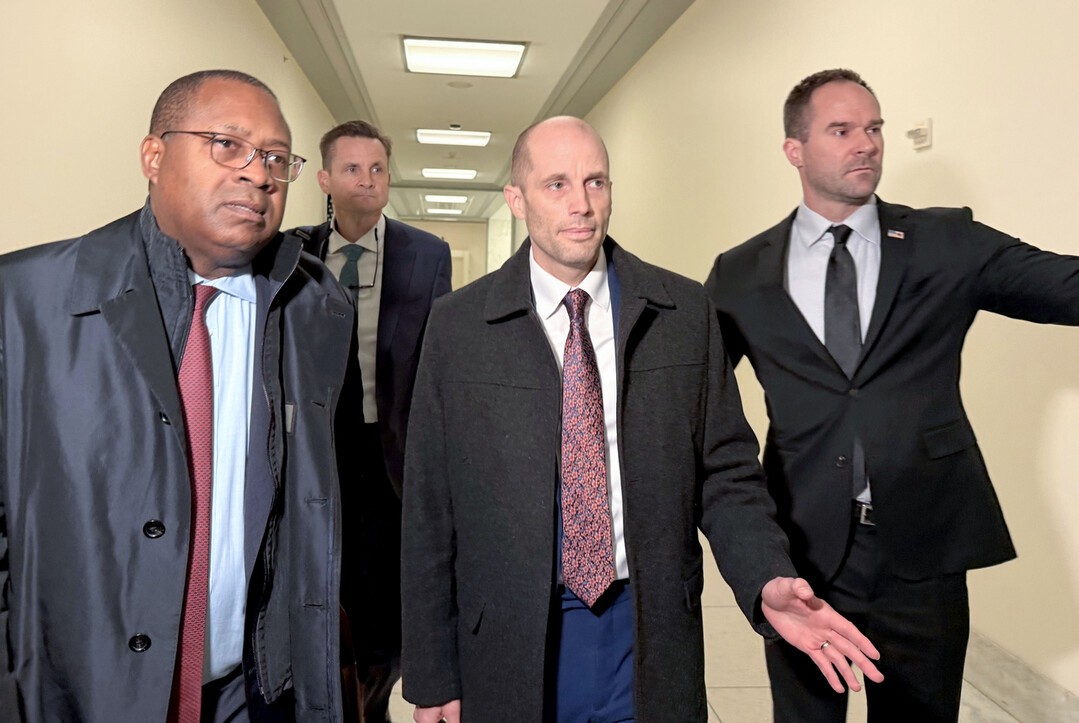
(C) The Investor
WASHINGTON D.C. — In a move that could signal a significant shift in U.S.-South Korea trade relations, the U.S. House Judiciary Committee conducted a marathon seven-hour closed-door briefing with Harold Rogers, the interim CEO of Coupang’s Korean subsidiary. This marks the first official congressional investigation into the e-commerce giant's recent legal and regulatory battles in South Korea.
A Seven-Hour Marathon Behind Closed Doors
On February 23 (local time), Harold Rogers appeared at the Rayburn House Office Building to testify before committee staffers and legal counsel. The session, which began at 10:00 AM and stretched until 5:00 PM, was described by onlookers as "intense," with investigators from both the Republican and Democratic sides alternating hour-long questioning blocks.
While Rogers remained silent to reporters’ questions regarding his message to Korean consumers, the length of the session—requiring working lunches to be brought into the hearing room—underscored the gravity with which U.S. lawmakers are viewing the situation.
Allegations of "Targeted Discrimination"
The probe centers on whether the South Korean government, under the administration of President Lee Jae-myung, has unfairly targeted U.S.-based or U.S.-invested tech firms.
In the summons sent by Judiciary Committee Chairman Jim Jordan (R-OH) and Representative Scott Fitzgerald (R-WI), the committee alleged that:
Korean regulators, including the Fair Trade Commission (KFTC), are imposing "disproportionate fines" and "criminal threats" against American citizens.
Political rhetoric from the Korean executive branch has sought "maximum punishment" for Coupang following a non-sensitive data leak incident.
These actions constitute a "discriminatory regulatory environment" designed to stifle American competitiveness in the Korean market.
The Section 301 "Wildcard"
The timing of this investigation is particularly sensitive. The Trump administration has recently signaled its intent to launch large-scale investigations under Section 301 of the Trade Act of 1974. This powerful tool allows the U.S. President to impose unilateral trade sanctions, including uncapped tariffs and import quotas, against countries found to be engaging in "unjustifiable or discriminatory" practices against U.S. commerce.
Last month, Coupang’s U.S. investors officially petitioned the Trump administration to initiate a Section 301 probe into South Korea. While a House Judiciary spokesperson noted that the "Section 301 process belongs to the Executive Branch," they emphasized that "all options, including public hearings and legislative action, remain on the table" regarding the Coupang case.
Geopolitical Friction vs. Economic Partnership
The South Korean government maintains that the investigations into Coupang are strictly domestic legal matters involving data security and fair trade, arguing they should not be conflated with diplomatic or trade issues.
However, Robert Porter, Coupang’s Chief Global Corporate Affairs Officer, expressed regret over the circumstances in a post-testimony statement. "We regret the situation in Korea that necessitated today’s testimony and remain committed to seeking a constructive resolution," Porter said. He added that Coupang hopes to continue serving as a "bridge between the U.S. and Korea," strengthening the security alliance and accelerating mutually beneficial trade.
Outlook: A Test for the Alliance
As the U.S. continues to scrutinize countries with large trade surpluses, the Coupang incident has evolved from a corporate legal dispute into a high-stakes litmus test for the U.S.-ROK economic alliance. If the House Judiciary Committee moves toward a public hearing, it could provide the political ammunition necessary for the U.S. Trade Representative (USTR) to formally designate South Korea’s regulatory landscape as a trade barrier, potentially triggering a new era of "Trade War" tensions between the two long-time allies.
[Copyright (c) Global Economic Times. All Rights Reserved.]