![[등록] 2026-09-01 15:48:31](/support/_updata/banner2/tl181982910_6749.png)


(C) TPR
MEXICO CITY – With only months remaining until the 2026 FIFA World Cup kicks off across North America, Mexico has been plunged into a state of high-alert following a bloody confrontation between government forces and the country’s most powerful drug syndicate.
The Fall of 'El Mencho'
On Tuesday, February 24, 2026, Ricardo Trevilla Trejo, Mexico’s Secretary of National Defense, officially confirmed the death of Nemesio Oseguera Cervantes, notoriously known as "El Mencho." As the supreme leader of the Jalisco New Generation Cartel (CJNG), El Mencho had long been one of the world’s most wanted fugitives, with a $15 million bounty placed on his head by the U.S. Drug Enforcement Administration (DEA).
The high-stakes operation, which involved elite special forces, the National Guard, and air support including combat helicopters, took place in Tapalpa, Jalisco. According to official reports, the kingpin succumbed to gunshot wounds while being airlifted to Mexico City. The mission was reportedly bolstered by critical intelligence and tracking data provided by U.S. agencies, a move praised by the White House.
A Trail of Devastation
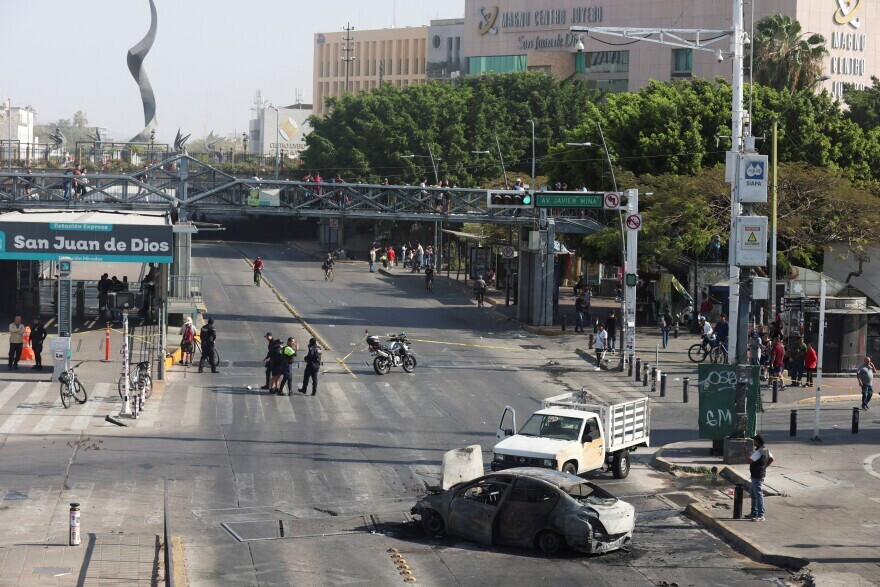
The vacuum left by El Mencho’s demise has ignited a wave of "narco-terror." In the immediate aftermath, Jalisco has seen a surge in retaliatory violence, including the torching of vehicles in public parking lots—notably at a Costco in Puerto Vallarta—and blockades of major transit routes.
The human toll is staggering. Authorities confirmed that the operation and subsequent clashes have resulted in at least 70 deaths, including 25 security personnel. Local media outlets suggest the civilian death toll alone has already exceeded 60, as caught-in-the-crossfire casualties continue to rise.
In response to the chaos:
Massive Deployment: Over 10,000 security personnel, including 2,500 additional troops, have been dispatched to stabilize volatile zones.
Infrastructure Shutdown: Puerto Vallarta International Airport was temporarily shuttered, leading to over 80 flight cancellations.
Public Safety: A state-wide school closure (curfew) has been implemented in Jalisco to protect students from potential skirmishes.
World Cup Security Under Scrutiny
The timing of this instability could not be worse for the Mexican government. With the 2026 North American World Cup scheduled for June, major host cities such as Mexico City, Monterrey, and particularly Guadalajara (located in the heart of Jalisco) are now under intense international scrutiny.
While President Claudia Sheinbaum emphasized that "ensuring peace and security for Mexican citizens and foreign residents is the top priority," the brazen nature of the cartel’s counter-attacks has raised doubts about whether the current security apparatus can guarantee the safety of millions of visiting football fans.
Looking Ahead
The CJNG, known for its paramilitary-grade weaponry including drone bombs and landmines, remains a potent threat despite the loss of its founder. As the "World Cup fever" begins to sweep the globe, the shadow of cartel violence looms large over Mexico’s preparations. The international community now watches closely to see if the Mexican government can transition from "war footing" to "hosting duty" in time for the world's biggest sporting event.
[Copyright (c) Global Economic Times. All Rights Reserved.]