![[등록] 2026-09-01 15:48:31](/support/_updata/banner2/tl181982910_6749.png)


(C) Bunjang Global
SEOUL — The relentless power of the "Starbucks" brand, coupled with a savvy limited-edition collaboration, has once again sent South Korean consumers into a frantic "open-run" (rushing to stores as soon as they open).
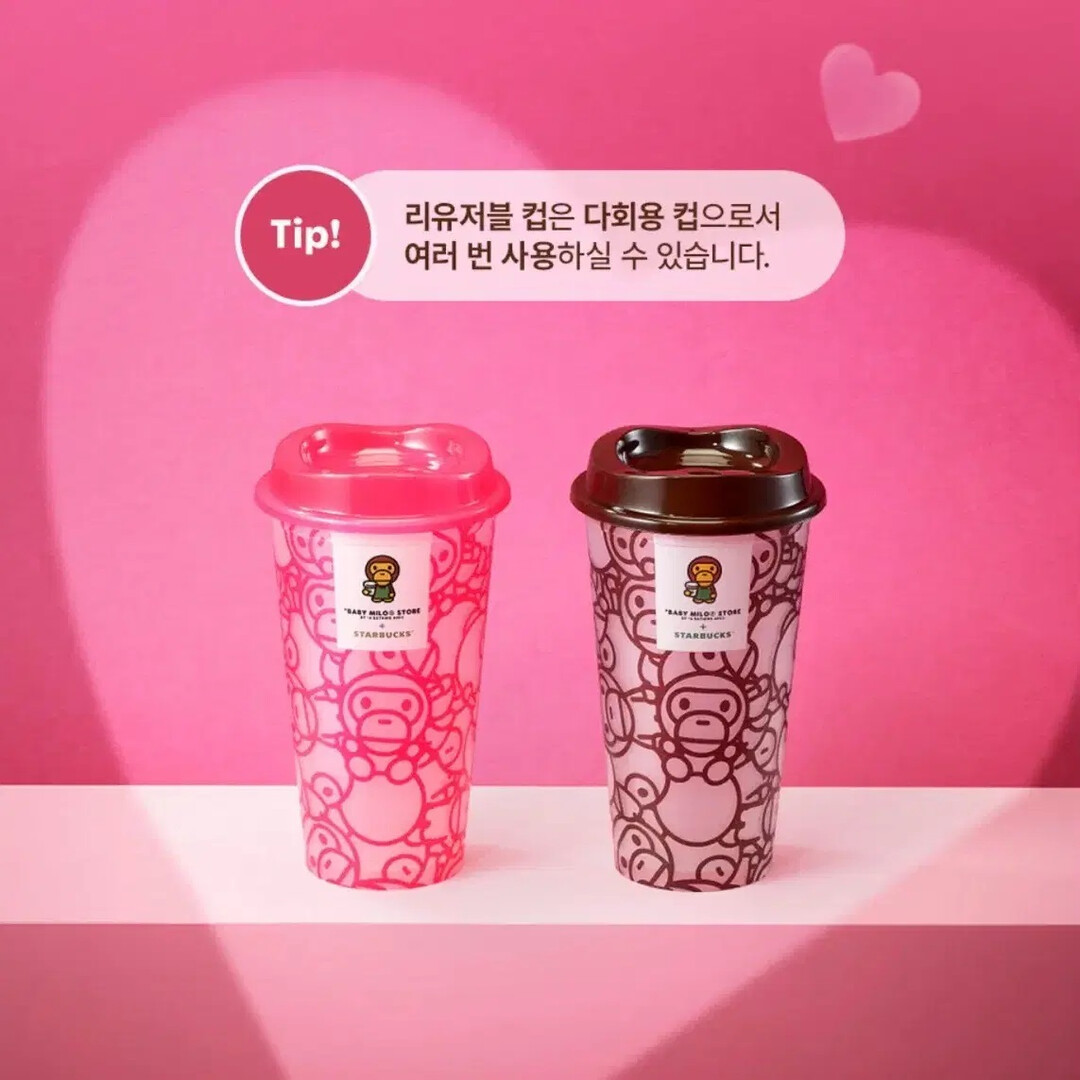
The latest object of desire? A simple yet stylish reusable cup featuring "Baby Milo," a famous character from the iconic Japanese streetwear brand A Bathing Ape (BAPE). Despite being nearly a week into the promotion, the craze shows no signs of cooling down.
The "Open-Run" Phenomenon
On the afternoon of February 24, at a Starbucks branch in Jung-gu, central Seoul, the atmosphere was electric. By 1:30 PM, thirty minutes before the daily sales began at 2:00 PM, a long queue had already snaked around the entrance. A sign labeled "Reusable Cup Waiting Line" stood as a testament to the brand's enduring grip on local consumers.
The promotion, which began on February 19, offers a pink or brown Baby Milo reusable cup to customers who purchase a specific event beverage between 2 PM and 8 PM. With a strict limit of four cups per person and a daily stock of only about 40 cups per store, the competition is fierce.
"Customers start lining up an hour before the sales start," said a Starbucks employee in Jung-gu. "The daily allotment sells out almost instantly. If you're even a few minutes late, you leave empty-handed."
Resale Markets Heat Up
The scarcity has naturally fueled a booming secondary market. On popular secondhand platforms like Danggeun (Karrot), these cups—originally obtained by purchasing a drink priced between 6,000 and 7,000 KRW—are being traded for 8,000 to 15,000 KRW. Fans are essentially paying a premium just for the plastic container.
For enthusiasts like Cho, an office worker who has already collected eight cups, the effort is worth it. "I waited about 30 minutes today. The design is unique, and as a collector, I feel these have significant long-term value," Cho said.
Scarcity Meets Brand Loyalty
Experts point to a sophisticated mix of "Scarcity Marketing" and deep-rooted brand loyalty as the engine behind this recurring phenomenon. Starbucks Korea has a long history of turning everyday items—from planners to camping chairs—into "must-have" trophies through its seasonal e-Frequency events.
"When a product is framed as something you cannot get anytime you want, it triggers a 'fear of missing out' (FOMO)," explained Lee Young-ae, a professor of Consumer Science at Incheon National University. "Consumers rush to buy not necessarily because they need the item, but to avoid the regret of losing the opportunity."
Professor Lee added that while many brands attempt scarcity marketing, Starbucks succeeds at a different level because of its massive, loyal fanbase. The emotional connection to the brand transforms a simple purchase into a cultural participation.
A Sustainable Trend?
While some critics argue that the production of "limited-edition" plastic cups contradicts the spirit of environmental sustainability, the marketing success remains undeniable. As long as Starbucks continues to bridge the gap between pop culture and coffee, the "waiting lines" in Seoul are unlikely to disappear anytime soon.
[Copyright (c) Global Economic Times. All Rights Reserved.]