![[등록] 2026-09-01 15:48:31](/support/_updata/banner2/tl181982910_6749.png)


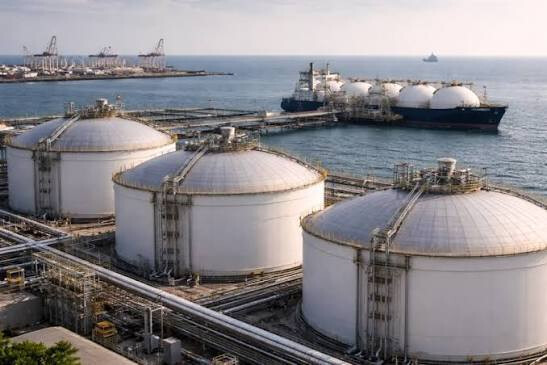
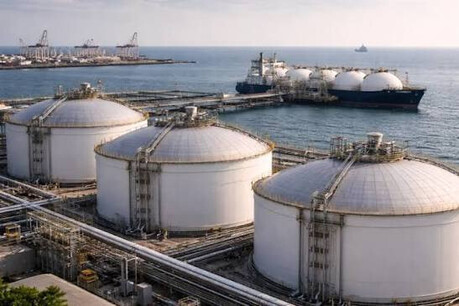
As geopolitical tensions in the Middle East escalate, liquefied natural gas (LNG) prices are soaring to levels comparable to the Russia-Ukraine war era. With international crude oil and LNG prices climbing simultaneously, mounting pressure on domestic inflation is anticipated.
According to statistical sources such as Investing.com on September 15, the "Japan Korea Marker" (JKM), the benchmark for LNG import prices in East Asia, hit 25.06 US dollars per 1 MMBtu on September 13. This marks the highest figure since the outbreak of the Middle East conflict and the first time JKM has surpassed the 25-dollar threshold since December 2022, when the Russia-Ukraine war was in full swing. Compared to 10.75 dollars on February 27, right before the Middle East crisis, the price has more than doubled.
Energy industry insiders note that while actual imports may not be purchased precisely at the listed JKM spot price, the indicator clearly demonstrates a sharp overall escalation in import costs. Crucially, rising LNG prices impact inflation much more severely than crude oil. While crude oil can be buffered in the short term using national strategic reserves, long-term storage for LNG is notoriously difficult. Industry estimates suggest that South Korea can store at most about nine days' worth of LNG supply.
This upward trend directly stimulates electricity and heating utility bills, placing a heavy burden on industrial sectors. The fact that LNG prices are spiking right ahead of winter—a period of surging energy consumption—is a particularly alarming headwind.
The outlook remains bleak as global LNG supply disruptions persist. Ras Laffan, a major Qatari facility accounting for 20 percent of global LNG production, has been damaged, rendering a full recovery of supply uncertain. Meanwhile, Reuters reported that Australia, a primary supplier, previously mandated that 20 percent of its domestic LNG production be reserved locally. Although the Australian government later relaxed regulations to set flexible domestic supply obligations up to 20 percent based on market conditions, industry experts widely agree this is insufficient to curb global price hikes. In 2025, South Korea imported 14.68 million tons of LNG from Australia, accounting for 31.42 percent of its total imports—the largest share by country.
Furthermore, imports of Russian LNG remain shackled by international sanctions. Korea Gas Corporation holds a long-term contract to introduce LNG produced from Russia's Sakhalin-2 project through March 2028, but international sanctions have created substantial hurdles for actual delivery. On September 11, Park Jung-sung, Minister for Trade at the Ministry of Trade, Industry and Energy, officially requested cooperation from the United Kingdom to facilitate the transport of Russian LNG. The UK previously announced plans to ban maritime shipping and insurance services for Russian LNG starting next January.
With shrinking global LNG availability colliding with surging demand, price escalation has become inevitable. Balaji Krishnamurthy, head of Chevron Australia, noted at a committee meeting that demand for Australian LNG is exploding, with Japanese demand in particular outpacing supply. Industry insiders warn that as more competing buyers chase limited LNG volumes, massive premiums are inevitably tacked onto final purchase prices.
Concurrently, international crude oil prices have pierced the 100-dollar mark and maintained a high-altitude march, driven by the closure of Saudi Arabia's East-West pipeline, which had served as a detour bypassing the Strait of Hormuz. On the London ICE Futures Exchange, November delivery Brent crude closed up 1.02 percent at 105.68 dollars per barrel, while West Texas Intermediate (WTI) for October delivery on the New York Mercantile Exchange rose 1.34 percent to close at 101.39 dollars per barrel.
Domestically, South Korea's refining sector has secured over 90 percent of its planned crude oil import volumes for September and October, shielding it from immediate supply shocks. However, starting in November, when the cumulative impacts of variables like the Saudi pipeline closure take full effect, serious supply chain vulnerabilities could materialize.
To supplement these structural vulnerabilities, experts emphasize that South Korea must urgently diversify its long-term supply contracts, expand bilateral diplomatic channels with alternative energy exporters, and accelerate the transition toward renewable and nuclear energy portfolios to insulate its domestic economy from volatile global energy shocks.
[Copyright (c) Global Economic Times. All Rights Reserved.]