![[등록] 2026-09-01 15:48:31](/support/_updata/banner2/tl181982910_6749.png)


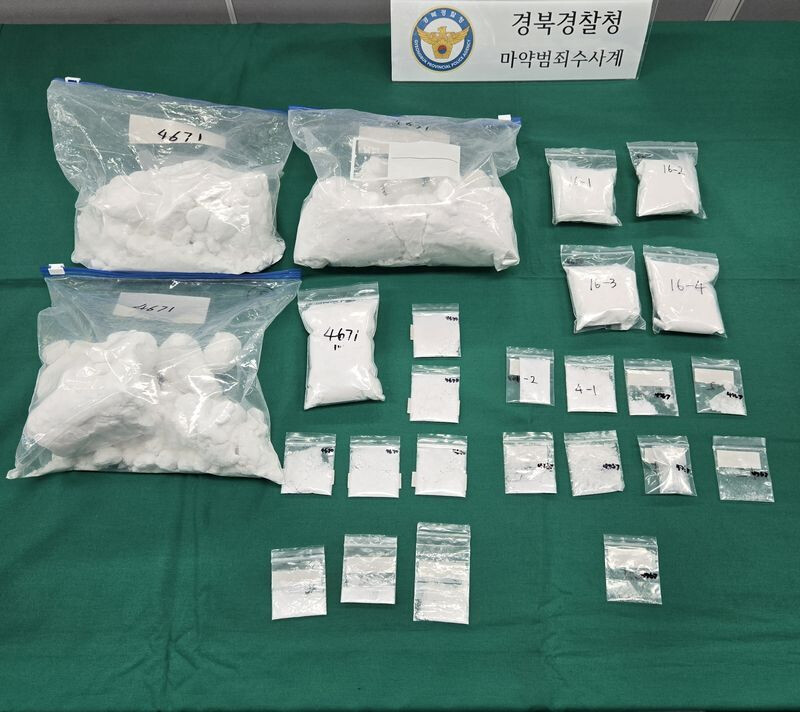
Signs have been detected that narcotics in South Korea have moved beyond simple distribution into the manufacturing stage. The National Forensic Service recently analyzed three liquid and paste-like substances seized in a drug case and detected two new types of intermediates generated during the manufacturing process of synthetic cannabis. Intermediates can be converted into actual narcotics through additional reactions, serving as a key indicator to gauge illicit manufacturing. For South Korea, which lost its status as a "drug-free nation" 11 years ago, showing signs of becoming a manufacturing hub is a matter of utmost gravity.
Drug supply cases that have surfaced in South Korea have thus far primarily involved smuggling and distribution. This usually entails bringing drugs intended for domestic consumption from abroad or having South Korea serve as a transit point to third countries. Even when looking solely at smuggling and distribution, the growth rate is explosive. Drug crackdown cases at airports, which are one of the major entry routes, have totaled 1,110 over the past five years, increasing every year. They skyrocketed from 198 cases (140 kg) in 2024 to 623 cases (280 kg) last year. In the first half of this year alone, drugs intercepted at airports and ports reached 1,000 kg (enough for 35.58 million doses). However, if direct domestic manufacturing overlaps with this, it is not something to simply worry about.
The fact that wastewater sample drug analysis, which began in 2020, consistently detects drug components above a certain concentration anywhere in the country is shocking. In particular, the higher concentrations detected in densely populated areas during Halloween or in Busan during the summer vacation season mean that drug components in wastewater accurately reflect the reality of drug use. As seen in cases such as the "Gangnam academy district drug beverage case" and the "Suwon drug zombie case," drugs have infiltrated our daily lives regardless of occupation or age. Drug offenders, much like distributors, are increasing day by day. Side effects are worsening as online platforms enabling covert transactions—such as YouTube and Telegram—diversify, and the influx of foreigners in the form of tourists or workers surges rapidly. Although rare, domestic manufacturing cases focusing on synthetic drugs have been sporadically uncovered. These methods involve bringing in raw materials from abroad or learning manufacturing methods online, then mixing and heating the raw materials with electronic cigarette liquids. Authorities must bear in mind that if domestic manufacturing becomes more prevalent, drugs could escalate into an uncontrollable social problem.
A confession made by a drug addict in a media interview—that "drugs can be delivered faster than Jjajangmyeon"—is a striking example of how widely drugs have already spread through Korean society. Part of the problem is that as law enforcement's drug crackdowns have grown lax and the risk costs associated with distribution and manufacturing have decreased, drug prices have become affordable enough for even teenagers to access. The only ways to block the distribution, manufacturing, and use of drugs are more stringent crackdowns and severe punishment. The creation of a lenient social atmosphere toward drugs—such as quietly condoning the return of celebrities who have caused scandals involving drugs—is also something that must be guarded against. The newly launched Investigation Bureau and the police, set to debut next month, must recognize the immense weight of their duties.
[Copyright (c) Global Economic Times. All Rights Reserved.]