• 2026.11.25 (Wed)
  • All articles
  • LOGIN
  • JOIN
Global Economic Times
한인동포뉴스(상단)
  • Synthesis
  • World
  • Business
  • Industry
  • ICT
  • Distribution Economy
  • Well+Being
    • Pet Life
    • Halal Horizon
  • Travel
  • Eco-News
  • Education
  • Korean Wave News
  • Opinion
  • Arts&Culture
  • Sports
  • People & Life
    • International Student Report
    • With Ambassador
  • Column
    • Cho Kijo Column
    • Cherry Garden Story
    • Ko Yong-chul Column
    • Kim Bong-seon's Photo Column
    • Kim Seul-Ong Column
    • Lee Yeon-sil Column
    • Professor Lee Soo-young’s Life Essays
  • Photo News
  • New Book Guide
MENU
 
Home > World

How an 1804 Impeachment Trial Forged the Shield of U.S. Judicial Independence

Global Economic Times Reporter / Updated : 2026-11-25 07:21:09
  • -
  • +
  • Print

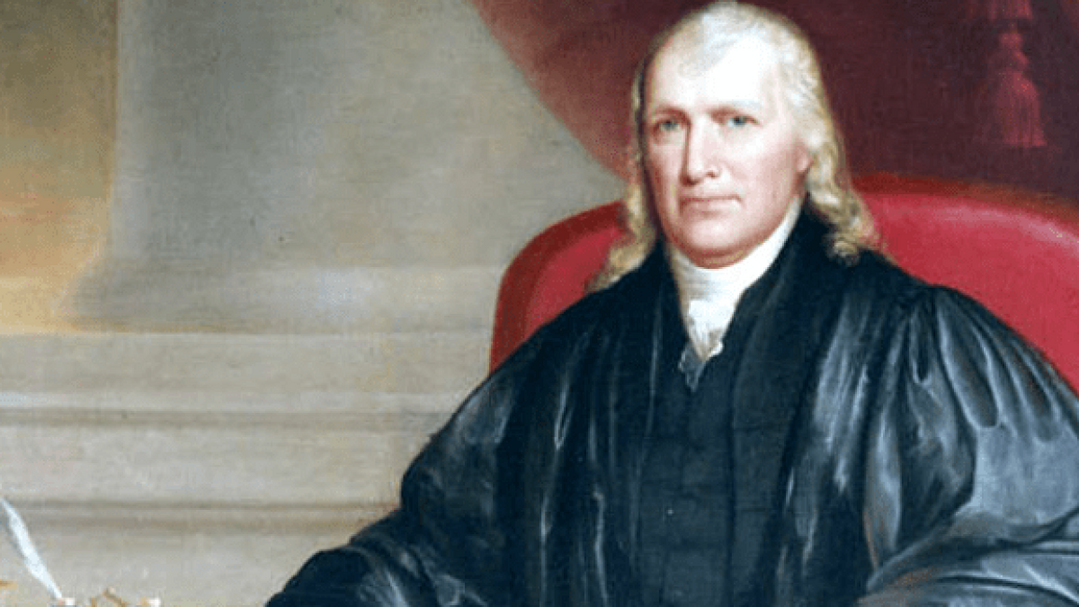
WASHINGTON — Throughout nearly two and a half centuries of American constitutional history, no Chief Justice of the United States has ever faced impeachment by the House of Representatives. When looking at the Supreme Court as a whole, Congress has formally impeached a sitting justice only once—a dramatic 1804 showdown that ended in acquittal and permanently insulated the federal bench from partisan retaliation.

The sole target was Associate Justice Samuel Chase, whose trial became a defining test of the separation of powers in the young republic. The clash erupted in the wake of the bitter 1800 presidential election, which swept Thomas Jefferson and his Democratic-Republican Party into control of both the White House and Congress, ousting John Adams and the Federalists. Before vacating office, Adams used the Judiciary Act of 1801 to create new federal judgeships and fill the courts with Federalist loyalists, including Chief Justice John Marshall.

Determined to break the Federalist grip on the courts, Jefferson’s allies repealed the 1801 law the following year. Chase, an outspoken Federalist already accused by critics of heavy-handedness on the bench, publicly denounced the repeal during a 1803 grand jury charge in Baltimore, warning that the move threatened to dismantle judicial independence. Prompted by Jefferson, House lawmakers led by Representative John Randolph drafted eight articles of impeachment in March 1804, accusing Chase of turning his courtroom into a partisan weapon.

On paper, Chase’s removal seemed assured when the trial moved to the Senate in 1805, as Jefferson’s party commanded more than 70 percent of the chamber. Yet Chase’s legal team successfully argued that political bias or judicial missteps did not meet the Constitution’s strict threshold for removal. Removing a justice over unpopular rulings, they warned, would reduce the Supreme Court to a subservient arm of whichever party held a congressional majority.

The warning resonated across party lines. Enough Democratic-Republican senators broke ranks to deny the prosecution the two-thirds supermajority needed to convict on any of the eight counts. Chase remained on the bench until his death in 1811.

The outcome established an enduring unwritten rule in American politics: ideological disagreements and controversial opinions are not impeachable offenses. By refusing to weaponize impeachment, the Senate gave real teeth to the Constitution's promise that federal judges hold their seats "during good Behaviour"—effectively granting lifetime tenure. As the late Chief Justice William Rehnquist observed in a 2000 address, the Chase acquittal drew a bright line in American law, confirming that official judicial acts are off-limits for removal and that only genuine "high crimes and misdemeanors" can unseat a federal judge.

[Copyright (c) Global Economic Times. All Rights Reserved.]

  • #Cherry Garden
  • #HalalFood
  • #Halal
  • #Petlife
  • #Cats
  • #Dogs
  • #Halalhorizone
  • #Hormuz Impasse
  • #Joseon
  • #globaleconomicti
Global Economic Times Reporter
Reporter Page

Popular articles

  • World Citizens are Flying Directly to Busan... The Era of 4 Million Foreigners is Just Around the Corner

  • Restoring Hearing with Genes, Cochlear Implants with Robots: Where Does Hearing Loss Treatment Stand Today?

  • Cold Wave and Autumn Chill Hit Korea on "Ipdong": Gangwon -6°C, Seoul Real-Feel -4°C… Rain and Snow Expected in Central Regions on Sunday

I like it
Share
  • Facebook
  • X
  • Kakaotalk
  • LINE
  • BAND
  • NAVER
  • https://globaleconomictimes.kr/article/1065565210351894 Copy URL copied.
Comments >

Comments 0

Weekly Hot Issue

  • Halal Turkeys Take Center Stage on American Thanksgiving Tables as Mainstream Grocers Expand Offerings
  • Hugging Your Cat After a Bad Day Might Backfire, Study Suggests — While Petting a Dog Builds Resilience
  • South Korea Weighs Low-Power Signal Jamming and stricter Device Rules to Curb AI Exam Cheating
  • South Korea Pushes for Overdue Media Law Overhaul as OTT Blurs Traditional Broadcast Lines
  • From Classroom and Lab to Smart Farms: Siblings Cultivate a Second Act in Rural Korea
  • Busan Tourism Organization Takes the Lead in Local Co-prosperity Again This Year with the ‘Good-Cycling’ Campaign

Most Viewed

1
South Korean Burger Chain Lotteria Expands Singapore Footprint with Halal Certification and New Teriyaki Lineup
2
AI Semiconductor Stocks Plummet: Philadelphia Index Drops 5.28% and Micron Plunges 7.59% Amid Executive Shakeup and Export Restrictions
3
"Stay Out, Get Paid, or Have Police Stay With You": Shenzhen Imposes Strict Security Ahead of APEC Summit
4
Taiwan Bans Short-Selling Below Previous Close Starting Nov. 23, Raises Margin Ratio to 150%
5
AI Music Tops Melon Chart: Is the K-Pop Production Formula Changing?
체리가든 스토리
nutri huevos
로타리
동포저널

Hot Issue

Trump Faces Rare Bipartisan Backlash Over Jensen Huang’s Return to Nvidia

Beyond the Click: How Agentic AI is Quietly Dismantling the App Economy

Jeju Tests Solar-Powered Greenhouses to Grow Carbon-Free ‘RE100’ Tangerines

Fashion Runway Show 2026

Let’s recycle the old blankets in Jeju Island’s closet instead of incinerating them.

Global Economic Times
korocamia@naver.com
CEO : LEE YEON-SIL
Publisher & Editor : KO YONG-CHUL
Registration number : Seoul, A55681
Registration Date : 2024-10-24
Youth Protection Manager: KO YONG-CHUL
Singapore Headquarters
5A Woodlands Road #11-34 The Tennery. S'677728
Korean Branch
Phone : +82(0)10 4724 5264
#304, 6 Nonhyeon-ro 111-gil, Gangnam-gu, Seoul
Copyright © Global Economic Times All Rights Reserved
  • News K
  • 반달곰 프로젝트
  • 광고문의
Search
Category
  • All articles
  • Synthesis
  • World
  • Business
  • Industry
  • ICT
  • Distribution Economy
  • Well+Being 
    • 전체
    • Pet Life
    • Halal Horizon
  • Travel
  • Eco-News
  • Education
  • Korean Wave News
  • Opinion
  • Arts&Culture
  • Sports
  • People & Life 
    • 전체
    • International Student Report
    • With Ambassador
  • Column 
    • 전체
    • Cho Kijo Column
    • Cherry Garden Story
    • Ko Yong-chul Column
    • Kim Bong-seon's Photo Column
    • Kim Seul-Ong Column
    • Lee Yeon-sil Column
    • Professor Lee Soo-young’s Life Essays
  • Photo News
  • New Book Guide
  • Overseas Koreans
  • Multicultural News