• 2026.11.25 (Wed)
  • All articles
  • LOGIN
  • JOIN
Global Economic Times
한인동포뉴스(상단)
  • Synthesis
  • World
  • Business
  • Industry
  • ICT
  • Distribution Economy
  • Well+Being
    • Pet Life
    • Halal Horizon
  • Travel
  • Eco-News
  • Education
  • Korean Wave News
  • Opinion
  • Arts&Culture
  • Sports
  • People & Life
    • International Student Report
    • With Ambassador
  • Column
    • Cho Kijo Column
    • Cherry Garden Story
    • Ko Yong-chul Column
    • Kim Bong-seon's Photo Column
    • Kim Seul-Ong Column
    • Lee Yeon-sil Column
    • Professor Lee Soo-young’s Life Essays
  • Photo News
  • New Book Guide
MENU
 
Home > World

U.S. Military Weighs 'Decapitation Strikes' on Iranian Leadership Amid Debate Over Diplomatic Fallout

Ana Fernanda Reporter / Updated : 2026-11-25 07:14:25
  • -
  • +
  • Print


WASHINGTON — As the U.S. government evaluates options for potentially resuming military action against Iran, Pentagon officials are actively debating the feasibility of targeted "decapitation strikes" aimed at eliminating the regime’s top leadership, according to a Tuesday report by NBC News.

Citing a Trump administration official and a source familiar with the internal deliberations, the report indicates that military planners are weighing whether to directly target Iran's highest-ranking figures as a means to bring the prolonged conflict to an end.

The Case for Targeted Strikes

Proponents within the administration argue that removing hardline leaders could serve as a decisive exit strategy, allowing President Donald Trump to declare victory and conclude hostilities. Advocates also contend that such operations would send an unmistakable deterrent message to any successor regime: that the United States possesses the capability to locate and eliminate Iranian leaders at will.

This stance aligns with recent remarks made by President Trump during a press conference on the 20th, where he asserted that U.S. intelligence maintains comprehensive visibility over the regime. "We know a lot about what's going on in Iran. We know every word they say. We know who they are and where they are," Trump stated.

Concerns Over Retaliation and Hardened Resistance

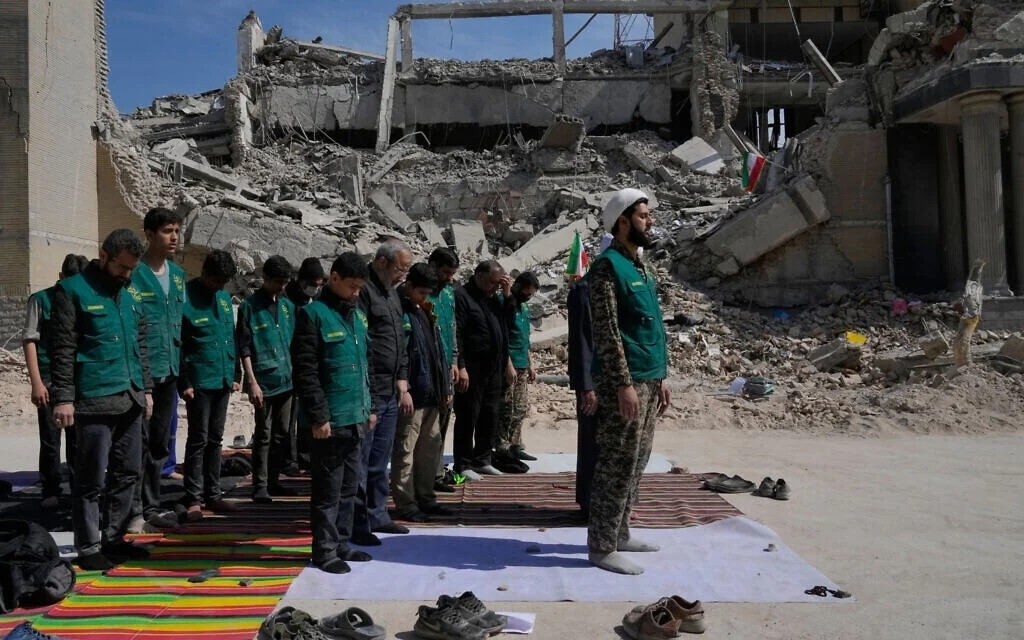
However, the proposal faces significant pushback from skeptics within the government. Critics point to the aftermath of the war's opening strike, which killed Supreme Leader Ali Khamenei; rather than capitulating, the regime grew noticeably more hardline under the leadership of his son, Mojtaba Khamenei.

Opponents warn that targeted assassinations carry severe geopolitical risks, including:

Martyrdom: Elevating slain leaders to martyr status, potentially galvanizing domestic and regional support for the regime.
Diplomatic Deadlock: Eroding any remaining trust needed to negotiate a eventual peace settlement.
Direct Retaliation: Exposing senior U.S. officials to heightened assassination threats.
Underscoring these security concerns, recent media reports revealed that Treasury Secretary Scott Bessent, who has spearheaded economic sanctions against Tehran, relocated to a military base in the Washington, D.C., area following credible threats to his personal safety.

While decapitation strikes are not a new military option, they have regained traction as President Trump considers renewed strikes to force a conclusion to the war. An administration official emphasized that the president retains a wide array of options and will ultimately pursue the best course of action to ensure Iran never acquires nuclear weapons.

Intelligence Sharing and Potential Targets

Following the APEC summit on the 19th, Trump suggested in a media interview that while Washington is in no rush to resume airstrikes—noting "we have time"—the administration will "see what happens after the new year begins."

Should the U.S. greenlight another leadership strike, Mojtaba Khamenei is widely expected to be the primary target. Believed to have sustained serious injuries in the initial U.S. airstrike that killed his father, the younger Khamenei has remained out of the public eye.

Locating and targeting a deeply reclusive figure requires exceptionally precise and reliable intelligence. To identify high-value targets inside Iran, the U.S. reportedly relies on a combination of domestic intelligence and shared data from Israel. Notably, Roman Gofman, head of Israel's Mossad intelligence agency, visited Washington last week to share intelligence on Iran during meetings with top U.S. officials, including CIA Director John Ratcliffe.

[Copyright (c) Global Economic Times. All Rights Reserved.]

  • #Cherry Garden
  • #HalalFood
  • #Halal
  • #Petlife
  • #Cats
  • #Dogs
  • #Halalhorizone
  • #Hormuz Impasse
  • #Joseon
  • #globaleconomicti
Ana Fernanda Reporter

Popular articles

  • US Army Conducts Rare Temporary Burial Drills to Prepare for Worst-Case Large-Scale War Scenarios

  • "Stay Out, Get Paid, or Have Police Stay With You": Shenzhen Imposes Strict Security Ahead of APEC Summit

  • US Midterm Elections Complicate Trade Calculus... Persistent Uncertainty Over Tariffs and Investment

I like it
Share
  • Facebook
  • X
  • Kakaotalk
  • LINE
  • BAND
  • NAVER
  • https://globaleconomictimes.kr/article/1065564661261798 Copy URL copied.
Comments >

Comments 0

Weekly Hot Issue

  • Halal Turkeys Take Center Stage on American Thanksgiving Tables as Mainstream Grocers Expand Offerings
  • Hugging Your Cat After a Bad Day Might Backfire, Study Suggests — While Petting a Dog Builds Resilience
  • South Korea Weighs Low-Power Signal Jamming and stricter Device Rules to Curb AI Exam Cheating
  • South Korea Pushes for Overdue Media Law Overhaul as OTT Blurs Traditional Broadcast Lines
  • From Classroom and Lab to Smart Farms: Siblings Cultivate a Second Act in Rural Korea
  • Busan Tourism Organization Takes the Lead in Local Co-prosperity Again This Year with the ‘Good-Cycling’ Campaign

Most Viewed

1
South Korean Burger Chain Lotteria Expands Singapore Footprint with Halal Certification and New Teriyaki Lineup
2
AI Semiconductor Stocks Plummet: Philadelphia Index Drops 5.28% and Micron Plunges 7.59% Amid Executive Shakeup and Export Restrictions
3
"Stay Out, Get Paid, or Have Police Stay With You": Shenzhen Imposes Strict Security Ahead of APEC Summit
4
Taiwan Bans Short-Selling Below Previous Close Starting Nov. 23, Raises Margin Ratio to 150%
5
AI Music Tops Melon Chart: Is the K-Pop Production Formula Changing?
체리가든 스토리
nutri huevos
로타리
동포저널

Hot Issue

Trump Faces Rare Bipartisan Backlash Over Jensen Huang’s Return to Nvidia

Beyond the Click: How Agentic AI is Quietly Dismantling the App Economy

Jeju Tests Solar-Powered Greenhouses to Grow Carbon-Free ‘RE100’ Tangerines

Fashion Runway Show 2026

Let’s recycle the old blankets in Jeju Island’s closet instead of incinerating them.

Global Economic Times
korocamia@naver.com
CEO : LEE YEON-SIL
Publisher & Editor : KO YONG-CHUL
Registration number : Seoul, A55681
Registration Date : 2024-10-24
Youth Protection Manager: KO YONG-CHUL
Singapore Headquarters
5A Woodlands Road #11-34 The Tennery. S'677728
Korean Branch
Phone : +82(0)10 4724 5264
#304, 6 Nonhyeon-ro 111-gil, Gangnam-gu, Seoul
Copyright © Global Economic Times All Rights Reserved
  • News K
  • 반달곰 프로젝트
  • 광고문의
Search
Category
  • All articles
  • Synthesis
  • World
  • Business
  • Industry
  • ICT
  • Distribution Economy
  • Well+Being 
    • 전체
    • Pet Life
    • Halal Horizon
  • Travel
  • Eco-News
  • Education
  • Korean Wave News
  • Opinion
  • Arts&Culture
  • Sports
  • People & Life 
    • 전체
    • International Student Report
    • With Ambassador
  • Column 
    • 전체
    • Cho Kijo Column
    • Cherry Garden Story
    • Ko Yong-chul Column
    • Kim Bong-seon's Photo Column
    • Kim Seul-Ong Column
    • Lee Yeon-sil Column
    • Professor Lee Soo-young’s Life Essays
  • Photo News
  • New Book Guide
  • Overseas Koreans
  • Multicultural News