• 2026.11.25 (Wed)
  • All articles
  • LOGIN
  • JOIN
Global Economic Times
한인동포뉴스(상단)
  • Synthesis
  • World
  • Business
  • Industry
  • ICT
  • Distribution Economy
  • Well+Being
    • Pet Life
    • Halal Horizon
  • Travel
  • Eco-News
  • Education
  • Korean Wave News
  • Opinion
  • Arts&Culture
  • Sports
  • People & Life
    • International Student Report
    • With Ambassador
  • Column
    • Cho Kijo Column
    • Cherry Garden Story
    • Ko Yong-chul Column
    • Kim Bong-seon's Photo Column
    • Kim Seul-Ong Column
    • Lee Yeon-sil Column
    • Professor Lee Soo-young’s Life Essays
  • Photo News
  • New Book Guide
MENU
 
Home > World

Why Russia’s Air Defenses Keep Shooting Down Their Own Aircraft

Ana Fernanda Reporter / Updated : 2026-11-25 07:10:08
  • -
  • +
  • Print
Outdated communication networks and flawed Identification Friend or Foe (IFF) systems are turning Russian skies into a hazard for Moscow’s own pilots—a cautionary tale for South Korea’s air defense.


SEOUL — Distinguishing between friend and foe is a military dilemma as old as organized warfare. While ancient armies relied on banners, distinct uniforms, and plumed helmets to prevent friendly fire, the dawn of modern aerial combat in World War II made visual identification nearly impossible. High-speed fighter jets, shaped by the same laws of aerodynamics, looked remarkably similar in the sky, leading to tragic friendly-fire incidents—including the deaths of top American ace Maj. George Preddy and Soviet hero Maj. Pyotr Petrov at the hands of their own anti-aircraft gunners.

To solve this, Britain pioneered Identification Friend or Foe (IFF) technology, allowing aircraft to electronically respond to friendly radar signals. Over the decades, IFF evolved from vulnerable, unencrypted radio frequencies into sophisticated, encrypted networks like NATO’s current standard, IFF Mode 5, which rapidly cycles cryptographic keys to prevent enemy spoofing and jamming.

Russia’s Fatal Flaw: The "Parol" System

Russia utilizes its own encrypted IFF network known as "Parol," introduced in the late 1970s. However, any encrypted IFF system is only as reliable as the communication infrastructure supporting it. To function properly, changing cryptographic keys must be distributed instantaneously across every branch of the military—army, navy, and air force.

Maintaining such a seamless, high-speed network requires immense financial investment and advanced telecommunications technology, areas where Russia has chronically fallen short. Without real-time key synchronization, even Russian units operating in the same airspace fail to recognize one another.

A History of Friendly Fire

This systemic weakness has led to a notorious track record of accidental shootdowns by Soviet and Russian forces:

1983: Soviet air defenses shot down Korean Air Lines Flight 007 over the Sea of Japan, mistaking the Boeing 747 passenger jet for a U.S. RC-135 reconnaissance plane.
2014: A Russian Buk surface-to-air missile system downed Malaysia Airlines Flight 17 over eastern Ukraine, killing all 298 people aboard after misidentifying it as a Ukrainian military transport.
The ongoing war in Ukraine has only accelerated this trend. In July 2022, a Russian air defense unit accidentally destroyed one of its own advanced Su-34M fighter-bombers in Luhansk. In January 2024, Russia’s prized S-400 air defense system reportedly shot down a rare, high-value A-50 airborne early warning aircraft over the Sea of Azov.

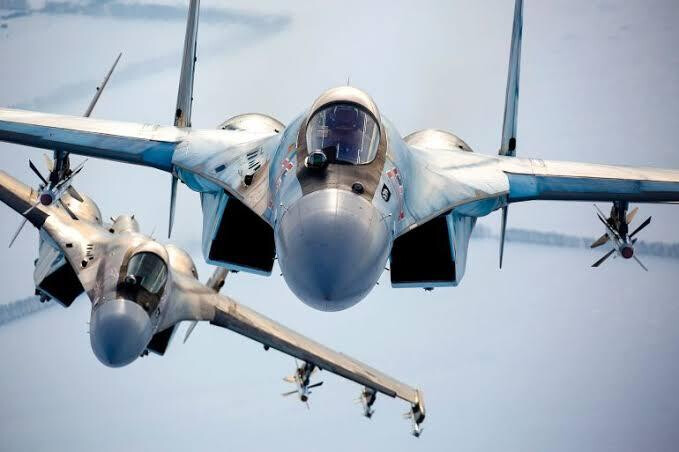
More recently, the breakdown in Russian command and control has become even more acute. Following a massive Ukrainian drone attack on November 10, unconfirmed reports from local media and military bloggers indicated that Russian forces lost three of their own helicopters—two Ka-52 attack helicopters and a Mi-8 transport—in a single day near St. Petersburg, downed by a Russian MiG-31 fighter and ground air defenses. This followed a similar incident in October in the Voronezh region, where an advanced Su-35 fighter shot down a friendly Mi-8 helicopter, killing its crew of three.

Lessons for South Korea

Defense analysts note a glaring gap between the advertised specifications of Russian weaponry and its actual battlefield performance. Authoritarian regimes often prioritize flashy, high-profile weapons systems for propaganda value while neglecting unglamorous—yet vital—investments like secure communications and data-link infrastructure.

For South Korea, Russia’s ongoing failures serve as an urgent warning. South Korea’s own air defense network has previously shown vulnerabilities during North Korean drone incursions, highlighting the need for upgrades in radar detection and IFF integration.

Unlike Russia, which possesses vast territory that affords its air defenses ample reaction time, South Korea lacks strategic depth. With hostile airspace just minutes away from major population centers, Seoul cannot afford any friction in target identification. Modernizing outdated radars and establishing a unified, military-wide cryptographic distribution network is no longer optional—it is essential for national survival.

[Copyright (c) Global Economic Times. All Rights Reserved.]

  • #Cherry Garden
  • #HalalFood
  • #Halal
  • #Petlife
  • #Cats
  • #Dogs
  • #Halalhorizone
  • #Hormuz Impasse
  • #Joseon
  • #globaleconomicti
Ana Fernanda Reporter

Popular articles

  • US Army Conducts Rare Temporary Burial Drills to Prepare for Worst-Case Large-Scale War Scenarios

  • "Stay Out, Get Paid, or Have Police Stay With You": Shenzhen Imposes Strict Security Ahead of APEC Summit

  • US Midterm Elections Complicate Trade Calculus... Persistent Uncertainty Over Tariffs and Investment

I like it
Share
  • Facebook
  • X
  • Kakaotalk
  • LINE
  • BAND
  • NAVER
  • https://globaleconomictimes.kr/article/1065564534699676 Copy URL copied.
Comments >

Comments 0

Weekly Hot Issue

  • Halal Turkeys Take Center Stage on American Thanksgiving Tables as Mainstream Grocers Expand Offerings
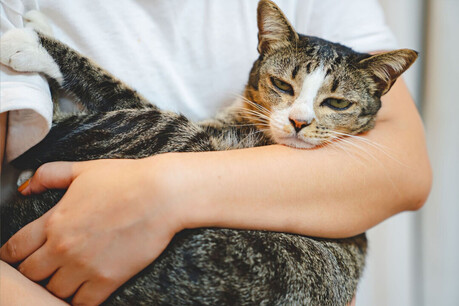
  • Hugging Your Cat After a Bad Day Might Backfire, Study Suggests — While Petting a Dog Builds Resilience
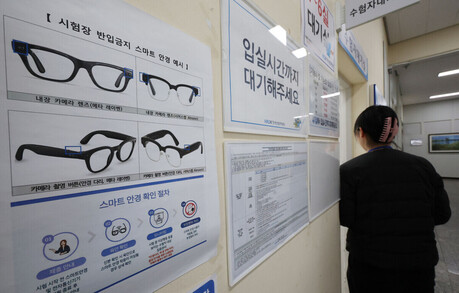
  • South Korea Weighs Low-Power Signal Jamming and stricter Device Rules to Curb AI Exam Cheating
  • South Korea Pushes for Overdue Media Law Overhaul as OTT Blurs Traditional Broadcast Lines
  • From Classroom and Lab to Smart Farms: Siblings Cultivate a Second Act in Rural Korea
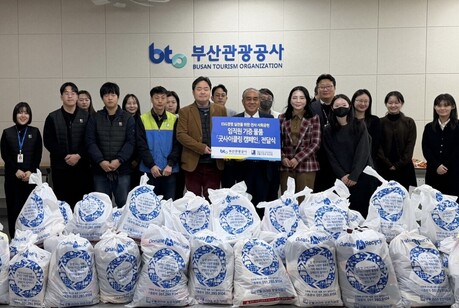
  • Busan Tourism Organization Takes the Lead in Local Co-prosperity Again This Year with the ‘Good-Cycling’ Campaign

Most Viewed

1
South Korean Burger Chain Lotteria Expands Singapore Footprint with Halal Certification and New Teriyaki Lineup
2
AI Semiconductor Stocks Plummet: Philadelphia Index Drops 5.28% and Micron Plunges 7.59% Amid Executive Shakeup and Export Restrictions
3
"Stay Out, Get Paid, or Have Police Stay With You": Shenzhen Imposes Strict Security Ahead of APEC Summit
4
Taiwan Bans Short-Selling Below Previous Close Starting Nov. 23, Raises Margin Ratio to 150%
5
AI Music Tops Melon Chart: Is the K-Pop Production Formula Changing?
체리가든 스토리
nutri huevos
로타리
동포저널

Hot Issue

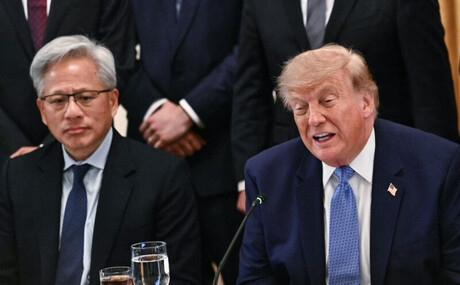
Trump Faces Rare Bipartisan Backlash Over Jensen Huang’s Return to Nvidia

Beyond the Click: How Agentic AI is Quietly Dismantling the App Economy

Jeju Tests Solar-Powered Greenhouses to Grow Carbon-Free ‘RE100’ Tangerines

Fashion Runway Show 2026

Let’s recycle the old blankets in Jeju Island’s closet instead of incinerating them.

Global Economic Times
korocamia@naver.com
CEO : LEE YEON-SIL
Publisher & Editor : KO YONG-CHUL
Registration number : Seoul, A55681
Registration Date : 2024-10-24
Youth Protection Manager: KO YONG-CHUL
Singapore Headquarters
5A Woodlands Road #11-34 The Tennery. S'677728
Korean Branch
Phone : +82(0)10 4724 5264
#304, 6 Nonhyeon-ro 111-gil, Gangnam-gu, Seoul
Copyright © Global Economic Times All Rights Reserved
  • News K
  • 반달곰 프로젝트
  • 광고문의
Search
Category
  • All articles
  • Synthesis
  • World
  • Business
  • Industry
  • ICT
  • Distribution Economy
  • Well+Being 
    • 전체
    • Pet Life
    • Halal Horizon
  • Travel
  • Eco-News
  • Education
  • Korean Wave News
  • Opinion
  • Arts&Culture
  • Sports
  • People & Life 
    • 전체
    • International Student Report
    • With Ambassador
  • Column 
    • 전체
    • Cho Kijo Column
    • Cherry Garden Story
    • Ko Yong-chul Column
    • Kim Bong-seon's Photo Column
    • Kim Seul-Ong Column
    • Lee Yeon-sil Column
    • Professor Lee Soo-young’s Life Essays
  • Photo News
  • New Book Guide
  • Overseas Koreans
  • Multicultural News