• 2026.11.25 (Wed)
  • All articles
  • LOGIN
  • JOIN
Global Economic Times
한인동포뉴스(상단)
  • Synthesis
  • World
  • Business
  • Industry
  • ICT
  • Distribution Economy
  • Well+Being
    • Pet Life
    • Halal Horizon
  • Travel
  • Eco-News
  • Education
  • Korean Wave News
  • Opinion
  • Arts&Culture
  • Sports
  • People & Life
    • International Student Report
    • With Ambassador
  • Column
    • Cho Kijo Column
    • Cherry Garden Story
    • Ko Yong-chul Column
    • Kim Bong-seon's Photo Column
    • Kim Seul-Ong Column
    • Lee Yeon-sil Column
    • Professor Lee Soo-young’s Life Essays
  • Photo News
  • New Book Guide
MENU
 
Home > Eco-News

South Korea Raises 2026 Renewable Quota to 94.08 Million RECs Ahead of Landmark Market Overhaul

Global Economic Times Reporter / Updated : 2026-11-25 07:01:28
  • -
  • +
  • Print

SEOUL — South Korea has finalized its 2026 renewable energy supply mandates, raising the annual target by 7.6% in certificate terms as the nation prepares to dismantle its 15-year-old Renewable Portfolio Standard (RPS) in favor of a centralized contract market.

According to an official notice released on the 24th by the Ministry of Climate, Energy and Environment, 29 major power producers are required to supply 69.17 terawatt-hours (TWh) of renewable electricity this year. Applying a 1.36 conversion multiplier, this translates to roughly 94.08 million Renewable Energy Certificates (RECs)—up from 87.40 million RECs (65.22 TWh) in 2025. The expansion reflects a policy hike that raised the mandatory renewable generation ratio from 14% to 15%.

State Utilities Shoulder Over 70% of the Mandate

The compliance burden remains heavily concentrated among state-backed utilities. Group I, comprising Korea Hydro & Nuclear Power (KHNP) and five state-owned power generation subsidiaries (GENCOs), accounts for 72.5% of the total obligation, or 68.21 million RECs.

KHNP holds the largest individual share at 17.97 million RECs (19.1% of the national total).
The five GENCOs collectively account for 53.4% (50.24 million RECs), led by Korea Midland Power (10.54 million), followed closely by Korea South-East Power (10.30 million), Korea Southern Power (10.11 million), Korea Western Power (9.89 million), and Korea East-West Power (9.41 million).
Meanwhile, Group II—a coalition of 23 entities including district heating providers and independent power producers (IPPs)—is tasked with fulfilling 25.87 million RECs. Korea District Heating Corp. leads this tier with 2.89 million RECs, while Paju Energy Service (2.09 million), POSCO International (2.01 million), and Goseong Green Power (1.94 million) top the list among private operators.

Market watchers emphasize that because state utilities dominate demand, their internal project timelines and external procurement strategies will dictate near-term REC market liquidity, especially amid ongoing discussions to consolidate the five GENCOs.

Transitioning from Mandates to Fixed-Price Contracts

The 2026 quota announcement marks a pivotal juncture as South Korea overhauls its renewable energy framework for the first time since 2012. Under the revised Renewable Energy Act taking effect on January 1, 2027, the current quota-driven RPS will begin a phased retirement.

In its place, the government will introduce a competitive bidding market categorized by energy source. Winning bidders will secure long-term, fixed-price Power Purchase Agreements (PPAs) directly with the state-run Korea Electric Power Corporation (KEPCO), shifting the policy focus from forced utility demand to predictable project revenue. To prevent sudden market shocks for existing operators, the REC spot market will remain operational through December 31, 2029.

Upcoming Policy Roadmap and Market Outlook

While higher 2026 quotas are expected to underpin REC demand, analysts caution that spot prices will remain sensitive to utilities' existing long-term contracts, in-house generation, and compliance deferral volumes. Safeguarding revenue stability for legacy spot-market generators during the transition remains a pressing regulatory challenge.

To address these issues, the Ministry of Climate will host a policy briefing at Seoul's Samjung Hotel on the 27th. Officials plan to detail operational guidelines for the new contract market, pathways for migrating existing facilities into the PPA system, and terms for the second solar bidding round of 2026—the final tender to be held under the outgoing RPS regime.

[Copyright (c) Global Economic Times. All Rights Reserved.]

  • #Cherry Garden
  • #HalalFood
  • #Halal
  • #Petlife
  • #Cats
  • #Dogs
  • #Halalhorizone
  • #Hormuz Impasse
  • #Joseon
  • #globaleconomicti
Global Economic Times Reporter
Reporter Page

Popular articles

  • World Citizens are Flying Directly to Busan... The Era of 4 Million Foreigners is Just Around the Corner

  • Restoring Hearing with Genes, Cochlear Implants with Robots: Where Does Hearing Loss Treatment Stand Today?

  • Cold Wave and Autumn Chill Hit Korea on "Ipdong": Gangwon -6°C, Seoul Real-Feel -4°C… Rain and Snow Expected in Central Regions on Sunday

I like it
Share
  • Facebook
  • X
  • Kakaotalk
  • LINE
  • BAND
  • NAVER
  • https://globaleconomictimes.kr/article/1065563987157921 Copy URL copied.
Comments >

Comments 0

Weekly Hot Issue

  • Halal Turkeys Take Center Stage on American Thanksgiving Tables as Mainstream Grocers Expand Offerings
  • Hugging Your Cat After a Bad Day Might Backfire, Study Suggests — While Petting a Dog Builds Resilience
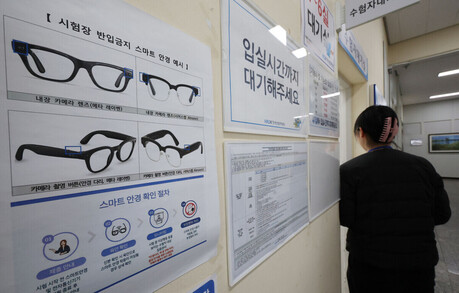
  • South Korea Weighs Low-Power Signal Jamming and stricter Device Rules to Curb AI Exam Cheating
  • South Korea Pushes for Overdue Media Law Overhaul as OTT Blurs Traditional Broadcast Lines
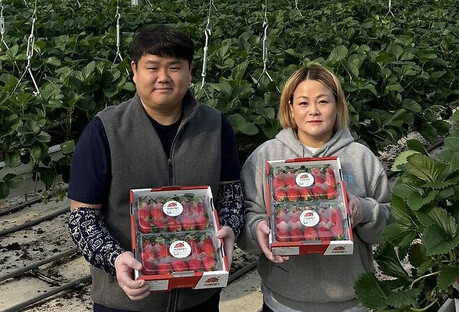
  • From Classroom and Lab to Smart Farms: Siblings Cultivate a Second Act in Rural Korea
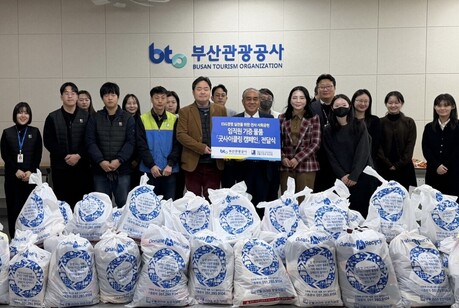
  • Busan Tourism Organization Takes the Lead in Local Co-prosperity Again This Year with the ‘Good-Cycling’ Campaign

Most Viewed

1
South Korean Burger Chain Lotteria Expands Singapore Footprint with Halal Certification and New Teriyaki Lineup
2
AI Semiconductor Stocks Plummet: Philadelphia Index Drops 5.28% and Micron Plunges 7.59% Amid Executive Shakeup and Export Restrictions
3
"Stay Out, Get Paid, or Have Police Stay With You": Shenzhen Imposes Strict Security Ahead of APEC Summit
4
Taiwan Bans Short-Selling Below Previous Close Starting Nov. 23, Raises Margin Ratio to 150%
5
AI Music Tops Melon Chart: Is the K-Pop Production Formula Changing?
체리가든 스토리
nutri huevos
로타리
동포저널

Hot Issue

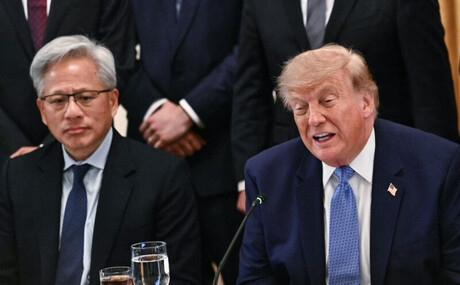
Trump Faces Rare Bipartisan Backlash Over Jensen Huang’s Return to Nvidia

Beyond the Click: How Agentic AI is Quietly Dismantling the App Economy

Jeju Tests Solar-Powered Greenhouses to Grow Carbon-Free ‘RE100’ Tangerines

Fashion Runway Show 2026

Let’s recycle the old blankets in Jeju Island’s closet instead of incinerating them.

Global Economic Times
korocamia@naver.com
CEO : LEE YEON-SIL
Publisher & Editor : KO YONG-CHUL
Registration number : Seoul, A55681
Registration Date : 2024-10-24
Youth Protection Manager: KO YONG-CHUL
Singapore Headquarters
5A Woodlands Road #11-34 The Tennery. S'677728
Korean Branch
Phone : +82(0)10 4724 5264
#304, 6 Nonhyeon-ro 111-gil, Gangnam-gu, Seoul
Copyright © Global Economic Times All Rights Reserved
  • News K
  • 반달곰 프로젝트
  • 광고문의
Search
Category
  • All articles
  • Synthesis
  • World
  • Business
  • Industry
  • ICT
  • Distribution Economy
  • Well+Being 
    • 전체
    • Pet Life
    • Halal Horizon
  • Travel
  • Eco-News
  • Education
  • Korean Wave News
  • Opinion
  • Arts&Culture
  • Sports
  • People & Life 
    • 전체
    • International Student Report
    • With Ambassador
  • Column 
    • 전체
    • Cho Kijo Column
    • Cherry Garden Story
    • Ko Yong-chul Column
    • Kim Bong-seon's Photo Column
    • Kim Seul-Ong Column
    • Lee Yeon-sil Column
    • Professor Lee Soo-young’s Life Essays
  • Photo News
  • New Book Guide
  • Overseas Koreans
  • Multicultural News