![[등록] 2026-09-01 15:48:31](/support/_updata/banner2/tl181982910_6749.png)


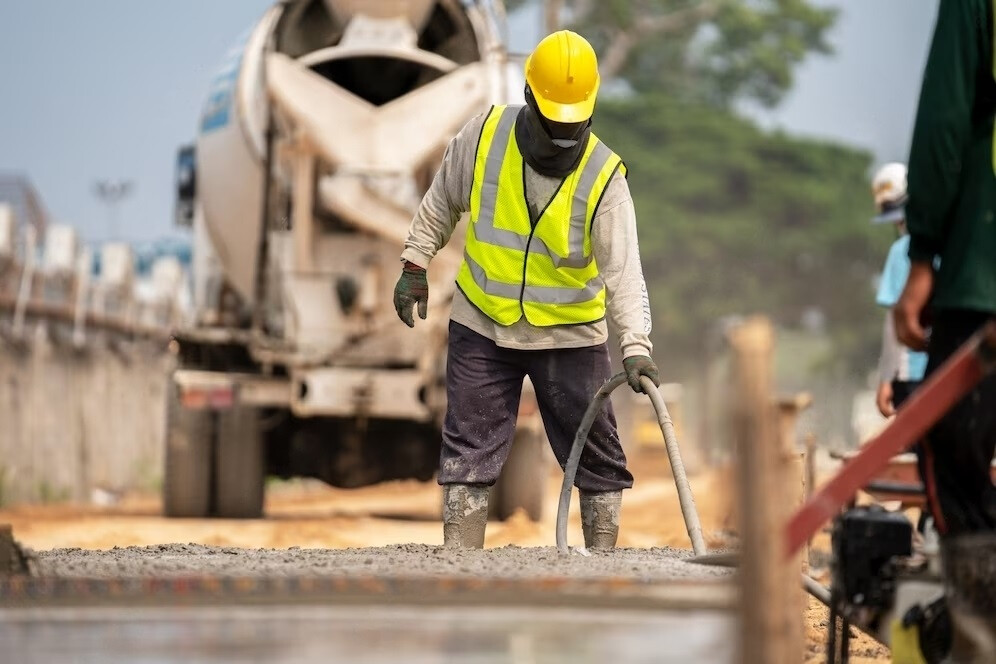
The streetscapes of Asunción, Paraguay's capital, and other major cities starkly illustrate the severe problem of informal employment plaguing the nation's labor market. The numerous workers struggling to make a living in precarious conditions represent only a visible fraction of a much larger issue. Alarmingly, a significant portion of the workforce, spanning from small and medium-sized enterprises to large corporations, operates under unstable employment arrangements. For the 65% of the total labor population trapped in this reality, the concept of a "quality job" remains a distant dream.
Rooted in the nation's chronic economic and social structures, the issue of informal employment transcends mere poverty. Contrary to the rhetoric of politicians who frequently invoke "respect for life" and "family values," the reality of the labor market severely undermines the quality of life for countless households. The absence of effective labor policies that ensure the transition of workers to formal employment and guarantee the legal operation of businesses only exacerbates this problem.
Paraguay registers the fourth-highest rate of informal employment in Latin America, trailing only Bolivia, Honduras, and El Salvador. The situation is particularly dire in the booming construction sector, fueled by vibrant public and private investment, where 88% of workers are excluded from the social security system, enduring long working hours, precarious low wages, and a lack of legal protection. The domestic work sector, essential for maintaining the economic system, faces a similar plight, with 96% of domestic workers in informal employment, deprived of even basic labor rights.
While the construction and domestic work sectors present the most critical scenarios, workers in other industries also grapple with informal employment, unstable incomes, and long working hours. This widespread informality traps these workers in a cycle of lifelong poverty, making them increasingly vulnerable in their old age. Informal employment is not merely a statistical figure; it acts as a profound social determinant that shapes an individual's entire life.
The lack of access to the social security system is a crucial link that deepens this vicious cycle. The fact that less than 20% of the total labor force contributes to pension funds suggests that millions of workers face extreme poverty in their retirement years. Despite years of hard work in their youth, the shackles of informal employment deny them a secure old age, painting a bleak future.
The fundamental causes of informal employment are multifaceted. Firstly, weak law enforcement and a lack of penalties play a significant role. The absence of an effective coordination system between relevant institutions and a lax oversight system create fertile ground for illegal employment practices to flourish. For instance, cross-referencing data between local government administrative records, the Social Security Institute (IPS), and the Ministry of Labor, Employment, and Social Security (MTESS) is neither a difficult nor a costly endeavor, yet it is not adequately implemented. Furthermore, it is entirely feasible for the public sector to rigorously monitor the labor law compliance of companies contracted for government procurement.
Secondly, complex administrative procedures and the financial burden associated with transitioning to formal employment pose significant challenges. For micro and small enterprises, which constitute a substantial portion of the Paraguayan economy, these issues represent genuine obstacles. However, the more concerning aspect is that even official statistics reveal that medium-sized and large corporations also keep a considerable number of workers outside the protection of labor laws. This indicates not merely economic hardship but a lack of awareness and a deficiency in the will to comply with regulations among these larger entities.
The vulnerability of Paraguay's informal workers was starkly exposed during the COVID-19 pandemic. The sudden cessation of economic activity posed an existential threat to their livelihoods, and the absence of a robust social safety net exacerbated their suffering. This underscored that informal employment is not just an economic problem but a serious issue directly linked to the stability of society as a whole.
The problem of informal labor is like a virus that permeates all corners of society. The precarious employment environment of adult workers leads to child labor, depriving children of educational opportunities – a grave social issue. The healthcare sector is similarly affected. With low social security affiliation rates, informal workers face difficulties accessing medical services or are burdened by excessive healthcare costs, leading to financial hardship. Housing is no exception; for informal workers, securing a mortgage remains an unattainable dream.
The experiences of neighboring countries like Uruguay, Chile, and Costa Rica suggest that alternative possibilities exist for Paraguay. These nations have demonstrated successful outcomes in improving the quality of their labor markets and mitigating social inequality through the firm will and efforts of their governments, politicians, and public officials. It is time for Paraguay to learn from these examples and actively pursue policy changes.
The lives of Paraguay's informal workers reflect a paradoxical reality. While the nation experiences economic growth, the fruits of this growth are not translating into human development. The issue of informal employment transcends mere economic indicators. It is an "open wound" that erodes the rights, opportunities, and human dignity of countless workers.
Unless the state addresses the structural roots of informal employment, numerous Paraguayan workers will remain trapped in a paradoxical situation: working to survive but unable to enjoy a true "life." Now is the time for Paraguay to move beyond the superficial achievements of short-sighted economic growth and actively strive to build a society where all citizens can lead a dignified life through fundamental labor market reforms.
[Copyright (c) Global Economic Times. All Rights Reserved.]