![[등록] 2026-09-01 15:48:31](/support/_updata/banner2/tl181982910_6749.png)


(C) FULCRUM
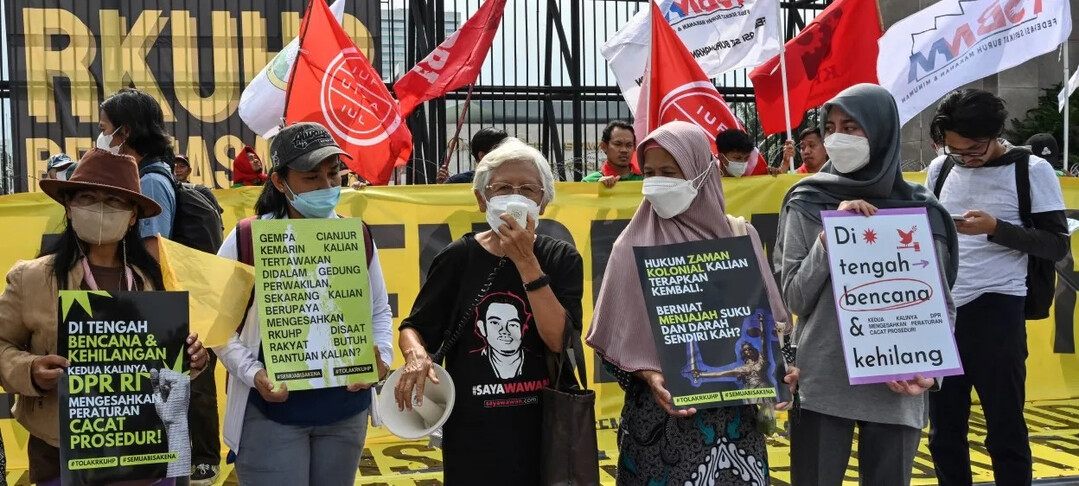
JAKARTA – A sweeping and contentious revision of Indonesia’s criminal code officially takes effect today, January 2, 2026. The new laws, which criminalize extramarital sex, cohabitation before marriage, and insults against the sitting president or state institutions, have sparked intense debate over human rights and civil liberties.
Key Provisions of the New Penal Code
The legislative overhaul, which was first passed in December 2022, marks a significant shift in the nation’s legal landscape, aligning more closely with conservative religious norms.
Morality Laws: Sex outside of marriage is now punishable by up to one year in prison, while cohabitation before marriage carries a maximum sentence of six months. These offenses are classified as "complaint-based crimes," meaning legal action can only be initiated if reported by a spouse, parent, or child of the accused.
Political Speech: Insulting the President or state institutions can lead to a three-year prison term.
Ideological Restrictions: Spreading ideologies that contradict the national state philosophy (Pancasila) or promoting communism can result in up to four years of imprisonment.
Government Defense vs. International Concern
Indonesian Minister of Law, Supratman Andi Agtas, defended the implementation, stating that the code reflects the country's unique "legal and cultural norms." While acknowledging the potential for power abuse, the Minister emphasized that the law includes safeguards and will be subject to public oversight. "Nothing new is perfect immediately," Supratman noted, adding that the code is a step toward an independent legal system distinct from its colonial past.
However, the international community, including the United Nations and the U.S. State Department, has previously voiced concerns that these laws could infringe upon privacy, freedom of expression, and human rights.
Impact on Tourism and Civil Rights
The "morality clauses" initially raised alarms within the tourism sector, with fears that foreign visitors could be prosecuted. However, industry leaders, including Hariyadi Sukamdani, Chairman of the Indonesian Tourism Association, indicated that the "complaint-based" nature of the crimes has mitigated some of these concerns, as tourists are unlikely to be reported by immediate family members.
Despite this, local legal experts remain critical. Legal scholar Asfinawati described the provisions regarding state insults as "new colonial-era laws created by ourselves," warning that the broad nature of the text allows for arbitrary enforcement and may stifle democratic dissent.
[Copyright (c) Global Economic Times. All Rights Reserved.]