![[등록] 2026-09-01 15:48:31](/support/_updata/banner2/tl181982910_6749.png)


(C) News Arena
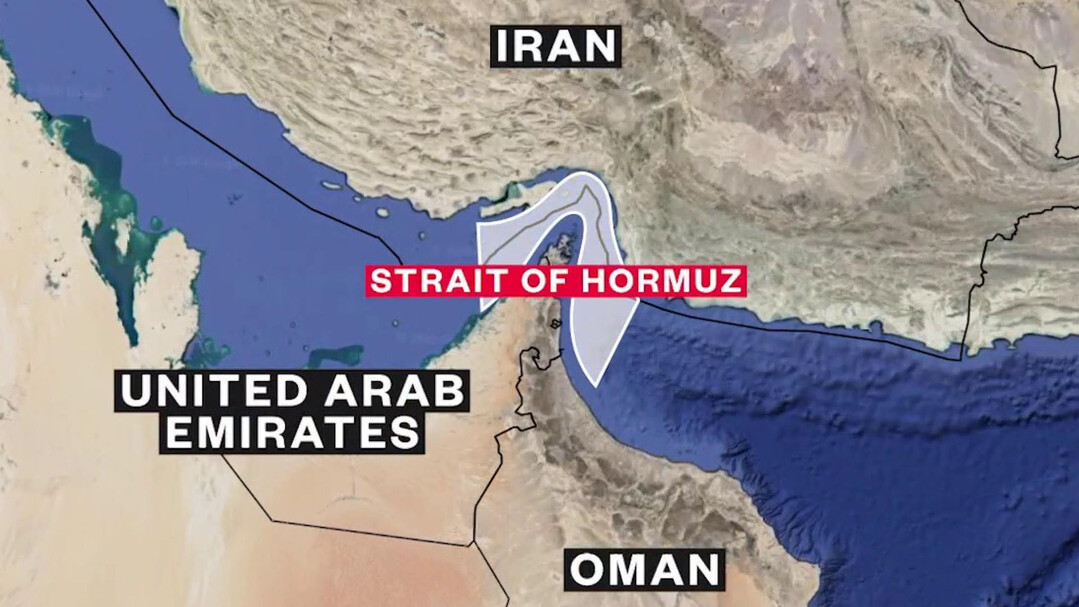
TEHRAN / DUBAI — The global energy supply chain is facing its most significant threat in decades as Iran’s Islamic Revolutionary Guard Corps (IRGC) began issuing warnings that the Strait of Hormuz—the world’s most vital oil chokepoint—is effectively closed to all maritime traffic.
The move comes as a direct retaliation to a massive joint military operation launched on February 28, 2026, by the United States and Israel. The strikes, targeting Iranian nuclear facilities and military command centers in Tehran, Isfahan, and several other provinces, have plunged the region into an unprecedented crisis.
"No Ship Allowed to Pass"
According to maritime officials from the European Union’s naval mission, Operation Aspides, multiple merchant vessels transiting the Gulf have reported receiving Very High Frequency (VHF) radio transmissions from the IRGC. The messages explicitly state: “No ship is allowed to pass the Strait of Hormuz.”
While the Iranian government has yet to issue a formal decree of a legal blockade, the UK Maritime Trade Operations (UKMTO) confirmed receiving numerous reports of these "unauthorized" directives. While the UKMTO noted that such broadcasts lack legal binding under international law without formal notification, the "de facto" threat has already paralyzed shipping routes.
Global Energy Markets in Turmoil
The Strait of Hormuz is a narrow waterway through which approximately 20% to 30% of the world’s total oil consumption passes daily—roughly 20 million barrels of liquid fuel.
Market analysts are warning of a "catastrophic" price surge. Current estimates suggest:
Immediate Price Spike: Brent crude, which averaged $66 per barrel earlier this year, could soar to $120–$150 per barrel even with a brief interruption.
Alternative Routes: While Saudi Arabia and the UAE possess pipelines that bypass the Strait, their combined idle capacity (approx. 3–4 million barrels) is far insufficient to offset a full blockade.
Insurance Crisis: War-risk insurance premiums for tankers in the Persian Gulf are expected to rise by as much as 50% overnight.
U.S. and International Response
In response to the escalating tension, the U.S. Department of Transportation’s Maritime Administration (MARAD) has issued an urgent advisory for all commercial vessels to avoid the Persian Gulf and the Gulf of Oman. The U.S. Navy's 5th Fleet has stated it "cannot guarantee the safety of neutral shipping" in the area due to "significant military activity."
Experts remain divided on whether Iran can sustain a long-term blockade. A prolonged closure would also stifle Iran's own oil-dependent economy and potentially strain its relationship with China, its largest buyer. However, with the IRGC citing "security risks due to U.S.-Israeli aggression," the psychological barrier for shipping companies has already been breached, leading many LNG and oil carriers to perform U-turns.
[Copyright (c) Global Economic Times. All Rights Reserved.]