![[등록] 2026-09-01 15:48:31](/support/_updata/banner2/tl181982910_6749.png)


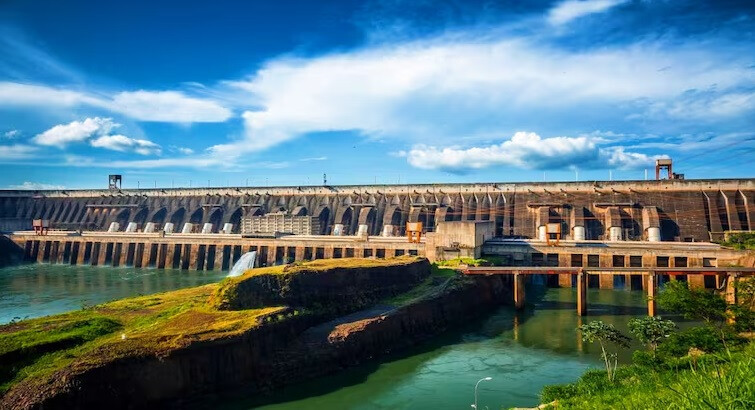
April 26, 2025, marks the 52nd anniversary of the signing of the Itaipu Treaty, which laid the groundwork for the construction of the world's largest hydroelectric power plant. This is considered the most significant international agreement in 20th-century Paraguayan history since the Chaco Peace Treaty, forever altering the destinies of Paraguay and Brazil.
For a long time, Paraguay and Brazil had experienced conflict over border issues. However, they found a groundbreaking solution in the joint development of the Paraná River's water resources. They agreed to jointly utilize the hydroelectric resources of the Paraná River basin, stretching from the Guaíra Falls (Sete Quedas Falls) to the confluence of the Iguazu River.
The signing ceremony took place 52 years ago at the Planalto Palace in Brasília. Representing their respective nations were Paraguayan Foreign Minister Raúl Sapena Pastor and Brazilian Foreign Minister Mário Gibson Barbosa, with Paraguayan President Alfredo Stroessner and Brazilian President Emílio Garrastazu Médici in attendance, witnessing the historic moment.
This treaty provided the fundamental framework for the construction of the world's largest hydroelectric power plant in terms of generating capacity. Subsequently, Brazil ratified the treaty on May 30, 1973, and Paraguay on July 17, 1973. The instruments of ratification were exchanged on August 13 of the same year, officially bringing the treaty into effect.
The signing of the Itaipu Treaty was a crucial step in implementing the content of the Final Act signed in Foz do Iguaçu on June 22, 1966. The Final Act stipulated the principle that the electricity generated in the concerned Paraná River basin would be equally distributed between the two countries, and it is essentially considered the cornerstone of the Itaipu Treaty.
The Itaipu Hydroelectric Power Plant, built on the border between Paraguay and Brazil, has supplied vast amounts of electricity to both nations. For Paraguay, in particular, the Itaipu Dam is a vital energy source, accounting for a significant portion of the country's total electricity production and serving as a crucial engine for economic growth. Brazil has also been able to secure a stable power supply and accelerate industrial development through the Itaipu Dam.
The construction of the Itaipu Dam went beyond simply expanding energy production facilities; it significantly contributed to deepening economic cooperation and friendly relations between Paraguay and Brazil. Successfully undertaking a large-scale joint project allowed both countries to build mutual trust and create opportunities to expand cooperation in various fields.
However, several points of contention regarding the operation of the Itaipu Dam have existed. In particular, the conditions related to the distribution of electricity generated by the dam and the environmental and social impacts of its operation have been subjects of ongoing discussion. Paraguay has, at times, raised concerns about the conditions under which it sells its surplus electricity, which it does not consume, to Brazil.
Recently, Paraguay and Brazil have been in discussions to renegotiate some aspects of the treaty related to the operation of the Itaipu Dam. This is interpreted as an effort to develop a more equitable and mutually beneficial cooperative relationship by reflecting the changed energy market environment and the energy demands of both countries.
On the 52nd anniversary of the Itaipu Treaty, we are reminded of the positive changes this historic agreement has brought to Paraguay and Brazil, as well as the importance of future-oriented discussions for sustainable energy cooperation. The Itaipu Dam will forever be remembered not just as an energy generation facility but as a symbol of friendship and cooperation between the two nations. Furthermore, this experience offers important lessons for resource sharing and joint development cooperation between other countries.
[Copyright (c) Global Economic Times. All Rights Reserved.]