![[등록] 2026-09-01 15:48:31](/support/_updata/banner2/tl181982910_6749.png)


(C) Inbox.lv
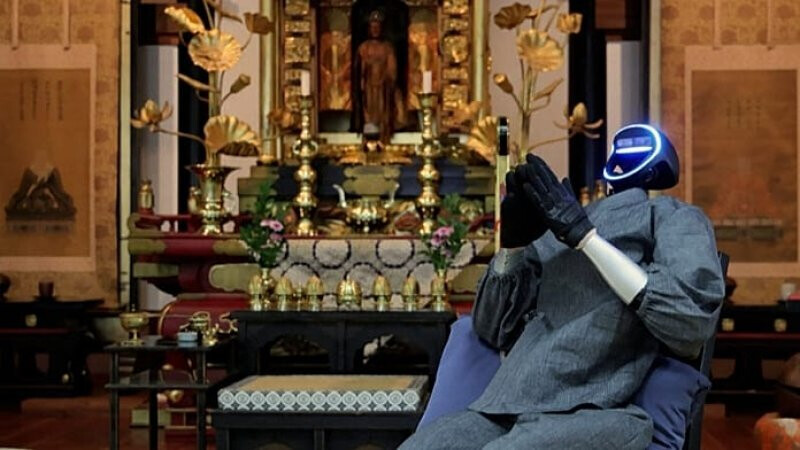
KYOTO, Japan — As Japan’s traditional temples grapple with an intensifying labor shortage and a dwindling number of monks, a new technological savior has emerged from the ancient capital of Kyoto. Researchers have unveiled “Buddharoid,” a humanoid robot monk designed to provide spiritual guidance and perform rituals, signaling a potential “paradigm shift” in how religion is practiced in the 21st century.
The Birth of a Digital Monk
Unveiled at the historic Shoren-in Temple in Kyoto, Buddharoid is the result of a collaborative effort between Kyoto University’s Institute for the Future of Human Society, AI developer Teraverse, and the tech startup XNOVA. Led by Professor Seiji Kumagai, the project aims to bridge the gap between ancient Buddhist wisdom and modern AI technology.
The robot stands approximately 130 cm tall and is built upon the Unitree G1, a state-of-the-art humanoid platform from China’s Unitree Robotics. Dressed in traditional grey monk’s robes, Buddharoid is designed to move with the slow, deliberate grace characteristic of a seasoned priest. It can perform the gassho (the act of pressing palms together in prayer), bow respectfully, and walk naturally within a temple setting.
Advanced Spiritual Intelligence
Unlike previous "sermon-only" robots that simply played back pre-recorded audio, Buddharoid is equipped with the “BuddhaBot-Plus” AI system. This advanced software is a generative AI model—specifically tuned using OpenAI’s ChatGPT architecture—that has been trained on a massive database of Buddhist scriptures, including foundational sutras and esoteric commentaries.
This allows the robot to engage in real-time, interactive dialogue. It can answer complex questions about:
-Mental Well-being: Coping with anxiety and stress.
-Human Relationships: Finding balance in interpersonal conflicts.
-Existential Meaning: Exploring the purpose of life through a Buddhist lens.
During a recent demonstration, when asked how to manage difficult relationships, Buddharoid responded in a calm, baritone voice: "It will improve if you regularly reflect on your closeness with others and maintain balance within your heart."
Addressing the "Temple Vanishing" Crisis
The development of Buddharoid is not merely a technical exercise; it is a response to a looming cultural crisis. Estimates suggest that nearly 30% of Japan’s 77,000 Buddhist temples could vanish by 2040 due to an aging population and a lack of successors.
"By providing a physical presence, Buddharoid offers a stronger sense of participation and psychological comfort than a simple screen or app," said Professor Kumagai. "In the future, these robots could assist with or even replace some rituals traditionally performed by human monks, ensuring the survival of Buddhist culture in regions where clergy are scarce."
Ethics and the Future
While the robot has been met with curiosity, the research team emphasized that it is intended as a supportive tool, not a total replacement for human spiritual leaders. The team plans to continue discussions on the ELSI (Ethical, Legal, and Social Issues) of robot-led religion, ensuring that the technology remains a respectful and effective medium for the Dharma.
[Copyright (c) Global Economic Times. All Rights Reserved.]