![[등록] 2026-09-01 15:48:31](/support/_updata/banner2/tl181982910_6749.png)


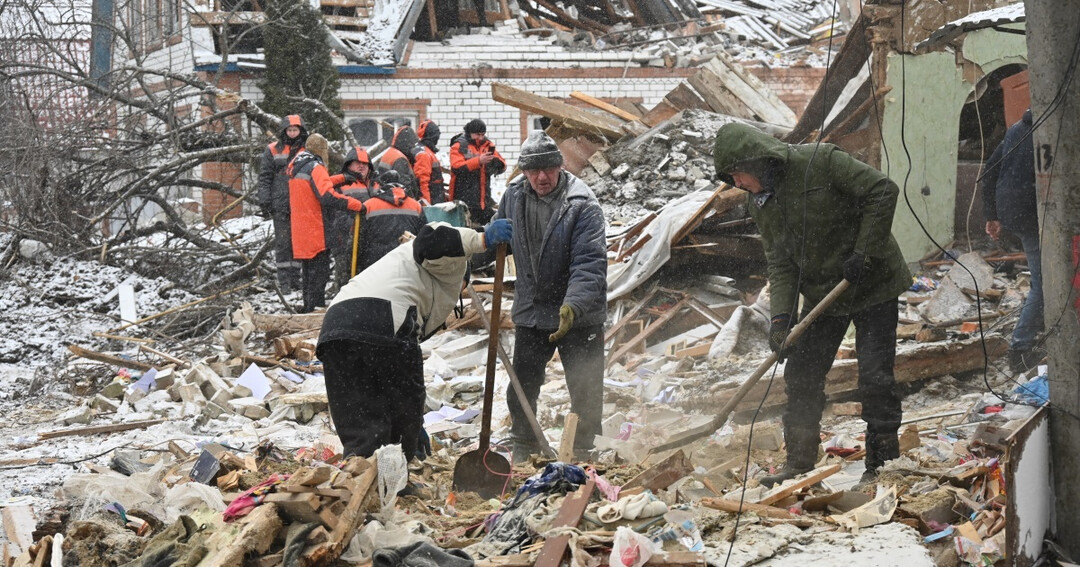
(C) Al Jazeera
February 24th marked the fourth anniversary of the Russian invasion of Ukraine. What began in 2022 as an escalation of localized skirmishes in the Donbas and Crimea has since evolved into a full-scale "International War" that has redefined the global order. However, four years into the carnage, the language used to define this conflict remains deeply polarized, reflecting a fundamental struggle over historical narrative and geopolitical legitimacy.
The Clash of Definitions: Special Operation vs. Sovereign Defense
Russia continues to shun the term "war," stubbornly clinging to the euphemism "Special Military Operation." This is not merely semantic; it is a calculated denial of Ukrainian statehood. By framing the conflict through the lens of a domestic cleanup or a re-unification of "Great Russia," Vladimir Putin employs a logic akin to a civil war. In his narrative, Ukraine is not a sovereign neighbor but an errant province.
Conversely, Ukraine’s position is unequivocal. For President Volodymyr Zelenskyy and his people, this is a definitive international war—a struggle for survival against an imperial aggressor. This clarity allowed Ukraine to mobilize the North Atlantic Treaty Organization (NATO) and the European Union (EU), framing the defense of Kyiv as the defense of the rules-based international order.
Lessons from History: The Taiping Rebellion and the British Choice
The current ambiguity echoes the mid-19th-century Taiping Rebellion in China, one of history’s bloodiest conflicts. As Stephen Platt explores in Autumn in the Heavenly Kingdom, the Taiping rebels viewed themselves as a sovereign political entity engaging in international diplomacy. The Qing Dynasty, however, dismissed them as mere insurgents in a civil uprising.
The turning point was the intervention of the era’s superpower: Great Britain. Faced with three competing interests—supporting the Taiping (who shared a pseudo-Christian ideology), maintaining trade with the Qing, or attending to the American Civil War—Britain ultimately chose to back the Qing Dynasty. The deployment of the "Ever Victorious Army" under Charles George Gordon proved decisive. The superpower’s choice dictated the end of the "civil war," leading to the Taiping's demise.
The Contemporary Superpower’s Dilemma
Today, the United States finds itself in a strikingly similar position. Washington sits at a crossroads of multiple global crises: the persistent threat of Iranian proxies in the Middle East, the strategic competition with China, and the moral obligation to sustain Ukraine.
Recent developments have added layers of complexity. The political gridlock in the U.S. Congress regarding military aid, coupled with "Ukraine fatigue" in parts of Europe, has emboldened the Kremlin. Russia is betting that if it can transition the "international war" into a prolonged, grinding "internalized conflict" that exhausts Western patience, it can force a settlement on its own terms—essentially annexing territory under the guise of "restoring order."
Conclusion: A Defining Moment for World History
The fourth anniversary of the war serves as a grim reminder that the character of a conflict is often determined not by those who fight it, but by those who support it. If the U.S. and its allies withdraw or falter, the war will likely be recorded in Russian history books as a successful "internal correction." If support remains steadfast, it will stand as a landmark victory for international sovereignty.
As the world watches the frontlines in Avdiivka and beyond, the echoes of the 19th century are loud. The choices made in Washington, Brussels, and Kyiv in the coming months will decide whether this war ends as a triumph of international law or a tragic footnote in the history of "civil" expansionism. History, once again, is waiting for a decision.
[Copyright (c) Global Economic Times. All Rights Reserved.]