![[등록] 2026-09-01 15:48:31](/support/_updata/banner2/tl181982910_6749.png)


(C) The Adecco Group
SEOUL — South Korea is currently witnessing a stark economic divergence that is rewriting the rules of traditional macroeconomics. While the nation’s headline GDP shows signs of a robust recovery, the "warmth" of this growth is failing to spread across the broader economy, leading to a surprising suppression of inflationary pressures.
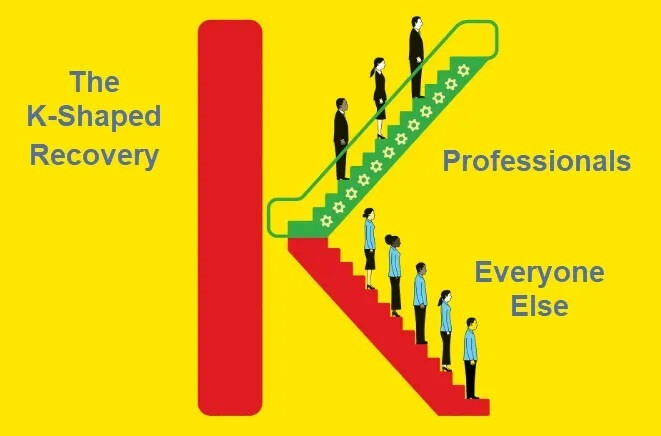
According to a recent report by the Bank of Korea (BOK) titled "The Impact of Sectoral Growth Differentiation on Inflation," the widening gap between the booming IT sector and the stagnant non-IT sectors—often referred to as a K-shaped recovery—is acting as a structural brake on price increases.
The Great Divergence: IT vs. The Rest
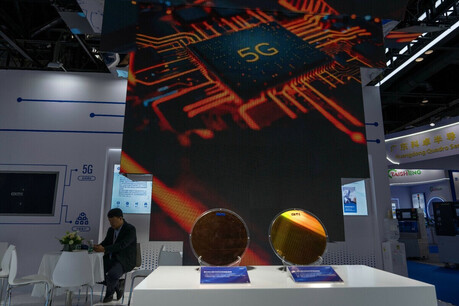
The data highlights a massive structural rift. In the latter half of 2024, the growth gap between the IT manufacturing sector (led by semiconductors) and other sectors stood at 5.0 percentage points. Fast forward to the third quarter of 2025, and that gap has ballooned to a staggering 9.5 percentage points.
The BOK forecasts a 2.0% growth rate for the current year. However, Jeong Won-seok, Deputy Director of the BOK’s Inflation Dynamics Team, warns that this figure is deceptive. "If you strip away IT manufacturing, the rest of the economy is limping along at a growth rate in the low-to-mid 1% range," Jeong noted.
The Consumption Trap: Why Wealth Isn't Spending
Traditional economic theory suggests that growth leads to higher income, which boosts consumption and drives up prices (demand-pull inflation). However, the K-shaped model breaks this chain through two primary "leakages":
Concentrated Income Growth: Between 2023 and 2024, the top 20% (the 5th quintile) of households saw an average income increase of 7.36 million KRW, vastly outperforming all other income brackets.
Declining Marginal Propensity to Consume (MPC): The BOK found that high-income earners have a significantly lower MPC than middle- and low-income groups. Instead of spending their windfall, the wealthy are funneling excess income into savings or asset accumulation (real estate and stocks).
The report also cites OECD data from 26 countries, confirming that nations with higher Gini coefficients (greater income inequality) tend to have flatter Phillips Curves. This means that even as the economy grows, the sensitivity of inflation to that growth diminishes.
The Wage Ceiling and Sectoral Stagnation
The labor market tells a similar story of fragmentation. While salaries in the semiconductor and IT sectors have surged, wages in the non-IT manufacturing and construction sectors have plateaued or even declined.
Regular vs. Temporary: Wages for regular employees continue to rise, but temporary and day-laborer wages entered a downward trend in late 2024, exacerbated by a slump in the construction industry.
Company Size: Large-scale enterprises are offering significant pay hikes, while small-and-medium enterprises (SMEs)—which employ the vast majority of the South Korean workforce—are struggling to keep pace.
Because the high-wage IT sector employs a relatively small percentage of the total workforce, the aggregate upward pressure on national wages remains muted.
Outlook: The Road Ahead
The Bank of Korea concludes that for inflation to reach target levels through demand-side pressure, a recovery in the non-IT sectors is essential. Conversely, the primary "cost-side" variable will remain the global price of semiconductors.
As the K-shaped trend shows no signs of reversing, policymakers face a delicate balancing act: managing a "rich" macro-economy that feels "poor" to the average consumer, all while navigating a low-inflation environment that belies the strength of the nation's tech giants.
[Copyright (c) Global Economic Times. All Rights Reserved.]