Japan has long enjoyed a stellar global reputation for hosting world-class international events with meticulous precision and unmatched hospitality. From the 1964 and 2020 Tokyo Olympics to countless high-profile cultural and gaming conventions, the nation’s standard has traditionally been second to none.
However, this year’s Asian Games in Nagoya and the wider Aichi Prefecture painted a starkly different picture. Marred by a cascading series of administrative blunders, transport failures, and severe accommodation shortages, the event faced intense public scrutiny. Online comment sections lit up with sharp criticism, with some disgruntled observers branding it the "worst Games in history" and demanding a full, transparent investigation.
A Compound Crisis of Scale and Accommodation
Before the opening ceremony even commenced, warning signs were flashing. In a cost-cutting measure designed to forgo building a traditional, centralized athletes' village, organizers opted to house participants across a decentralized network of standard hotels and container-style lodging units scattered throughout Nagoya.
The strategy quickly backfired. A high-ranking South Korean basketball official voiced public frustration, noting that taller athletes accommodated in the container units struggled simply to "stretch their legs out on the beds."
The situation deteriorated further when a last-minute surge in participant numbers severely strained the city’s housing capacity. Ultimately, organizers had to charter an Italian cruise ship featuring 1,500 cabins to absorb the overflow.
Takaaki Omi, deputy director general of the Games, explained to the BBC that the organizing committee had initially arranged accommodation for up to 15,000 delegation members in strict compliance with the host city contract. However, as additional sports and regional delegations were integrated into the lineup, the participant count swelled by 2,000, reaching a total of 17,000.
Initially, organizers claimed there was "simply nowhere" to put the late influx, advising delegations to make independent arrangements. Facing massive diplomatic fallout, organizers backpedaled, releasing a joint statement alongside the Olympic Council of Asia (OCA) promising that all 17,000-plus guests would receive appropriate accommodations.
A Cascade of Diplomatic and Logistical Missteps
Unfortunately, the housing crisis was merely the prologue. Throughout the course of the tournament, athletes and officials were subjected to a litany of operational failures:
Logistical Failures: Teams were frequently bussed to incorrect competition venues due to communication breakdowns.
Anthem Blunders: In a severe diplomatic embarrassment, the North Korean national anthem was mistakenly played for the South Korean men's hockey team. Glitches with national anthems reportedly persisted into the subsequent Para Games, prompting formal apologies.
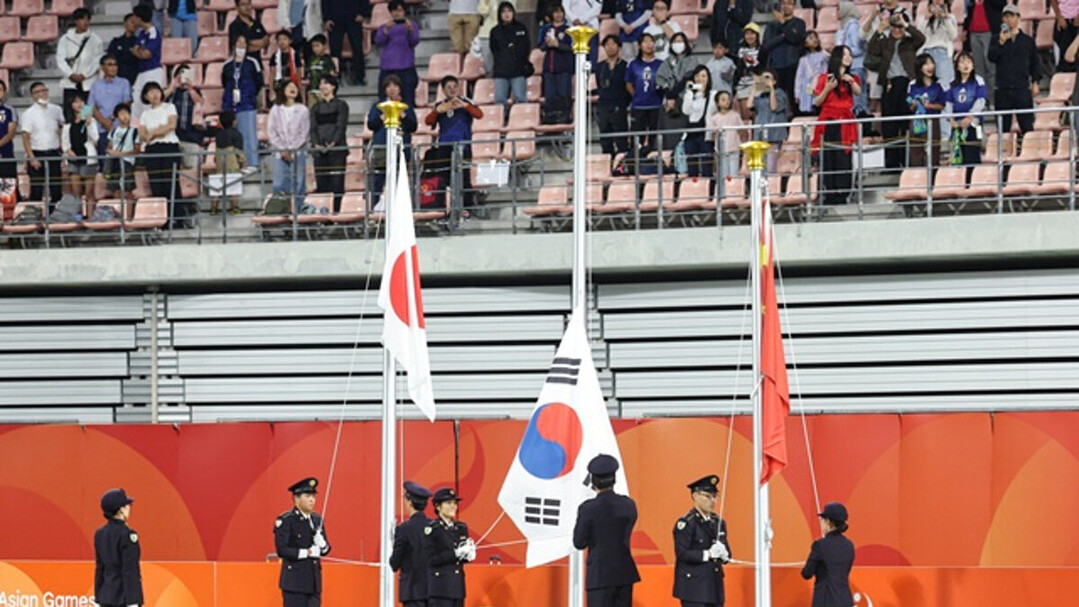
Protocol Errors: During the men’s football gold medal ceremony, the South Korean flag was improperly raised. Meanwhile, Taiwan’s sports minister found himself temporarily barred from entering a flag-raising venue.
Ticketing Confusion: In the final days of the competition, volunteers received an automated email inviting them to the closing ceremony free of charge, only for organizers to retract the announcement hours later, stating the decision was still under review.
These compounding errors transformed the event—which actually surpassed the Paris Olympics in total number of participants—into a logistical nightmare.
"Hosting and managing an event of this scale was a major challenge for us, and each day involved addressing a range of unexpected issues," Omi admitted, adding that organizers worked diligently to listen to athlete feedback and implement immediate rectifications.
The Cost-Cutting Controversy: GL Events Under Scrutiny
As the operational failures mounted, local media quickly turned its investigative lens toward the primary contractor managing venue operations: the Japanese subsidiary of France's GL Events.
GL Events secured the lucrative 63 billion yen ($405 million USD) contract over Dentsu Group, a domestic advertising giant with decades of experience handling major sporting events in Japan. Dentsu had been effectively sidelined from the bidding process following a criminal bid-rigging conviction related to earlier Tokyo Olympic contracts. According to a source speaking to Kyodo News, GL Events’ bid was "overwhelmingly cheaper" than competing proposals.
Last week, the Tokyo Shimbun alleged that the French firm aggressively cut corners during the recruitment phase, resulting in a critical shortage of experienced management personnel and insufficient training for local staff.
Despite these allegations, Omi defended the selection, pointing out that GL Events possesses a robust track record in international sporting events, including the Paris Olympic Games. "We believe the necessary competition environment was in place by the start of competition, through thorough discussions and coordination with GL Events," Omi told the BBC.
Prof. Kozo Tomiyama, an expert on major sporting events at Osaka University, suggested that the root of the problem may lie not purely in the contractor's lack of experience, but rather in the "extremely broad" scope of responsibilities assigned to them.
"Because this was a negotiated contract rather than a competitive tender, it is vital to examine the strict criteria organizers used to assess the contractor’s capabilities, as well as how closely they supervised them after the award," Tomiyama noted.
Competing Perspectives: Athletic Triumph vs. Administrative Failure
While the administrative friction dominated headlines, international sports authorities attempted to balance the narrative by focusing on athletic achievements.
Husain al-Musallam, director general of the Olympic Council of Asia, strongly defended the quality of the event, pointing to the 54 new world records shattered in swimming, weightlifting, and shooting as definitive proof of success.
"This achievement does not come without the best environment that the organizing committee created for the athletes," al-Musallam stated. "Athletes cannot perform if they don't sleep well, and they cannot perform if they don't have good transportation."
Nonetheless, the shadow of administrative shortcomings has lingered, spilling over into the subsequent Para Games, where further anthem errors drew public reprimands from Nagoya Mayor and deputy organizing committee head Ichiro Hirosawa, who called the repeat incidents "unacceptable."
Looking Forward: Protecting Japan’s International Standing
The overarching fear among domestic analysts is the long-term damage to Japan's premier-event brand. The chaotic scenes felt fundamentally disconnected from omotenashi—Japan’s revered cultural philosophy of whole-hearted, meticulous hospitality.
Prof. Tomiyama warned that if these recurring problems erode international confidence in Japan's operational reliability, it could significantly jeopardize the country’s prospects of securing and hosting major international competitions in the future.
As the dust settles on Nagoya, the definitive takeaway for sports administrators across Japan is clear: cost-efficiency must never compromise core operational integrity. Organizers must turn these hard lessons into institutional reforms to ensure that future events live up to the world-class standard the global community expects from Japan.
[Copyright (c) Global Economic Times. All Rights Reserved.]