![[등록] 2026-09-01 15:48:31](/support/_updata/banner2/tl181982910_6749.png)


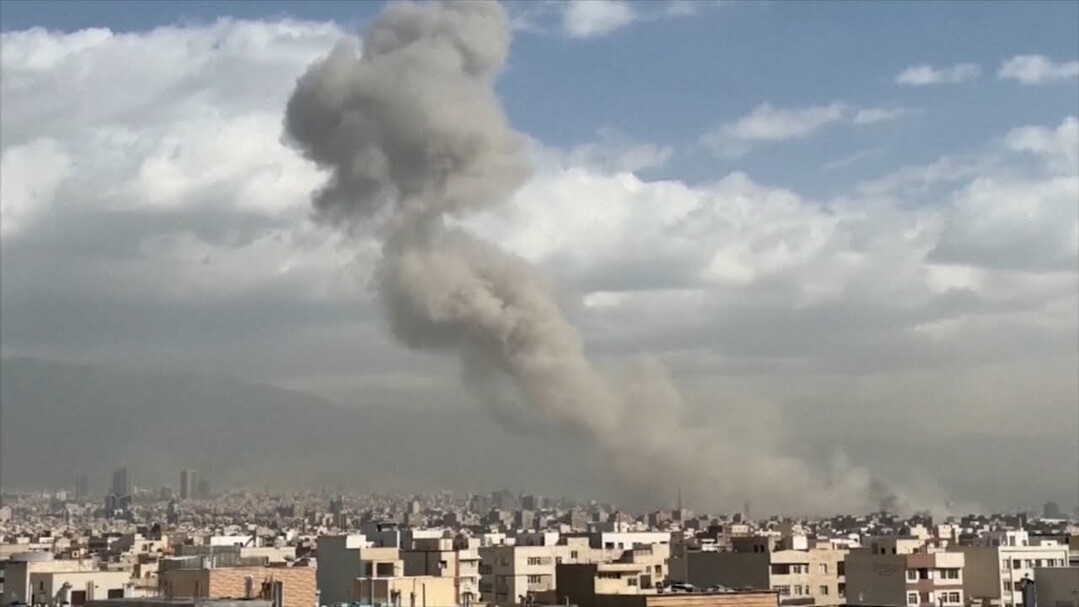
(C) Youtube
TEHRAN/WASHINGTON – The Middle East has plummeted into a state of total war. On the 28th, a coordinated aerial assault by U.S. and Israeli forces struck the Iranian capital, Tehran, marking a massive escalation in regional hostilities. In immediate retaliation, Iran launched ballistic missiles and drone swarms targeting U.S. military installations across the Persian Gulf, including bases in the UAE, Qatar, and Bahrain.
Operation 'Roaring Lion'
Israeli Defense Minister Israel Katz confirmed the "preventive" strike, codenamed Operation Roaring Lion. The operation aims to neutralize "immediate existential threats" posed by the Iranian regime. Reports from Tehran describe massive explosions near the office of Supreme Leader Ayatollah Ali Khamenei. While the leader was reportedly moved to a secure location prior to the strikes, the symbolic and physical damage to the Iranian command structure is significant.
U.S. President Donald Trump, speaking via Truth Social, announced that the United States has entered "major combat" to ensure long-term regional stability. "There may be sacrifices among our brave heroes, but this is a noble mission for the future," Trump stated.
Iran’s Multi-Pronged Counter-Strike
The Iranian Revolutionary Guard Corps (IRGC) responded by declaring the "first wave" of a counter-offensive. Intelligence reports confirmed missile impacts near the U.S. Navy’s 5th Fleet maintenance center in Bahrain. While Qatar claimed to have intercepted all incoming projectiles, explosions were reported near the Al-Udeid Air Base and Al-Dhafra in the UAE.
The "Stagflation" Nightmare for the Global Economy
The most immediate threat to the global community is the potential closure of the Strait of Hormuz. As the transit point for 30% of the world’s seaborne oil, a total blockade could send crude prices screaming from $70 toward $130 per barrel.
Financial markets are already in a tailspin:
Safe Havens: Gold prices surged past $5,200 per ounce, and U.S. 10-year Treasury yields fell below 3.96% as investors fled to safety.
Risk Assets: Bitcoin plunged over 6% within hours, trading near $63,000, while Ethereum saw double-digit losses.
Tech Sector: Concerns over an "AI Bubble" have resurfaced, with fears that geopolitical instability will curb the massive capital expenditure required for AI infrastructure.
South Korea: The Most Vulnerable Link
South Korea finds itself at the epicenter of the economic fallout. Highly dependent on Middle Eastern crude and heavily skewed toward semiconductor exports, the Korean economy faces a "triple whammy":
Energy Costs: Skyrocketing oil prices threaten to derail the BOK’s 2% growth forecast.
Logistics: A blockade of the Strait of Hormuz would paralyze the supply chains for petrochemicals and heavy industries.
Currency & Stocks: A surging USD/KRW exchange rate and a massive sell-off in Samsung Electronics and SK Hynix could lead to a domestic "Stagflation" crisis.
As Russia and China signal potential "indirect involvement" to protect their interests, the world watches with bated breath. If the conflict is not contained within days, the 2026 Middle East War may become the defining economic catastrophe of the decade.
[Copyright (c) Global Economic Times. All Rights Reserved.]