![[등록] 2026-09-01 15:48:31](/support/_updata/banner2/tl181982910_6749.png)


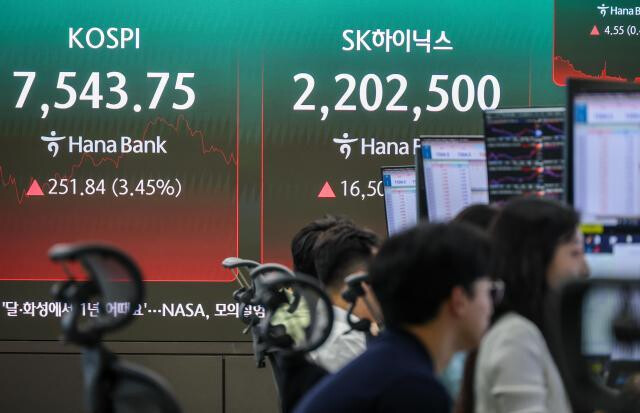
SEOUL — South Korea’s newly implemented regulatory restrictions on single-stock leveraged and inverse exchange-traded funds (ETFs) have delivered an immediate and dramatic cooling effect on retail trading speculation. According to data released by the Korea Exchange (KRX) on Monday, trading value across 16 single-stock leveraged and inverse ETFs tied directly to tech giants Samsung Electronics and SK Hynix collapsed to approximately 1.2 trillion won ($875 million). This represents a staggering 90% plunge compared to the 12.4 trillion won recorded on July 30, the final trading day before financial regulators raised the mandatory base deposit requirement for retail investors from 10 million won to 30 million won.
The regulatory intervention, engineered by South Korean financial authorities to curb excessive retail speculation and safeguard individual investors from amplified market volatility, appears to have achieved its intended dampening effect in record time. Within just two trading days of implementation, total turnover across these highly leveraged instruments was slashed to less than one-tenth of pre-regulation levels, and less than half of the 3-trillion-won level observed on the first day of enforcement (July 31).
Sharp Liquidity Contraction Across Flagship Leveraged ETFs
The liquidity drain was widespread across all 16 tracked products, with not a single single-stock leverage or inverse ETF managing to clear the 1-trillion-won daily transaction threshold on Monday. Industry flagship products, which previously witnessed extraordinary trading frenzy driven by day-trading retail investors ("ants"), experienced dramatic declines in market activity.
The 'KODEX SK Hynix Single Stock Leverage ETF'—the largest single-stock leveraged fund in South Korea by net asset size—saw its daily trading turnover plummet to 422.6 billion won. Just two sessions prior, on July 30, the fund posted a massive trading value of 3.6 trillion won. Trading volume figures revealed an equally stark collapse: share turnover for the KODEX SK Hynix leverage fund plunged from 488.89 million shares on July 30 to 116.92 million shares on July 31, before sliding further to a mere 44 million shares on Monday.
Similarly, inverse products designed to bet against semiconductor performance felt a massive chill. The 'SOL SK Hynix Futures Single Stock Inverse 2X ETF', which recorded an extraordinary 5 trillion won in trading value on July 30 as bearish retail traders piled into downside hedges, plummeted to just 180.7 billion won on August 3.
Retail Investors Maintain Net Selling Stance Amid Underlying Market Crash
The regulatory tightening coincided with severe broader turmoil in South Korea's benchmark KOSPI index. On Monday, underlying semiconductor behemoths suffered steep selloffs: Samsung Electronics closed down 8.76%, while SK Hynix collapsed 8.79%. The sharp declines in the underlying equity prices amplified volatility across derivative products, causing 14 single-stock leverage ETFs to plummet between 13% and 18% in a single session.
Conversely, inverse products surged as semiconductor prices cratered. SK Hynix inverse ETFs soared by approximately 23%, while Samsung Electronics inverse funds gained around 12%. Despite these dramatic price swings, individual investors continued to exit their positions rather than double down.
Following a net-selling trend initiated on July 31, retail investors remained net sellers across key leverage and inverse products on Monday:
KODEX SK Hynix Single Stock Leverage: Net sold KRW 23.5 billion
SOL SK Hynix Futures Single Stock Inverse 2X: Net sold KRW 30.3 billion
KODEX Samsung Electronics Single Stock Leverage: Net sold KRW 13.6 billion
TIGER SK Hynix Single Stock Leverage: Net sold KRW 6.5 billion
In stark contrast, the top retail net-buy product among single-stock leveraged funds, 'PLUS Samsung Electronics Single Stock Leverage', recorded a negligible net inflow of just 200 million won.
Regulatory Objectives and Market Outlook
South Korea's financial oversight authorities instituted the tripled deposit mandate following growing concern over excessive market concentration and systemic risk stemming from single-stock leveraged trading. With 'Sam-Jeon' (Samsung Electronics) and 'Nix' (SK Hynix) accounting for a dominant share of South Korea's total market capitalization, hyper-leveraged retail trading on these two tickers had threatened to amplify broader cash market volatility.
Market observers note that while trading volume has contracted sharply, the regulatory measure appears to have successfully contained retail exposure during a period of intense chip-sector turbulence. As capital requirements remain elevated at 30 million won, financial institutions expect single-stock leverage trading to remain subdued, shifting retail participation back toward diversified benchmark ETFs or primary equity holdings.
[Copyright (c) Global Economic Times. All Rights Reserved.]