![[등록] 2026-09-01 15:48:31](/support/_updata/banner2/tl181982910_6749.png)


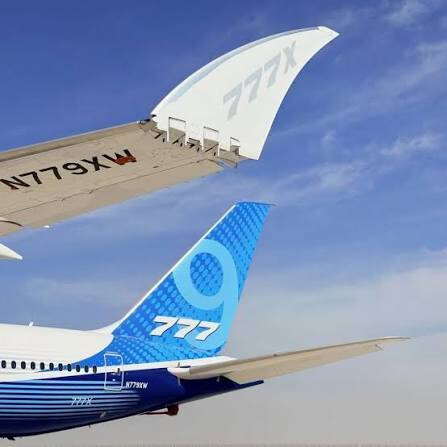
When passengers board long-haul international flights across the Pacific or the Atlantic, they frequently step onto a Boeing 777. While it lacks the double-deck architecture of the iconic Boeing 747 or the Airbus A380, its elongated, single-deck fuselage enables high-capacity transport for intercontinental routes. Building upon this legacy, Boeing developed its next-generation widebody aircraft, the 777X, designed to bring enhanced efficiency and passenger capacity to global airlines.
The Road to Certification and the Folding Wingtip Factor
Originally slated for commercial delivery starting around 2020, the 777X program experienced successive delays. Before a newly designed commercial aircraft can carry passengers, it must secure a Type Certification from the manufacturing nation’s aviation authority—proving that it has been designed and constructed to rigorous safety standards. The certification process for the 777X has been exceptionally thorough, largely due to a pioneering feature never before seen on a civil commercial airliner: folding wingtips.
Unlike conventional aircraft, the 777X features approximately 3.5 meters (11.5 feet) of each wingtip that folds upward by roughly 90 degrees when the aircraft is on the ground. Pilots unfold these "folding wingtips" immediately prior to takeoff and retract them after landing.
Addressing Regulatory and Technical Concerns
Because folding wingtips represent uncharted territory in commercial aviation, they naturally drew intense scrutiny from the U.S. Federal Aviation Administration (FAA) and the European Union Aviation Safety Agency (EASA). Regulators raised critical safety questions: Could the wingtips accidentally fold or structural components fail during high-speed flight? What operational disruptions might occur if the mechanism failed to deploy or retract properly?
To satisfy regulatory authorities, Boeing engineered robust structural safeguards and rigorous performance criteria. The mechanism is designed to withstand hurricane-force crosswinds of up to 120 km/h (approximately 82 knots) while remaining fully operable. Furthermore, the aircraft is equipped with automated interlock systems that prevent takeoff if the wingtips are not fully extended and locked into place. Boeing also integrated intuitive visual indicators into the flight deck, allowing pilots to monitor the exact operational status of the wingtips at a glance.
Boeing representatives have repeatedly emphasized that the folding wingtips function much like standard high-lift devices or control surfaces already proven across decades of aviation. Extensive testing has demonstrated that the structural integrity of the composite wings meets or exceeds all safety parameters.
The Strategic Purpose: Solving the Airport Compatibility Dilemma
The primary motivation behind this complex engineering feat comes down to airport infrastructure compatibility and aircraft classification. Commercial aircraft are categorized into "aerodrome reference codes" based on their wingspan. The largest category, Code F, includes mega-jets like the Boeing 747-8 and the Airbus A380. However, Code F aircraft face severe operational limitations, as many regional and medium-sized airports cannot accommodate their massive wingspans without extensive and costly infrastructure modifications—such as widening taxiways or expanding terminal gates.
By implementing folding wingtips, Boeing engineered the 777X to stretch its massive wingspan to maximize aerodynamic efficiency and lift during flight, yet shrink its footprint while on the ground. With the wingtips folded, the aircraft falls into the smaller Code E classification—the same category as the existing Boeing 777 fleet. This clever geometric adaptation allows the 777X to utilize standard airport gates and taxiways worldwide without requiring billions of dollars in airport upgrades. Major global carriers, including Korean Air, plan to integrate this groundbreaking aircraft into their long-haul fleets.
Precedent and Future Outlook
While folding wingtips are entirely unprecedented in modern commercial aviation, the underlying concept is well-established in military aviation. Boeing draws on decades of extensive design experience with carrier-based naval aircraft—such as the F/A-18 Hornet featured in cinematic blockbusters like Top Gun: Maverick—which routinely rely on folding wings for aircraft carrier storage.
As flight testing advances and regulatory milestones are achieved, the aviation industry stands on the threshold of a new era in widebody design. The successful deployment of the 777X will soon allow passengers worldwide to witness wings that seamlessly transform from ground configuration to flight readiness, bridging the gap between massive aerodynamic scale and real-world airport infrastructure limits.
[Copyright (c) Global Economic Times. All Rights Reserved.]