![[등록] 2026-09-01 15:48:31](/support/_updata/banner2/tl181982910_6749.png)


(C) Good Authority
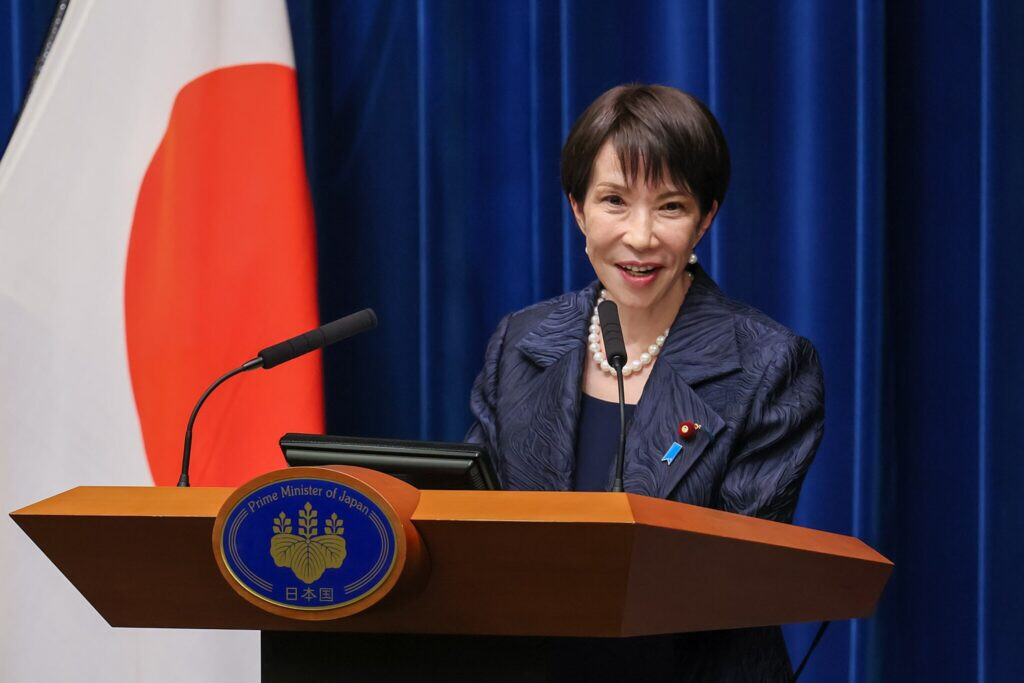
TOKYO – Prime Minister Sanae Takaichi on Wednesday sought to de-escalate diplomatic tensions following her controversial remarks regarding a potential Taiwan contingency, asserting that her comments do not represent a shift in Japan’s long-standing foreign policy.
Speaking at a press conference at the Prime Minister’s Official Residence to mark the end of the extraordinary Diet session, Takaichi addressed the international friction caused by her suggestion last month that Japanese military intervention in a Taiwan conflict could be legally justified.
Reaffirming the Status Quo
"My remarks do not change the Japanese government’s traditional position," Takaichi stated, referring to Japan’s "One China" policy and its constitutional limits on military force. "We will persistently explain this point to China and the international community at various levels."
The controversy stems from a November 7 parliamentary session where Takaichi noted that if a conflict involving Taiwan required the use of warships and kinetic force, it could be classified as an "existential crisis" for Japan. Under Japan’s 2015 security legislation, such a classification allows the Self-Defense Forces (SDF) to exercise the right of collective self-defense to support an ally, even if Japan itself is not under direct attack.
Beijing reacted sharply to the comments, viewing them as an interference in its internal affairs and a breach of the 1972 Japan-China Joint Communiqué. Despite Takaichi’s recent efforts to frame her words as consistent with existing laws, Chinese officials have maintained that a formal retraction is necessary for bilateral relations to normalize.
Balancing Deterrence and Dialogue
When asked whether she would prioritize compromise to maintain stability or risk friction by asserting Japan’s national interests, Takaichi avoided a binary choice, emphasizing the "importance of communication."
"Japan is always open to various dialogues with China; we do not close doors," she said. "We will continue to communicate while responding appropriately from the perspective of our national interests, despite existing security concerns, including economic security."
She also addressed Beijing’s recent travel warnings regarding Japan, which have impacted the tourism sector. Takaichi downplayed the economic damage, noting a surge in domestic travel and pledging to diversify Japan's tourism appeal to attract visitors from other regions.
Strengthening Alliances: Korea and the U.S.
While relations with Beijing remain frosty, Takaichi highlighted significant progress in "shuttle diplomacy" with Seoul. She reaffirmed her commitment to a "future-oriented" relationship with South Korean President Lee Jae-myung, noting their recent meeting at the APEC summit in Gyeongju. Plans are currently being discussed for President Lee to visit Nara Prefecture—Takaichi’s hometown—early next year.
Regarding the United States, Takaichi dismissed concerns that Washington has been lukewarm in its support during recent Sino-Japanese spats. She touted a "new golden age" of the U.S.-Japan alliance under President-elect Donald Trump, claiming she has established a rapport that allows for direct telephone communication "at any time." She expressed hope for a formal summit with Trump as soon as schedules permit.
Domestic Agenda and Defense
Domestically, Takaichi remains focused on a "strong economy and strong defense." She indicated that her administration would accelerate the revision of Japan’s three key security documents by next year to facilitate a historic buildup of defense capabilities.
Despite pressure from some factions within the Liberal Democratic Party (LDP), Takaichi ruled out a snap election in the near future. "There is a mountain of work to do," she said, citing the need to tackle rising inflation and implement the recently passed supplementary budget as her top priorities.
[Copyright (c) Global Economic Times. All Rights Reserved.]