![[등록] 2026-09-01 15:48:31](/support/_updata/banner2/tl181982910_6749.png)


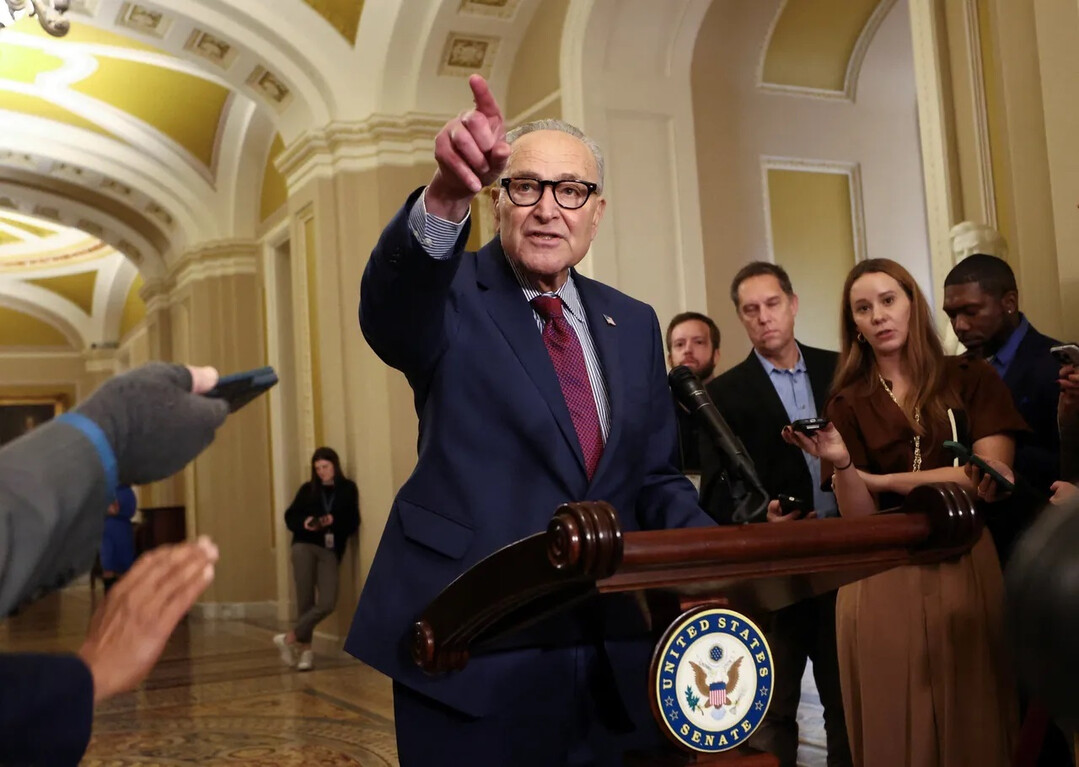
(C) TRT World
WASHINGTON D.C. — The legislative battle lines over American trade policy were drawn sharply this week as Senate Majority Leader Chuck Schumer (D-NY) declared that Democrats will aggressively block any attempt to extend President Donald Trump’s latest round of global tariffs once their statutory time limit expires.
The announcement sets the stage for a high-stakes constitutional and economic showdown this summer, as the White House attempts to bypass a recent Supreme Court defeat by pivoting to alternative executive authorities.
The Shift to Section 122
The current friction stems from a major legal setback for the Trump administration. Earlier this month, the U.S. Supreme Court ruled that the administration's "Reciprocal Tariffs" and "Fentanyl Tariffs"—originally levied under the International Emergency Economic Powers Act (IEEPA)—were an overreach of executive authority.
In an immediate countermove, President Trump invoked Section 122 of the Trade Act of 1974. This specific provision grants the President the power to impose temporary import surcharges of up to 15% to address "large and serious" balance-of-payments deficits. While the administration initially floated a 10% rate on February 20, the White House revised the figure upward to the maximum 15% just 24 hours later.
A Five-Month Countdown
Unlike other trade laws that grant the President broad, indefinite discretion, Section 122 comes with a strict "ticking clock." Under the law:
The President can unilaterally impose tariffs for a maximum of 150 days (approximately five months).
Any extension beyond this period requires explicit approval from Congress.
Senator Schumer made it clear via a statement on X (formerly Twitter) that the Democratic caucus has no intention of granting that approval. "Senate Democrats will block any attempt to extend Trump’s tariffs when they expire this summer," Schumer wrote, labeling the policy "Trump’s chaotic tariff regime."
Economic and Political Fallout
The debate over the tariffs is centered on who ultimately pays the price. While the White House argues that global tariffs protect domestic industry and reduce the trade deficit, critics argue the burden falls directly on the American consumer.
"These tariffs are a tax on the American people that will only increase the cost of living for families," Schumer added. "They have been rebuked by Democrats, Republicans, and even the Supreme Court."
Economists warn that a 15% blanket tariff could reignite inflationary pressures just as the Federal Reserve has begun to stabilize prices. Sectors such as electronics, automotive manufacturing, and retail are expected to be the hardest hit, as supply chains remain sensitive to sudden shifts in import costs.
The Road to Summer
As the 150-day window begins to close later this year, the Biden-aligned Democrats and some free-trade Republicans are expected to form a coalition to let the tariffs lapse. However, President Trump has remained defiant, suggesting that the tariffs are a necessary tool to force trading partners to the negotiating table.
The looming expiration sets up a volatile summer for the markets. If Congress refuses to extend the measure, the administration may be forced to seek yet another legal avenue or face a sudden reversal of its signature trade policy. For now, the "150-day clock" is the most watched timer in Washington.
[Copyright (c) Global Economic Times. All Rights Reserved.]