![[등록] 2026-09-01 15:48:31](/support/_updata/banner2/tl181982910_6749.png)


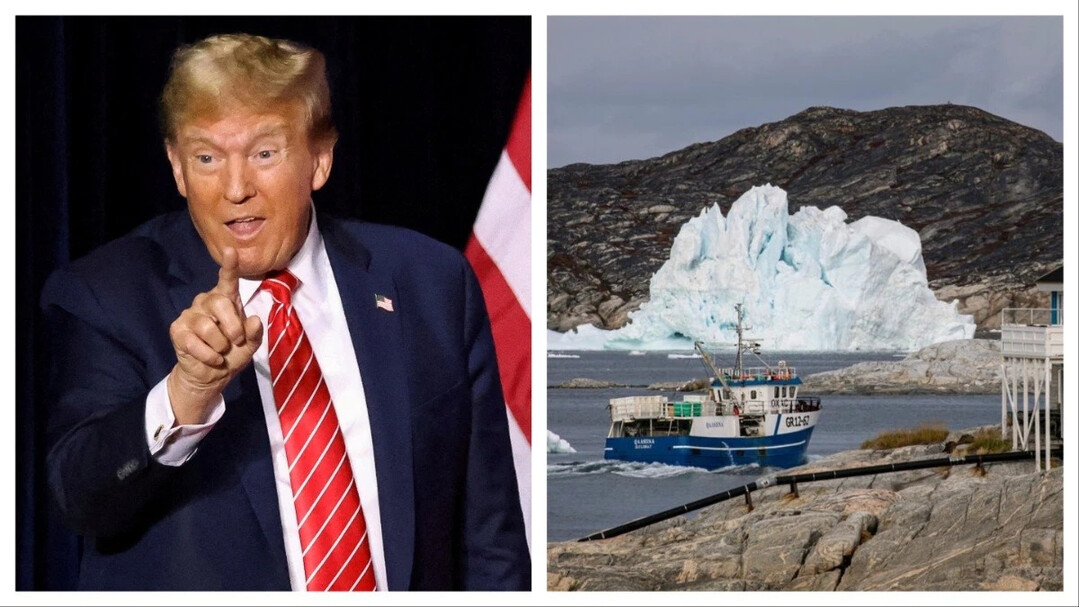
(C) India Today
WASHINGTON/NUUK – U.S. President Donald Trump has reaffirmed his administration's aggressive intent to acquire Greenland, designating it a matter of "supreme national security." The move has ignited a firestorm of diplomatic friction, pitting the United States against its NATO ally Denmark and the European Union.
Strategic Ambition vs. Sovereignty
On December 22, 2024, President Trump escalated the situation by appointing Louisiana Governor Jeff Landry as a special envoy for Greenland. Speaking from his Mar-a-Lago estate, Trump emphasized the island's strategic necessity, citing the encroaching presence of Russian and Chinese vessels along its coastline. "For the sake of national security, we must have it," Trump stated, framing the potential acquisition as a vital bulwark in the Arctic.
However, this ambition faces a wall of resistance. Greenland’s population of approximately 57,000 has overwhelmingly rejected the idea of becoming the 51st U.S. state. A March 2025 referendum saw an absolute majority of residents vote against U.S. incorporation, with local political leaders labeling the American approach "unacceptable."
Diplomatic and Military Friction
The Danish government has reacted with unprecedented severity. For the first time, Denmark’s intelligence services have classified the United States as a "potential security threat." In a display of European solidarity, the military forces of Denmark, Sweden, Norway, Germany, and France conducted joint exercises in Greenland this past September, aiming to underscore the territory’s alignment with EU interests.
Trump’s justification remains rooted in a "real estate" logic, arguing that Denmark is failing to fund Greenland’s defense adequately—a claim Copenhagen vehemently denies, pointing to billions of dollars in recent infrastructure and defense investments.
The Value of the "High North"
Greenland’s allure is driven by the climate crisis. As glaciers melt at record rates, vast deposits of rare earth minerals and fossil fuels—essential for the global energy transition—are becoming accessible. Furthermore, the opening of Arctic shipping routes promises to drastically shorten trade paths between North America, Europe, and Asia.
The island already hosts Pituffik Space Base (formerly Thule Air Base), a critical node for U.S. missile defense and space surveillance. Complete control would allow Washington to project unmatched air and naval power across the Arctic.
Legal and Historical Hurdles
While U.S. history is marked by territorial purchases—such as Alaska from Russia (1867) and the Virgin Islands from Denmark (1917)—modern international law heavily favors territorial integrity and self-determination. The 2009 Act on Greenland Self-Government explicitly grants the Greenlandic people the right to decide their own future, meaning Denmark lacks the legal authority to "sell" the territory without the residents' consent.
Experts suggest Trump may be banking on a scenario where Greenland first declares independence from Denmark before negotiating a compact of association with the U.S. Yet, the aggressive nature of Washington’s rhetoric has ironically slowed the independence movement, as residents fear a rapid exit from the Danish Crown might leave them vulnerable to American pressure.
As the geopolitical tug-of-war continues, the "Great Game" in the Arctic enters a volatile new chapter, with Greenland caught between its quest for autonomy and the strategic hunger of a superpower.
[Copyright (c) Global Economic Times. All Rights Reserved.]