• 2026.06.06 (Sat)
  • All articles
  • LOGIN
  • JOIN
Global Economic Times
fashionrunwayshow2026
  • Synthesis
  • World
  • Business
  • Industry
  • ICT
  • Distribution Economy
  • Well+Being
  • Travel
  • Eco-News
  • Education
  • Korean Wave News
  • Opinion
  • Arts&Culture
  • Sports
  • People & Life
    • International Student Report
    • With Ambassador
  • Column
    • Cho Kijo Column
    • Cherry Garden Story
    • Ko Yong-chul Column
    • Kim Seul-Ong Column
    • Lee Yeon-sil Column
  • Photo News
  • New Book Guide
MENU
 
Home > Synthesis

LH Faces Mounting Losses in Public Rental Housing

Global Economic Times Reporter / Updated : 2024-11-05 04:38:47
  • -
  • +
  • Print


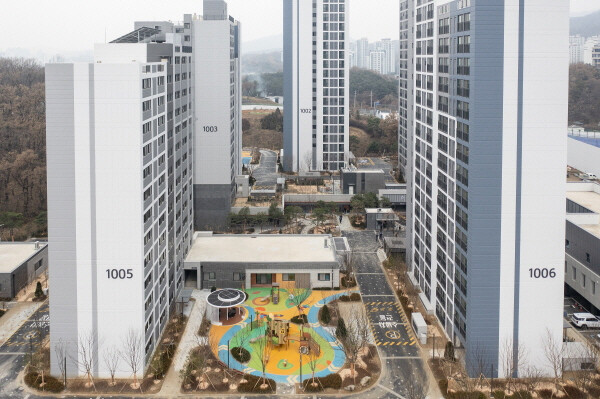
The Korea Land and Housing Corporation (LH) is incurring a staggering loss of 110 million won (approximately US$82,000) for each public rental housing unit it constructs, according to a recent study. Experts are calling for a substantial increase in government subsidies to ensure the sustainability of public rental housing programs.

A policy forum co-hosted by LH and Rep. Min Hong-cheol revealed a significant discrepancy between government subsidies and actual construction costs for integrated public rental housing. According to a study by Professor Jin Mi-yun of Myongji University's Graduate School of Real Estate, the government allocates 191 million won per unit for construction, while LH’s actual expenditure stands at 302 million won per unit.

The widening gap is primarily attributed to soaring land prices, inflation, and stricter regulations on transportation infrastructure. Consequently, the government's subsidy rate, which was 90.5% in 2016, plummeted to 62.2% last year.

LH has traditionally offset these losses through profits from land development. However, with large-scale land development projects becoming less feasible and the aging of existing public rental housing increasing maintenance costs, the corporation is facing financial strain. Raising rental fees for low-income tenants is not a viable solution.

"Public rental housing is inherently a debt-accumulating structure, but it also creates assets for the government," Professor Jin said. "Advocating for a reduction in public rental housing due to LH's debt would be overlooking the positive aspects of this program."

Experts argue that the government must increase its financial support to ensure the continued provision of affordable housing for low-income households.

[Copyright (c) Global Economic Times. All Rights Reserved.]

Global Economic Times Reporter
Reporter Page

Popular articles

  • Hyundai Motor Group Bets $700 Million on Mexico Amid Trade Policy Volatility

  • IRANIAN STATE MEDIA DEMONSTRATES ASSAULT RIFLES ON-AIR, TARGETING UAE FLAG AMID RISING REGIONAL PRESSURES

  • Tesla Model Y Becomes First to Pass Grueling New U.S. Autonomous Safety Tests

I like it
Share
  • Facebook
  • X
  • Kakaotalk
  • LINE
  • BAND
  • NAVER
  • https://globaleconomictimes.kr/article/1065555469779696 Copy URL copied.
Comments >

Comments 0

Weekly Hot Issue

  • Nvidia CEO Jensen Huang to Arrive in South Korea for "Sam-So" Meeting with Tech Tycoons
  • Samsung Electronics Super-Enterprise Union Loses Majority Status Amid Backlash Over Bonus Disparities
  • Samsung to Embed Vital Signs and Heart Health Scores in Upcoming Galaxy Watch9 Lineup
  • Apple Honors Digital Excellence: 12 Exceptional Apps and Games Celebrated at the 2026 Design Awards
  • Nexon Revamps Signature Youth Coding Competition into AI-Driven 'Nexon Young Programmers Cup'
  • Tech University of Korea Gathers 200 Game and AI Researchers to Discuss Industrial Expansion

Most Viewed

1
From a moment of collective sacrifice to a moment of collective democracy: The Timing of the Election in Ethiopia and Korea
2
U.S. Holds Off on Immediate Comprehensive Semiconductor Tariffs, but Pressure Mounts for Samsung and SK Hynix to Accelerate Domestic Investments
3
[Interview] "Halal is Not a Religious Regulation, but a 'Trust Infrastructure'… Creating a Premium 'K-Halal' Centered on Data and Platforms"
4
‘600 Million Won Bonus’ at Samsung Electronics Triggers Deep Sense of Relative Deprivation Among Korean Workers
5
Musk’s SpaceX Secures Space Hegemony with Flawless Starship V3 Recovery Ahead of Historic IPO
광고문의
임시1
임시3
임시2

Hot Issue

Murata Unveils Next-Gen Resin Electrode MLCC for Automotive Applications

Samsung to Embed Vital Signs and Heart Health Scores in Upcoming Galaxy Watch9 Lineup

L&F Plus Secures KRW 220 Billion from National Growth Fund to Anchor South Korea’s First Mass LFP Cathode Production

Samsung Electronics Super-Enterprise Union Loses Majority Status Amid Backlash Over Bonus Disparities

Fashion Runway Show 2026

Global Economic Times
korocamia@naver.com
CEO : LEE YEON-SIL
Publisher : KO YONG-CHUL
Registration number : Seoul, A55681
Registration Date : 2024-10-24
Youth Protection Manager: KO YONG-CHUL
Singapore Headquarters
5A Woodlands Road #11-34 The Tennery. S'677728
Korean Branch
Phone : +82(0)10 4724 5264
#304, 6 Nonhyeon-ro 111-gil, Gangnam-gu, Seoul
Copyright © Global Economic Times All Rights Reserved
  • 에이펙2025
  • APEC2025가이드북TV
  • 반달곰 프로젝트
Search
Category
  • All articles
  • Synthesis
  • World
  • Business
  • Industry
  • ICT
  • Distribution Economy
  • Well+Being
  • Travel
  • Eco-News
  • Education
  • Korean Wave News
  • Opinion
  • Arts&Culture
  • Sports
  • People & Life 
    • 전체
    • International Student Report
    • With Ambassador
  • Column 
    • 전체
    • Cho Kijo Column
    • Cherry Garden Story
    • Ko Yong-chul Column
    • Kim Seul-Ong Column
    • Lee Yeon-sil Column
  • Photo News
  • New Book Guide
  • Multicultural News
  • Jobs & Workers