• 2026.01.08 (Thu)
  • All articles
  • LOGIN
  • JOIN
Global Economic Times
APEC2025KOREA가이드북
  • Synthesis
  • World
  • Business
  • Industry
  • ICT
  • Distribution Economy
  • Well+Being
  • Travel
  • Eco-News
  • Education
  • Korean Wave News
  • Opinion
  • Arts&Culture
  • Sports
  • People & Life
  • Column
    • Cho Kijo Column
    • Lee Yeon-sil Column
    • Ko Yong-chul Column
    • Cherry Garden Story
  • Photo News
  • New Book Guide
MENU
 
Home > Distribution Economy

Conflict Brews Over Ilsan Bridge Toll-Free Initiative: Gyeonggi Pushes Forward While Incheon Hesitates

Global Economic Times Reporter / Updated : 2026-01-06 04:14:23
  • -
  • +
  • Print


(C) Gyeonggi Province

GOYANG/INCHEON — A long-standing tug-of-war over the toll fees of Ilsan Bridge, the only paid crossing over the Han River, has entered a new phase of regional friction. While Gyeonggi Province and its northern municipalities are accelerating plans for a "complete toll-free" experience, neighboring Incheon Metropolitan City remains cautious, raising concerns that its residents might be excluded from future benefits.

A Half-Price Milestone
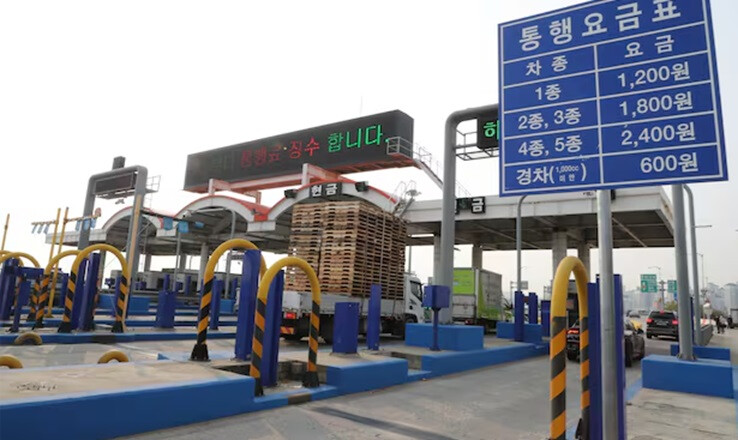
As of January 1, 2026, Gyeonggi Province officially slashed toll fees for Ilsan Bridge by 50%. Standard passenger cars, which previously paid 1,200 KRW, now pay 600 KRW. This move, funded by a 20-billion-won provincial budget, currently applies to all motorists regardless of their residency.

The bridge, a 1.8km privately funded link between Gimpo and Goyang, has been a focal point of public outcry for years. Critics argue the tolls are excessively high—over ten times more expensive per kilometer than national expressways—placing an unfair burden on residents of Gimpo, Goyang, and Paju.

The Roadmap to Zero Tolls
Gyeonggi Province’s ultimate goal is a 100% toll-free system. To achieve this, the province is seeking national government funding and financial cooperation from the three most affected cities: Gimpo, Goyang, and Paju.

Gimpo City has already taken a proactive step, securing 750 million KRW for the first quarter of 2026. The city plans to establish a tracking system by the first half of the year to reimburse the remaining 50% of toll costs for its residents during commuting hours. Paju is also in active negotiations with Gyeonggi Province to follow suit.

The "Incheon Dilemma"
However, this localized funding model creates a potential "benefit gap." If the final 50% of the toll is covered only by participating municipalities, Incheon residents—particularly those in the Geomdan and Bullo-daegok districts who share the same living zone—could be the only ones still paying.

Data suggests that while Gimpo (42%), Goyang (23%), and Paju (15%) make up the bulk of traffic, motorists from Incheon and Seoul account for roughly 20%. Experts estimate Incheon’s share alone is between 10% and 15%. This figure is expected to rise significantly once the Incheon section of State-Funded Local Road No. 98 opens in December 2027.

Legal and Financial Hurdles
Incheon Metropolitan City has expressed reservations about contributing funds. "There is no legal basis for us to provide financial support to an infrastructure project located in a different administrative jurisdiction," stated an official from Incheon’s Road Department. The city also cited concerns over equity, noting that it already manages its own toll issues with the Incheon and Yeongjong Bridges.

Incheon residents, however, are ramping up pressure on local politicians. "This isn't about subsidizing Gyeonggi Province; it's about Incheon City supporting its own citizens who are forced to use this bridge due to geographical proximity," said Ahn Dong-hyuk, Secretary General of the Bullo-Daegok Residents Association.

The Path Forward
The dispute mirrors the 2021 legal battle when Gyeonggi Province attempted to revoke the private operator’s right to collect tolls, a move that was eventually blocked by the courts. Now, by using a budget-sharing model rather than legal force, Gyeonggi hopes to bypass previous hurdles. Whether Incheon will eventually join the coalition or leave its northern residents to foot the bill remains the critical question for 2026.

[Copyright (c) Global Economic Times. All Rights Reserved.]

  • #Globaleconomictimes
  • #Korea
  • #Seoul
  • #Samsung
  • #LG
  • #Bitcoin
  • #Meta
  • #Business
  • #Economic
  • #The Woori Bank
  • #Elon Musk
  • #C
Global Economic Times Reporter
Reporter Page

Popular articles

  • South Korea Launches $115 Million Export Voucher Program to Boost SME Global Reach

  • The Siege of Merit: MIT Stands as a Bulwark Against Federal Encroachment

  • South Korea's Foreign Workforce Hits 1.1 Million Milestone

I like it
Share
  • Facebook
  • X
  • Kakaotalk
  • LINE
  • BAND
  • NAVER
  • https://globaleconomictimes.kr/article/1065553923648813 Copy URL copied.
Comments >

Comments 0

Weekly Hot Issue

  • ROK Air Force to Recruit High Schoolers as "Pre-NCO Candidates" to Combat Personnel Shortage
  • Hyundai’s ‘Physical AI’ Metamorphosis: Chung Euisun Leads 130 Executives to CES 2026
  • U.S. To Open Floodgates for Venezuelan Crude; Commodity Markets Braced for "Rebalancing Shock"
  • Samsung Electronics Rewrites History: Quarterly Operating Profit Hits 20 Trillion Won Amid "AI Super-Cycle"
  • Crisis of Credibility: South Korea’s Human Rights Commission Paralized by Political Strife and Internal Scandals
  • The Great Resource War: Japan Scrambles for Survival Amid China’s Rare Earth "Chokehold"

Most Viewed

1
KOTRA Signs KRW 500 Billion G2G Export Contract for 'Chunmoo' with Estonia
2
The Era of Private Space Stations: Voyager, Airbus, and Mitsubishi Join Forces for 'Starlab'
3
Samsung Electronics Signals Comeback in Robot Vacuum Market, Overtaking Chinese Rival Roborock in Online Buzz
4
Musk’s Ambition for ‘AI Compute Dominance’: Securing the World’s Most Powerful Infrastructure
5
S. Korean Insurers to Raise Auto Insurance Premiums by 1% Amid Ballooning Deficits
광고문의
임시1
임시3
임시2

Hot Issue

The Great Tech Shift: China’s Dominance at CES 2026 Leaves Global Rivals in the Dust

The Algorithmic Abyss: How Digital Echo Chambers are Fracturing Modern Politics

SpaceX IPO Looms: Strategies and Cautionary Tales for Retail Investors

South Korean Rebar Defies 50% Tariffs: A Strategic Pivot to the U.S. Amid Domestic Stagnation

Let’s recycle the old blankets in Jeju Island’s closet instead of incinerating them.

Global Economic Times
korocamia@naver.com
CEO : LEE YEON-SIL
Publisher : KO YONG-CHUL
Registration number : Seoul, A55681
Registration Date : 2024-10-24
Youth Protection Manager: KO YONG-CHUL
Singapore Headquarters
5A Woodlands Road #11-34 The Tennery. S'677728
Korean Branch
Phone : +82(0)10 4724 5264
#304, 6 Nonhyeon-ro 111-gil, Gangnam-gu, Seoul
Copyright © Global Economic Times All Rights Reserved
  • 에이펙2025
  • APEC2025가이드북TV
  • 독도는우리땅
Search
Category
  • All articles
  • Synthesis
  • World
  • Business
  • Industry
  • ICT
  • Distribution Economy
  • Well+Being
  • Travel
  • Eco-News
  • Education
  • Korean Wave News
  • Opinion
  • Arts&Culture
  • Sports
  • People & Life
  • Column 
    • 전체
    • Cho Kijo Column
    • Lee Yeon-sil Column
    • Ko Yong-chul Column
    • Cherry Garden Story
  • Photo News
  • New Book Guide
  • Multicultural News
  • Jobs & Workers