• 2025.12.29 (Mon)
  • All articles
  • LOGIN
  • JOIN
Global Economic Times
APEC2025KOREA가이드북
  • Synthesis
  • World
  • Business
  • Industry
  • ICT
  • Distribution Economy
  • Well+Being
  • Travel
  • Eco-News
  • Education
  • Korean Wave News
  • Opinion
  • Arts&Culture
  • Sports
  • People & Life
  • Column
    • Cho Kijo Column
    • Lee Yeon-sil Column
    • Ko Yong-chul Column
    • Cherry Garden Story
  • Photo News
  • New Book Guide
MENU
 
Home > Distribution Economy

"Cashless Society" Accelerates: Monthly Cash Spending Drops to 320,000 Won

KO YONG-CHUL Reporter / Updated : 2025-12-29 03:42:52
  • -
  • +
  • Print

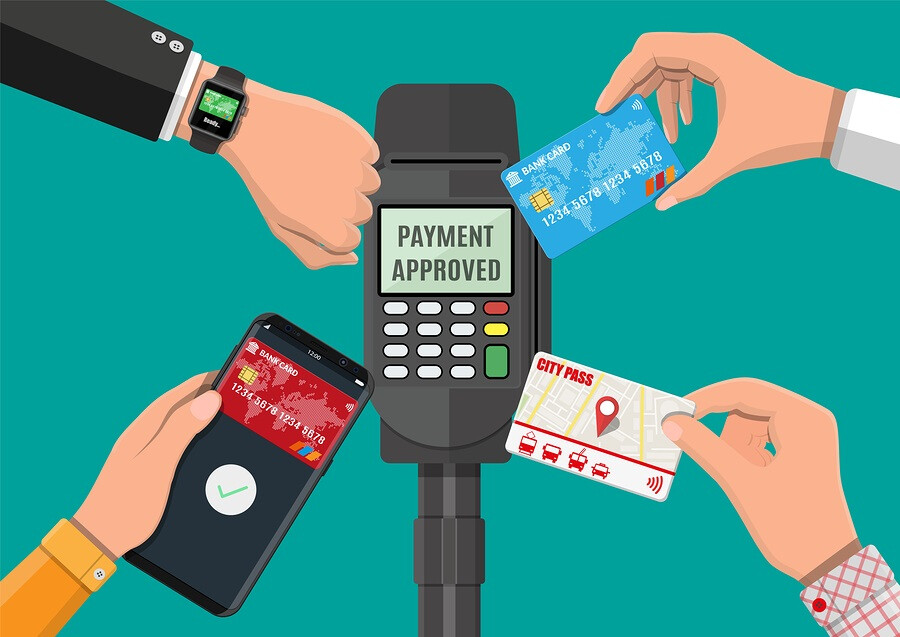
(C) Inside Small Business

SEOUL — While the transition toward a "cashless society" is picking up pace in South Korea, a paradoxical trend is emerging: people are spending less cash but holding onto more of it for emergencies.

According to the "2025 Survey on Currency Usage by Economic Entities" released by the Bank of Korea (BOK) on the 28th, the average monthly cash expenditure per individual stood at 324,000 KRW. This marks a sharp 36% decline from the 506,000 KRW recorded in 2021. Cash now accounts for only 17.4% of total monthly spending, down from 21.6% four years ago.

The "Cash Paradox": Spending Less, Hoarding More

Despite the decline in daily transactions, the amount of cash kept in wallets and safes has surged. The average "transactional cash" held by individuals rose to 103,000 KRW, a 25.6% increase from 2021. More notably, "precautionary cash"—money kept for emergencies—jumped by 52.8% to an average of 541,000 KRW per person.

The corporate sector showed an even more dramatic shift. While average monthly cash spending by businesses plummeted from 9.11 million KRW to 1.12 million KRW, their cash holdings nearly doubled to 9.77 million KRW. Roughly 36% of companies cited "securing liquidity for emergencies" as their primary reason for holding cash.

A Growing Digital Divide

The shift away from cash is not uniform across all demographics. The survey highlighted a persistent reliance on paper money among vulnerable groups. Cash usage remains high for those in their 70s and older (32.4%) and for households with a monthly income under 1 million KRW (59.4%).

Public Skepticism Remains

Public sentiment regarding a fully cashless society remains wary. Approximately 45.8% of individuals expressed opposition to the transition, significantly outnumbering those in favor (17.7%). The primary concern cited by 39.1% of respondents was the "transaction difficulties faced by the financially underprivileged," such as the elderly who may struggle with digital payment systems.

"Economic uncertainty and interest rate fluctuations are heavily influencing the public's demand for physical cash," a BOK official stated. "While the convenience of digital payments is undeniable, the role of cash as a safe-haven asset remains strong."

[Copyright (c) Global Economic Times. All Rights Reserved.]

  • #Globaleconomictimes
  • #Korea
  • #Seoul
  • #Samsung
  • #LG
  • #Bitcoin
  • #Meta
  • #Business
  • #Economic
  • #The Woori Bank
  • #Elon Musk
KO YONG-CHUL Reporter
Reporter Page

Popular articles

  • K-Consumables Pop-up Strategy Targets Central Japan Distribution Hub, K-Beauty Popularity Spreading

  • Moon Jun-hyuk: A 20-Year Journey to the 'Stage of Dreams' – "I Want to Be a Golfer of Hope like Choi Kyoung-ju"

  • Return Home After a Long Wait… 82 Sakhalin Koreans Return for Permanent Settlement via Donghae Port

I like it
Share
  • Facebook
  • X
  • Kakaotalk
  • LINE
  • BAND
  • NAVER
  • https://globaleconomictimes.kr/article/1065552008634226 Copy URL copied.
Comments >

Comments 0

Weekly Hot Issue

  • Musk’s Ambition for ‘AI Compute Dominance’: Securing the World’s Most Powerful Infrastructure
  • 'Digital Border' Rises: South Koreans Rush to Erase Social Media Ahead of U.S. Visits
  • 'Culinary Class Wars 2' Returns: Less Novelty, More Sophisticated 'Flavor'
  • South Korean Gas Prices Dip for Third Straight Week; Downward Trend Expected to Continue
  • New Food Trends: From Creamy Fusion Noodles to Traditional Korean Pickles
  • Energy Giant Samchully Acquires 'Sunggyung Food' for 120 Billion Won to Boost Food Business

Most Viewed

1
K-Consumables Pop-up Strategy Targets Central Japan Distribution Hub, K-Beauty Popularity Spreading
2
GS25 Retains Operating Rights for "Gold Mine" Convenience Stores at Jamsil Baseball Stadium
3
Moon Jun-hyuk: A 20-Year Journey to the 'Stage of Dreams' – "I Want to Be a Golfer of Hope like Choi Kyoung-ju"
4
10th Cheonan World Christmas Festival Opens, Runs Until Dec. 25
5
Return Home After a Long Wait… 82 Sakhalin Koreans Return for Permanent Settlement via Donghae Port
광고문의
임시1
임시3
임시2

Hot Issue

Musk’s Ambition for ‘AI Compute Dominance’: Securing the World’s Most Powerful Infrastructure

Samsung Electronics Signals Comeback in Robot Vacuum Market, Overtaking Chinese Rival Roborock in Online Buzz

HD Hyundai Heavy Industries Nears 20-Vessel Export Milestone with Philippine Corvette Deal

Coupang Faces Intense Backlash Over ‘Self-Investigation’ Into Massive Data Leak

Let’s recycle the old blankets in Jeju Island’s closet instead of incinerating them.

Global Economic Times
korocamia@naver.com
CEO : LEE YEON-SIL
Publisher : KO YONG-CHUL
Registration number : Seoul, A55681
Registration Date : 2024-10-24
Youth Protection Manager: KO YONG-CHUL
Singapore Headquarters
5A Woodlands Road #11-34 The Tennery. S'677728
Korean Branch
Phone : +82(0)10 4724 5264
#304, 6 Nonhyeon-ro 111-gil, Gangnam-gu, Seoul
Copyright © Global Economic Times All Rights Reserved
  • 에이펙2025
  • APEC2025가이드북TV
  • 독도는우리땅
Search
Category
  • All articles
  • Synthesis
  • World
  • Business
  • Industry
  • ICT
  • Distribution Economy
  • Well+Being
  • Travel
  • Eco-News
  • Education
  • Korean Wave News
  • Opinion
  • Arts&Culture
  • Sports
  • People & Life
  • Column 
    • 전체
    • Cho Kijo Column
    • Lee Yeon-sil Column
    • Ko Yong-chul Column
    • Cherry Garden Story
  • Photo News
  • New Book Guide
  • Multicultural News
  • Jobs & Workers