![[등록] 2026-09-01 15:48:31](/support/_updata/banner2/tl181982910_6749.png)


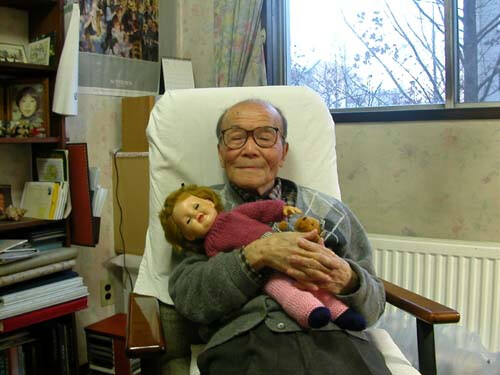
(C) Korean Writers Association, American Branch
The late Pi Chon-deuk (1910–2007), a towering figure in Korean lyrical prose, has long been synonymous with the tender, paternal love depicted in his famous essay Seo-young. However, a newly released collection of his works offers a rare glimpse into a different side of the master: a father offering stern yet affectionate practical advice to his son.
The essay collection titled We Parted Without Even a Handshake, published by Minumsa on December 12, has garnered significant attention for featuring seven previously unreleased letters. These letters were sent during the 1970s to his eldest son, Dr. Pi Su-young, who was then working as a neonatologist at the Duluth Clinic in Minnesota, USA.
In these letters, the refined, poetic language of Pi’s famous essays is replaced by the raw, mundane concerns of a worried father. "Never buy a car," and "Don't eat out; save your money," he urged in a 1976 letter. Yet, revealing the universal nature of parenthood, his stern "don'ts" softened into "be careful while driving" just a year later, once he realized his son had bought a vehicle. These snippets of daily life reflect a philosophy of temperance and frugality that underpinned his literary world.
The publication is also a milestone in Korean literary history. For the first time, a collection of Korean essays has been included in Minumsa’s prestigious World Literature Series. Previously, the series had included Kim Soo-young’s literary criticism, but Pi's inclusion marks a recognition of the Korean essay as a universal literary form. Park Hye-jin, the editor behind the project, noted that Pi’s prose captures the "birth of the individual"—a core tenet of modern literature—within a uniquely Korean context.
Dr. Pi Su-young, who later returned to Korea to establish the nation’s first neonatal intensive care system at Asan Medical Center, recalls his father with deep fondness. Despite the legendary affection showered upon his sister Seo-young, Dr. Pi remarked during a recent interview, "I received more than enough love myself; I have no complaints." Their bond was so strong that during his years in the U.S., Dr. Pi reportedly spent over $500 of his $800 monthly salary on international calls to his father.
This new collection, which also includes timeless masterpieces like A Silver Coin and Asako, allows readers to rediscover Pi Chon-deuk not just as a "master of small things," but as a father whose life and literature were deeply intertwined with the virtues of sincerity and restraint. As his tombstone reads, "Life is beautiful because of small encounters," these letters serve as a testament to the small, everyday moments of love that defined one of Korea’s most beloved writers.
[Copyright (c) Global Economic Times. All Rights Reserved.]