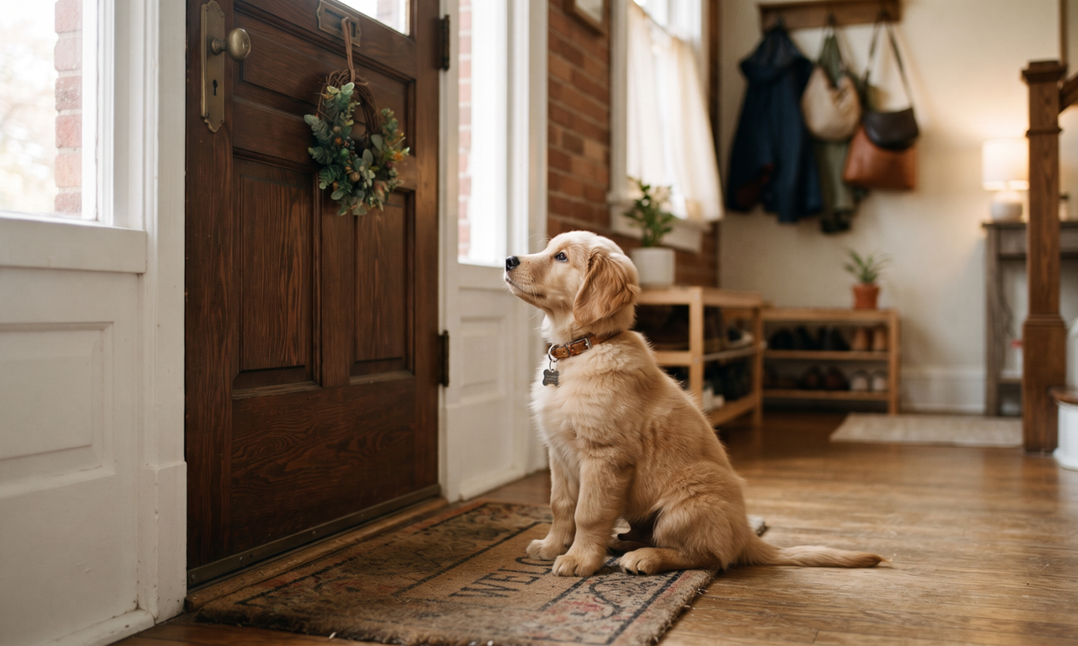
Have you ever wondered how your dog always seems to know the exact moment you are coming home, long before you unlock the door? For many pet owners, walking into the house to find a dog already sitting faithfully by the entryway is a daily ritual. While it might feel like magic, canine behavior experts point out that dogs rely on a sophisticated combination of sensory perception and routine learning to anticipate their owners' return.
Decoding the Clock Inside a Dog’s Mind
Dogs do not read time on a clock, but they are masters of temporal patterns. When an owner maintains a steady daily schedule—leaving in the morning and returning at a predictable evening hour—the dog internalizes this rhythm. Over time, the animal connects the fading of the daylight or the general flow of the household to the owner's impending arrival.
Other human activities in the home also act as vital markers. If family members routinely start cooking dinner at a certain hour or turn on the evening news, dogs pick up on these contextual clues. Furthermore, acute senses play a major role. A dog’s hearing is sharp enough to recognize specific auditory triggers from afar, such as the familiar rumble of a car in the driveway, an elevator bell ringing, or footsteps echoing in a hallway.
Olfactory cues are equally powerful. Research into canine cognition indicates that as an owner spends hours away from home, their distinct scent lingering indoors gradually dissipates. Dogs monitor these microscopic changes in odor concentration, using them as a natural timer to gauge how many hours have passed since their owner left.
Why the Front Door Becomes Command Central
The choice of location—almost always right at the front door—is strategic. The entryway is the primary hub where outside air, sounds, and lingering traces of the owner converge first. By stationing themselves there, dogs maximize their chances of being the first to react when their human finally arrives.
For many pets, the threshold also serves as a comfort zone. Because the entryway carries a heavy concentration of the family's scent, anxious dogs may gravitate toward it to seek reassurance. However, behaviorists caution that persistent door-waiting is not always simple affection. If a dog lingers excessively or displays signs of distress—such as continuous whining, scratching, or drooling—it may point toward underlying separation anxiety rather than standard anticipation.
Managing Expectations for an Anxious Pet
While predictable schedules make life easy for a dog, erratic work hours or frequent travel can introduce considerable stress. When an owner's schedule fluctuates wildly, a dog loses its sense of predictability, often leading to heightened nervousness.
To help pets cope with unpredictable routines, experts recommend keeping departure and arrival behaviors low-key. Dramatic greetings or high-energy entries can over-stimulate an anxious animal. Instead, owners are advised to enter quietly, allow the dog to settle down independently, and greet them only after calm has been restored. Providing interactive puzzle toys or engaging in nose-work before leaving can also help pass the time and keep boredom at bay.
Ultimately, a dog waiting by the door is a testament to deep loyalty and remarkable cognitive adaptation. By understanding how daily habits and environmental cues shape a pet's emotional well-being, owners can foster a more secure, relaxed environment for their furry companions.
[Copyright (c) Global Economic Times. All Rights Reserved.]