As late autumn paints the Korean countryside in shades of gold and amber, wanderers often find themselves drawn to forgotten country stations. These quiet relics, standing resiliently against the passage of time, carry a melancholic charm that mirrors the season. Visiting an old station feels much like uncovering a pressed autumn leaf between the pages of a forgotten book—fragile and weathered, yet preserving the vibrant hues of a bygone era.
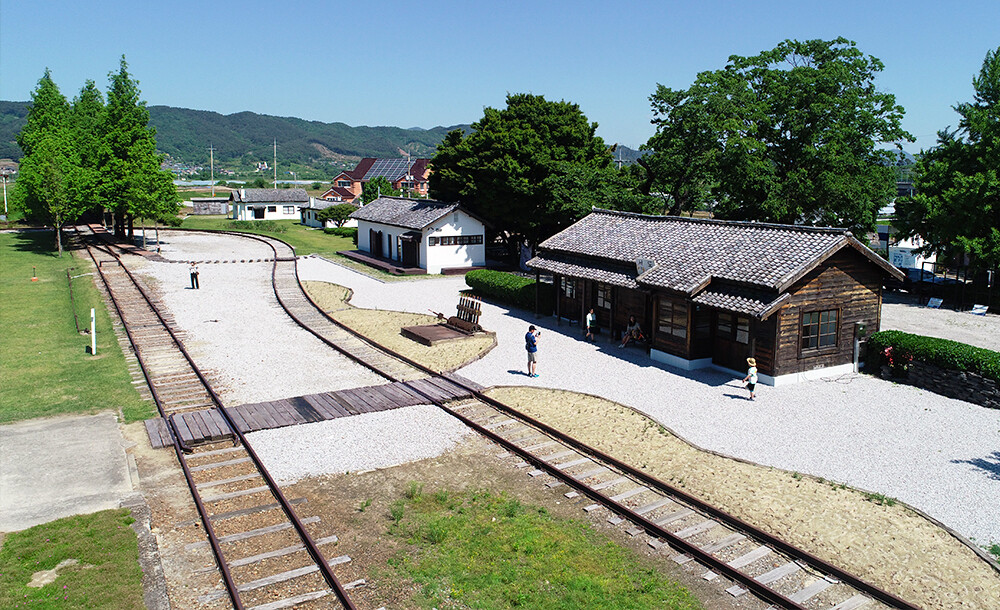
Tucked away in Jeollabuk-do’s Namwon city lies a destination that captures this late-autumn romanticism better than most: the historic Old Seodo Station in Samae-myeon. Recognized as South Korea’s oldest wooden abandoned railway station, this 100-year-old landmark transports visitors straight back to the early 20th century with its weathered brown timber architecture and rustic tracks. Its evocative scenery has earned it fame not only among literature enthusiasts—as the primary setting of Choi Myung-hee’s monumental historical novel Honbul—but also as a premier filming location for celebrated media projects like the television drama Mr. Sunshine and the biographical film Dongju.
Upon arriving at Seochon Village, visitors are greeted by an arching, centuries-old cherry tree standing sentinel at the entrance of the station complex. Beyond the tree rests a modest, single-story wooden building, its dark, time-worn siding telling tales of decades gone by.
The station’s exterior offers a masterclass in colonial-era Japanese railway architecture, characterized by its traditional gable-style tiled roof and horizontal wooden board siding—a rare architectural configuration among surviving stations from that period. Stepping closer, visitors can still spot the weathered station sign featuring both Hangeul and Chinese characters, alongside the sheltered double-layered tiled awnings designed to protect waiting passengers from the elements.
Originally established in 1932 during the Japanese colonial occupation along the Jeolla railway line, Seodo Station carries a complex heritage intertwined with regional commerce and historical hardship. Local octogenarian resident Lee Jeong-lee recalls when the area, once known as Yeokchon (Station Village), thrived as a bustling hub. Travelers from neighboring counties like Imsil and Sunchang would converge here, supporting a vibrant local economy filled with traditional inns, taverns, and marketplaces.
Though the station faced potential demolition following the 2002 relocation of the Jeolla Line, a collaborative preservation effort by local residents and the Namwon city government saved the structure, transforming it into a protected cultural heritage and filming site.
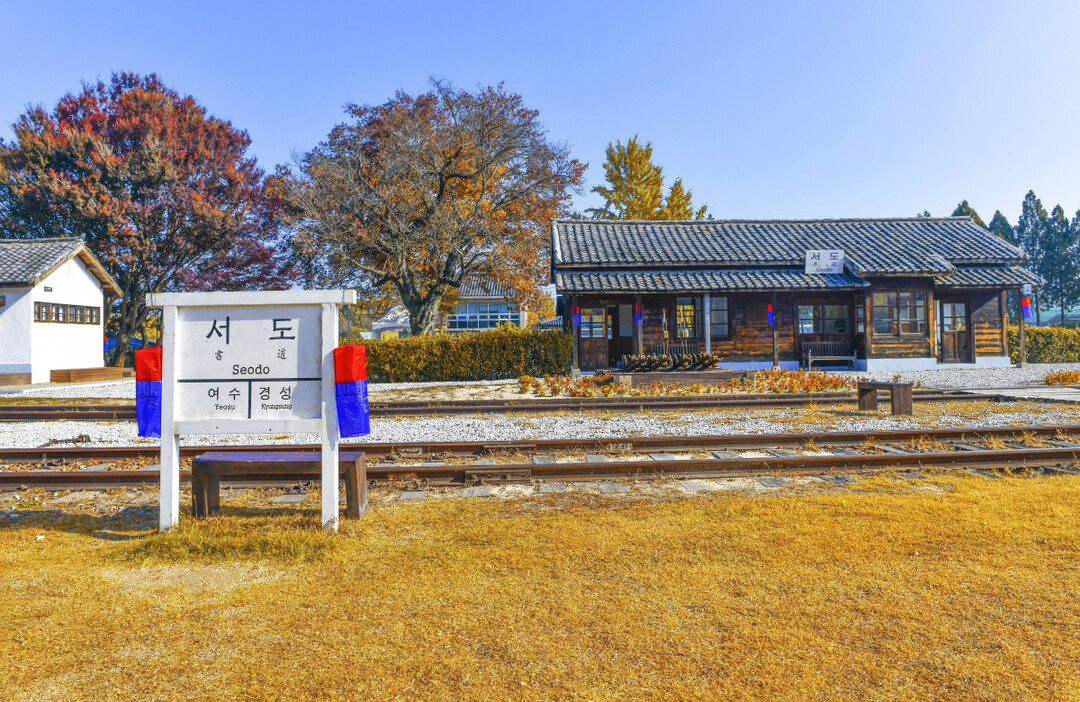
Inside, the station’s waiting room remains frozen in time. Long wooden benches line the walls, while a vintage wooden ticket window features an old chalkboard detailing past departure schedules. Just outside, the rusted rails are flanked by towering metasequoia trees that ignite in brilliant shades of red during late autumn. It was right at this very railway crossing that directors filmed iconic, sweeping scenes for Mr. Sunshine.
Exploring further down the tracks reveals more tactile fragments of history, including a manual iron track switch used by past railway workers to redirect trains by hand. Nearby stands the former station master’s official residence, constructed in a traditional Japanese architectural style complete with tatami mats—famously featured as the lodging of poet Yun Dong-ju in the film Dongju. Other surrounding staff quarters have been thoughtfully repurposed into cozy rest spaces like "Seodomaru" for modern travelers.
A short walk across the tracks leads visitors to Nobong Village, the thematic heartland of Honbul, which chronicles the trials and triumphs of three generations of an aristocratic Namwon family. Here, the traditional hanok-styled Honbul Literary House celebrates the novel, which famously opens with the protagonist arriving at the fictional "Maean Station"—modeled directly after Seodo. Every autumn, the village comes alive with the annual Honbul Literature Festival, reenacting historical bridal processions down the old station paths.
Although locomotives no longer rumble down these tracks, Seodo Station remains far from silent. It continues to resonate with echoes of the past, whispering stories of hardship, romance, departure, and reunion to every traveler who walks its wooden platforms. Like a well-preserved leaf tucked into a favorite anthology, Seodo Station stands timeless, growing more breathtakingly poetic with every passing year.
[Copyright (c) Global Economic Times. All Rights Reserved.]