![[등록] 2026-09-01 15:48:31](/support/_updata/banner2/tl181982910_6749.png)


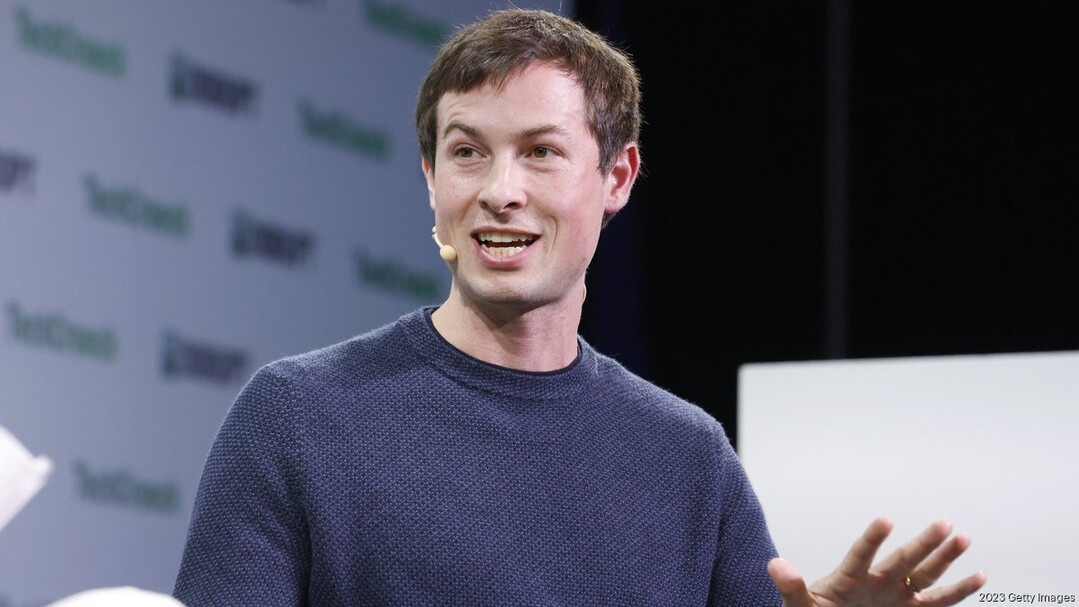
Anyone who vividly remembers the late Apple co-founder Steve Jobs will inevitably experience a profound sense of déjà vu upon meeting his 34-year-old son, Reed Jobs, for the first time. Boasting a lean physique, distinct facial features, and a calm yet resolutely firm manner of speaking, Reed bears an uncanny resemblance to his iconic father. However, his life’s ultimate passion diverges sharply from consumer electronics, handheld smartphones, or ubiquitous artificial intelligence services; instead, he is staking his entire future on pioneering technologies that can eradicate cancer.
On July 11 (local time), the prominent American technology media outlet TechCrunch published an extensive, in-depth interview with Reed Jobs. The feature illuminated the grand vision driving his specialized biotechnology venture capital firm, appropriately named "Yosemite." Throughout the dialogue, Reed explicitly noted that he is far more enthusiastic about discussing modern oncology breakthroughs and the systemic eradication of cancer than dwelling on his world-famous surname. When lightheartedly asked during the video conference if he was utilizing a MacBook, he laughed and replied, "Are you joking? Of course, I am," before seamlessly and expertly redirecting the conversation back to the complex domains of novel anti-cancer therapeutics, clinical trials, and data-driven artificial intelligence systems.
Yosemite's Unique Early-Stage Venture Model
Established in 2023, Yosemite operates as a highly specialized oncology-focused investment entity. Unlike conventional venture capital firms that primarily inject funds into already established, mid-stage corporations, Yosemite distinguishes itself through a radically proactive model: it directly commercializes early-stage, foundational research incubated within elite university laboratories to build brand-new biotechnology startups from scratch. By forging tight-knit collaborations with world-class research teams at Yale University, UC Berkeley, and Stanford University, Reed Jobs' firm actively helps launch new enterprises, frequently providing crucial seed funding partly in the flexible form of philanthropic grants.
This aggressive operational thesis permits Yosemite to invest courageously in unproven, highly speculative scientific hypotheses that boast immense clinical potential, even if their immediate commercial viability remains completely unproven. At present, Yosemite manages a robust portfolio spanning 25 cutting-edge biotechnology startups and has successfully closed its second major fund, totaling an impressive $350 million (approximately 526 billion KRW). Reed Jobs firmly believes that the elusive answer to curing cancer does not lie hidden somewhere within the existing pipelines of legacy pharmaceutical conglomerates; rather, it must be aggressively forged through entirely new scientific frontiers.
A Legacy Forged in Loss
Reed Jobs' intense dedication to oncology is deeply rooted in personal history. In 2003, his father, Steve Jobs, was diagnosed with a rare form of pancreatic neuroendocrine cancer, fighting the disease for eight agonizing years before passing away in 2011. Witnessing his father's arduous treatment journey up close during his formative teenage years ignited an enduring passion for oncology.
Although Reed initially pursued a pre-med biology track at Stanford University, he later pivoted his major to history and international security, earning both his bachelor's and master's degrees in those fields. Nevertheless, his scientific grounding remained formidable; he spent his teenage years participating in an intensive internship at a Stanford oncology laboratory, accumulating a deep reservoir of biomedical expertise that serves as the foundation for his current venture capital career.
Revolutions in Clinical Trials via AI
Reed Jobs evaluates artificial intelligence not merely as a temporary tech trend, but as an absolute game-changer for the biomedical industry. He projects that AI will transcend its current utility of discovering novel drug candidates and fundamentally revolutionize the archaic structure of clinical trials. Today, a traditional Phase III clinical trial for an oncology drug requires an astronomical average investment of $260 million, alongside massive expenditures of time and capital to recruit, monitor, and retain suitable patient cohorts.
However, Reed explains that by leveraging comprehensive, real-world patient data, AI can construct sophisticated "Synthetic Control Arms" (SCAs). This approach effectively mitigates the logistical necessity of recruiting a physical control group of patients to receive placebos, thereby drastically accelerating the drug development lifecycle while slashing operational costs. Furthermore, AI is expanding the historical boundaries of targeted therapies. Historically, only about 15% of the human genome was considered "druggable" or targetable by traditional small molecules. With AI-driven structural biology predicting precise protein configurations, scientists can now discover viable therapeutic candidates for biological pathways that were once dismissed as completely intractable.
Targeting the Untargetable: KRAS and p53
A prime example of this paradigm shift is the KRAS (Kirsten rat sarcoma viral oncogene) mutation, which for decades was infamously dubbed an "undruggable target" by the global oncological community. Thanks to rapid advancements in computational biology and AI, therapies targeting KRAS are experiencing an extraordinary turning point. Building upon this momentum, Yosemite has identified the p53 gene as one of its core strategic targets. Widely recognized as the "guardian of the genome," p53 is a critical tumor-suppressor gene whose protective function is corrupted or inactivated in the vast majority of human cancers.
Reed confidently asserts that if science can successfully reactivate the wild-type functions of p53, or selectively destroy its mutated variants, it will mark an absolute, historic breakthrough in global cancer therapy. Beyond molecular therapeutics, he envisions AI optimizing the wider healthcare ecosystem. Noting that many American hospitals still depend on obsolete infrastructure like fax machines, Reed foresees AI dramatically relieving medical staff burdens by automating call centers, accelerating radiology imaging and digital pathology diagnostics, and streamlining electronic health record (EHR) systems.
A Philosophical Echo of a Maverick Father
Intriguingly, Reed’s core investment philosophy mirrors the fiercely meritocratic, disruptive spirit of his father. When evaluating academic researchers or prospective founders, he deliberately ignores resumes, institutional pedigree, and formal titles. Whether an applicant is a seasoned Nobel laureate or a young, unproven scientist applying for their very first research grant, Reed reviews their core underlying idea with identical rigor. "If an idea has the genuine potential to save or improve a cancer patient's life, I want to hear it, regardless of who it comes from," he emphasizes.
Steve Jobs permanently altered the course of human civilization by reinventing the smartphone and democratizing personal computing. Today, his son Reed Jobs moves forward under a different, yet equally monumental mantle, firmly believing that conquering cancer is the definitive, defining challenge that his generation is morally obligated to solve.
[Copyright (c) Global Economic Times. All Rights Reserved.]