• 2026.06.06 (Sat)
  • All articles
  • LOGIN
  • JOIN
Global Economic Times
fashionrunwayshow2026
  • Synthesis
  • World
  • Business
  • Industry
  • ICT
  • Distribution Economy
  • Well+Being
  • Travel
  • Eco-News
  • Education
  • Korean Wave News
  • Opinion
  • Arts&Culture
  • Sports
  • People & Life
    • International Student Report
    • With Ambassador
  • Column
    • Cho Kijo Column
    • Cherry Garden Story
    • Ko Yong-chul Column
    • Kim Seul-Ong Column
    • Lee Yeon-sil Column
  • Photo News
  • New Book Guide
MENU
 
Home > Synthesis

Lithuania Exits Cluster Munitions Treaty, Citing Security Concerns Amidst Russian Aggression

Graciela Maria Reporter / Updated : 2025-03-13 19:57:49
  • -
  • +
  • Print

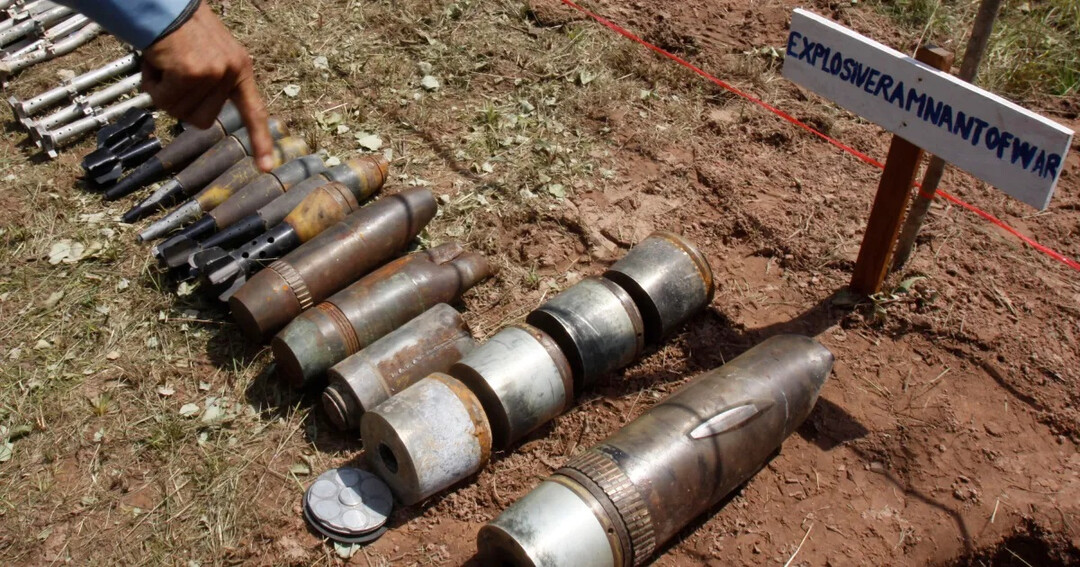
VILNIUS – Lithuania has officially withdrawn from the Convention on Cluster Munitions, an international treaty that prohibits the use, production, stockpiling, and transfer of cluster munitions. The withdrawal, effective March 6th, underscores Lithuania's growing security concerns amidst escalating tensions with Russia and its allies.

The decision, ratified by the Lithuanian parliament in July 2023, reflects a strategic shift in Vilnius' defense posture. The move comes as cluster munitions have been extensively deployed by Russian forces in Ukraine, often targeting civilian areas. This has heightened fears within Lithuania, which shares borders with Russia's ally Belarus and the heavily militarized Russian exclave of Kaliningrad.

Cluster munitions, known for their wide dispersal of submunitions or "bomblets," pose a significant threat to civilians due to their high failure rate. Unexploded bomblets can remain active for years, turning vast areas into de facto minefields. While over 110 countries are signatories to the Convention on Cluster Munitions, key players like Russia, Ukraine, and the United States have not joined the treaty. Notably, the U.S. began providing Ukraine with cluster munitions in 2023, under strict conditions that they are used outside populated areas and against Russian military targets in occupied Ukrainian territories.

Lithuania's decision is rooted in its assessment of the current security landscape. "Given the aggressive actions of Russia, including the use of cluster munitions in Ukraine, we must ensure that we have all necessary means to deter potential aggression," stated a Lithuanian defense official. The country has pledged to implement advanced algorithms to minimize the risk of unexploded bomblets, aiming to enhance the reliability of these weapons. However, the move has drawn criticism from human rights organizations, which emphasize the indiscriminate nature of cluster munitions and their long-term humanitarian impact.

Furthermore, Lithuania is actively exploring alternatives to cluster munitions, seeking to balance its defense needs with adherence to international humanitarian law. The withdrawal from the treaty is seen as a strategic message to potential adversaries, signaling Lithuania's resolve to bolster its defense capabilities.

In addition to the cluster munitions treaty, Lithuania is also considering withdrawing from the Ottawa Treaty, which bans anti-personnel landmines. Defense Minister Dovile Sakaliene indicated that a final decision on this matter is expected in the spring. "We are carefully evaluating our defense needs and the evolving security situation," Sakaliene stated. "Our priority is to ensure the safety and security of our nation."

Lithuania's actions reflect a broader trend among Eastern European nations seeking to strengthen their defenses in response to perceived threats from Russia. The decision to withdraw from these treaties highlights the complex challenges faced by countries balancing their security needs with international humanitarian norms.

[Copyright (c) Global Economic Times. All Rights Reserved.]

  • #globaleconomictimes
  • #글로벌이코노믹타임즈
  • #한국
  • #중기청
  • #재외동포청
  • #외교부
  • #micorea
  • #mykorea
  • #newsk
  • #nammidonganews
  • #singaporenewsk
Graciela Maria Reporter

Popular articles

  • Alleged Marital Rift Between Macrons Tied to Iranian Actress: New Claims Emerge

  • OpenAI Redefines Human-AI Interaction with ‘GPT-Realtime-2’ and New Suite of Live Voice Models

  • Taiwanese President Lai Ching-te Honors Japanese Engineer from Colonial Era: "We Are Family"

I like it
Share
  • Facebook
  • X
  • Kakaotalk
  • LINE
  • BAND
  • NAVER
  • https://globaleconomictimes.kr/article/1065610581973683 Copy URL copied.
Comments >

Comments 0

Weekly Hot Issue

  • Nvidia CEO Jensen Huang to Arrive in South Korea for "Sam-So" Meeting with Tech Tycoons
  • Samsung Electronics Super-Enterprise Union Loses Majority Status Amid Backlash Over Bonus Disparities
  • Samsung to Embed Vital Signs and Heart Health Scores in Upcoming Galaxy Watch9 Lineup
  • Apple Honors Digital Excellence: 12 Exceptional Apps and Games Celebrated at the 2026 Design Awards
  • Nexon Revamps Signature Youth Coding Competition into AI-Driven 'Nexon Young Programmers Cup'
  • Tech University of Korea Gathers 200 Game and AI Researchers to Discuss Industrial Expansion

Most Viewed

1
From a moment of collective sacrifice to a moment of collective democracy: The Timing of the Election in Ethiopia and Korea
2
U.S. Holds Off on Immediate Comprehensive Semiconductor Tariffs, but Pressure Mounts for Samsung and SK Hynix to Accelerate Domestic Investments
3
[Interview] "Halal is Not a Religious Regulation, but a 'Trust Infrastructure'… Creating a Premium 'K-Halal' Centered on Data and Platforms"
4
‘600 Million Won Bonus’ at Samsung Electronics Triggers Deep Sense of Relative Deprivation Among Korean Workers
5
Musk’s SpaceX Secures Space Hegemony with Flawless Starship V3 Recovery Ahead of Historic IPO
광고문의
임시1
임시3
임시2

Hot Issue

Murata Unveils Next-Gen Resin Electrode MLCC for Automotive Applications

Samsung to Embed Vital Signs and Heart Health Scores in Upcoming Galaxy Watch9 Lineup

L&F Plus Secures KRW 220 Billion from National Growth Fund to Anchor South Korea’s First Mass LFP Cathode Production

Samsung Electronics Super-Enterprise Union Loses Majority Status Amid Backlash Over Bonus Disparities

Fashion Runway Show 2026

Global Economic Times
korocamia@naver.com
CEO : LEE YEON-SIL
Publisher : KO YONG-CHUL
Registration number : Seoul, A55681
Registration Date : 2024-10-24
Youth Protection Manager: KO YONG-CHUL
Singapore Headquarters
5A Woodlands Road #11-34 The Tennery. S'677728
Korean Branch
Phone : +82(0)10 4724 5264
#304, 6 Nonhyeon-ro 111-gil, Gangnam-gu, Seoul
Copyright © Global Economic Times All Rights Reserved
  • 에이펙2025
  • APEC2025가이드북TV
  • 반달곰 프로젝트
Search
Category
  • All articles
  • Synthesis
  • World
  • Business
  • Industry
  • ICT
  • Distribution Economy
  • Well+Being
  • Travel
  • Eco-News
  • Education
  • Korean Wave News
  • Opinion
  • Arts&Culture
  • Sports
  • People & Life 
    • 전체
    • International Student Report
    • With Ambassador
  • Column 
    • 전체
    • Cho Kijo Column
    • Cherry Garden Story
    • Ko Yong-chul Column
    • Kim Seul-Ong Column
    • Lee Yeon-sil Column
  • Photo News
  • New Book Guide
  • Multicultural News
  • Jobs & Workers