• 2026.01.20 (Tue)
  • All articles
  • LOGIN
  • JOIN
Global Economic Times
APEC2025KOREA가이드북
  • Synthesis
  • World
  • Business
  • Industry
  • ICT
  • Distribution Economy
  • Well+Being
  • Travel
  • Eco-News
  • Education
  • Korean Wave News
  • Opinion
  • Arts&Culture
  • Sports
  • People & Life
  • Column
    • Cho Kijo Column
    • Lee Yeon-sil Column
    • Ko Yong-chul Column
    • Cherry Garden Story
  • Photo News
  • New Book Guide
MENU
 
Home > Industry

EU Accelerates 'Battery Independence' with Multi-Trillion Won Public Fund Injection

Graciela Maria Reporter / Updated : 2025-11-19 08:26:43
  • -
  • +
  • Print


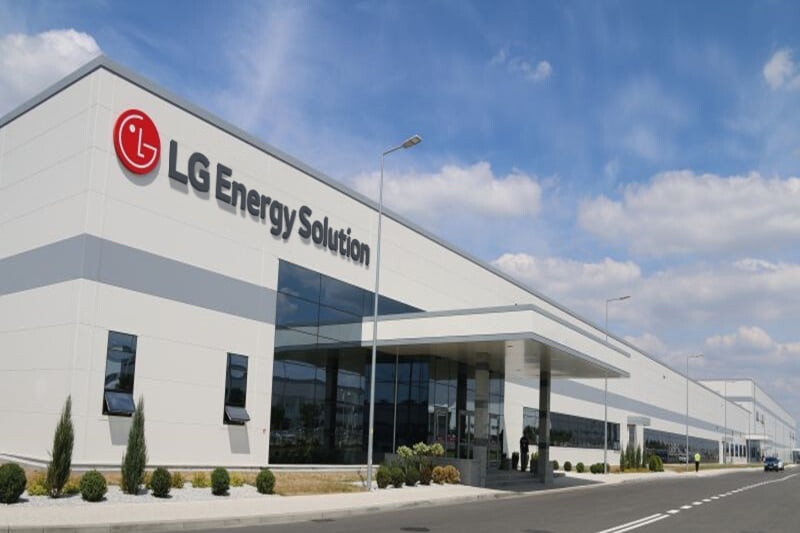
 (C) LG Energy Slution


The European Union (EU) is accelerating its drive for battery independence by allocating a massive €640 million (approximately 1.1 trillion South Korean won) in public funds to support domestic battery production projects. This strategic move, detailed in a recent announcement from the European Commission, is aimed at reducing the bloc's reliance on foreign sources for critical battery materials and breaking the current global dominance held by South Korea and China in the battery industry supply chain.

Key Investments and Strategic Focus 

The funding, drawn from the EU Innovation Fund, is scheduled for disbursement between 2027 and 2029, tied to the completion phases of five selected projects across Europe. The Commission stated this initiative is designed to strengthen the EU's autonomy in the battery sector and create jobs within the region.

The five recipient projects are:

ACCEPT
AGATHE (France)
WGF2G (Germany)
NOVO One (Sweden)
46inEU (Poland)

Notably, the 46inEU project in Poland involves the South Korean giant LG Energy Solution, which is exploring the conversion of some of its existing pouch-type battery production lines to manufacture the next-generation 46-millimeter cylindrical batteries.

Betting on Cobalt-Free Technology 

In a separate but related development earlier this month, the EU Commission also approved the 'NEXTGEN CAM' project for the construction of a next-generation cathode material factory in Portugal. This plant, which will also receive funding from the EU Innovation Fund (with the final subsidy amount to be confirmed in the first half of next year), is set to become Europe's first production hub for Lithium Nickel Manganese Oxide (LNMO) cathode material.

LNMO is considered a cutting-edge material because it is completely cobalt-free. It boasts superior energy density, faster charging speeds, and better thermal stability, positioning it as a potential successor to both Lithium Iron Phosphate (LFP) and Nickel-Cobalt-Manganese (NCM) battery chemistries.

This focus on LNMO is intrinsically linked to the EU’s efforts to reduce its foreign dependence on battery components. Under the Critical Raw Materials Act (CRMA), the EU plans to limit reliance on any single country for critical minerals like cobalt to below 65% by 2030. Industry observers suggest this measure is primarily targeting China, which currently controls an estimated 70–80% of the world's cobalt refining and processing capacity.

Shifting the Global Paradigm 

The confluence of these policy moves underscores the EU's strategic determination to internalize the core technology and supply chain of the battery industry. By striving for a higher degree of production self-sufficiency and securing industrial leadership, the EU is making an existential commitment to this strategic sector. The bloc's pursuit of next-generation technologies like LNMO is explicitly intended to disrupt the current 'two-power' structure dominated by Korean and Chinese manufacturers.

The escalating pressure from these EU policies means that Korean companies operating in Europe will likely need to scale up their local production lines or adjust their manufacturing focus to comply with EU requirements, potentially by increasing production of low-cobalt High-Nickel batteries or LFP cathodes. The continent is sending a clear signal: the future of battery manufacturing will be written on European soil.

[Copyright (c) Global Economic Times. All Rights Reserved.]

  • #globaleconomictimes
  • #micorea
  • #mykorea
  • #Lifeplaza
  • #nammidonganews
  • #singaporenewsk
  • #Samsung
  • #Daewoo
  • #Hyosung
  • #A
Graciela Maria Reporter

Popular articles

  • Hyundai Likely to Forfeit Buyback Option on Russian Plant Amid Geopolitical Stasis

  • Silver Shatters $80 Ceiling as Copper nears $13,000 Amid Global Supply Squeeze

  • Free-Floating Planet Discovery: A Saturn-Mass Rogue World Found 10,000 Light-Years Away

I like it
Share
  • Facebook
  • X
  • Kakaotalk
  • LINE
  • BAND
  • NAVER
  • https://globaleconomictimes.kr/article/1065569104924184 Copy URL copied.
Comments >

Comments 0

Weekly Hot Issue

  • “$3.20 for Coffee, 15 Cents for the Cup”: New Pricing Policy Leaves Café Owners Exhausted
  • “HBM Semiconductor Tech Stolen”: China Remains Top Destination for South Korea’s Leaked Technology
  • KOSPI Hits Historic 4,900 Mark After 12-Day Rally; Hyundai Motor Soars to 3rd in Market Cap
  • S. Korea Braces for Longest, Most Intense Cold Wave of the Season: Feels-like Temps to Plummet to -20°C
  • Trump Escalates Atlantic Tensions with ‘Greenland Tariffs’ Targeting European Allies
  • Wealthy Individuals Value Time Over Money: Insights into the "Rich Mindset"

Most Viewed

1
“The Answer Lies in the Field”... Incheon Superintendent Do Seong-hun Bets on ‘Educational Innovation’ for 2026
2
Territorial Plundering in the 21st Century: The Catastrophe Awaited by Trump’s ‘Order Through Force’
3
Actress Goo Hye-sun Fast-tracks Master’s Degree at KAIST, Eyes Doctorate Next
4
From 'Maduro Gray' to 'Hwang Hana Parka': Why Negative News Drives Fashion Consumption
5
South Korean Rebar Defies 50% Tariffs: A Strategic Pivot to the U.S. Amid Domestic Stagnation
광고문의
임시1
임시3
임시2

Hot Issue

KOSPI Hits Historic 4,900 Mark After 12-Day Rally; Hyundai Motor Soars to 3rd in Market Cap

“HBM Semiconductor Tech Stolen”: China Remains Top Destination for South Korea’s Leaked Technology

Hyundai’s ‘Atlas’ Shakes Up CES 2026: A Formidable Rival to Tesla’s Optimus

Long Queues in Sub-zero Temperatures: Hello Kitty Meets Jisoo as MZ Generation Flocks to Pop-up Store

Let’s recycle the old blankets in Jeju Island’s closet instead of incinerating them.

Global Economic Times
korocamia@naver.com
CEO : LEE YEON-SIL
Publisher : KO YONG-CHUL
Registration number : Seoul, A55681
Registration Date : 2024-10-24
Youth Protection Manager: KO YONG-CHUL
Singapore Headquarters
5A Woodlands Road #11-34 The Tennery. S'677728
Korean Branch
Phone : +82(0)10 4724 5264
#304, 6 Nonhyeon-ro 111-gil, Gangnam-gu, Seoul
Copyright © Global Economic Times All Rights Reserved
  • 에이펙2025
  • APEC2025가이드북TV
  • 독도는우리땅
Search
Category
  • All articles
  • Synthesis
  • World
  • Business
  • Industry
  • ICT
  • Distribution Economy
  • Well+Being
  • Travel
  • Eco-News
  • Education
  • Korean Wave News
  • Opinion
  • Arts&Culture
  • Sports
  • People & Life
  • Column 
    • 전체
    • Cho Kijo Column
    • Lee Yeon-sil Column
    • Ko Yong-chul Column
    • Cherry Garden Story
  • Photo News
  • New Book Guide
  • Multicultural News
  • Jobs & Workers