• 2026.03.08 (Sun)
  • All articles
  • LOGIN
  • JOIN
Global Economic Times
fashionrunwayshow2026
  • Synthesis
  • World
  • Business
  • Industry
  • ICT
  • Distribution Economy
  • Well+Being
  • Travel
  • Eco-News
  • Education
  • Korean Wave News
  • Opinion
  • Arts&Culture
  • Sports
  • People & Life
    • International Student Report
    • With Ambassador
  • Column
    • Cho Kijo Column
    • Cherry Garden Story
    • Ko Yong-chul Column
    • Kim Seul-Ong Column
    • Lee Yeon-sil Column
  • Photo News
  • New Book Guide
MENU
 
Home > People & Life

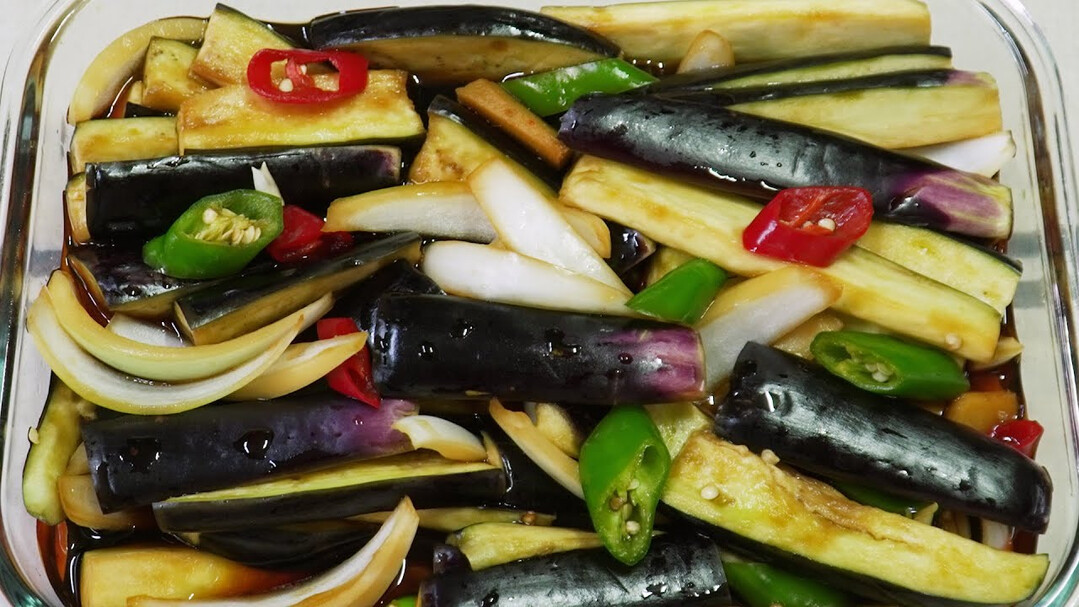
The Eggplant Enigma: Why Koreans Are Saying 'No' to This Purple Powerhouse

Shin Yeju Intern Reporter / Updated : 2025-09-12 19:55:37
  • -
  • +
  • Print


SEOUL — South Korea, once a global leader in vegetable consumption, is seeing its reputation wilt. A new report shows a significant decline in vegetable intake, a trend fueled by a shift toward Western diets and a particular aversion to one nutrient-rich purple vegetable: the eggplant.

According to data from the Korea Disease Control and Prevention Agency, the average daily vegetable consumption per person in South Korea dropped by 20% over a decade, from 282.2g in 2013 to 226.9g in 2022. This decline has cost the country its top spot on the list of per-capita vegetable consumers. In 2015, the OECD ranked Korea first, a position it had held since at least 2000. Now, the country has fallen to 12th place, with an annual consumption of 164kg per person, far behind Croatia’s 330kg and China’s 329kg, according to a 2023 analysis by Insider Monkey based on 2020 FAO data.

A Colorful Diet Deficiency 

Beyond the sheer quantity, experts are concerned about the lack of diversity in the Korean diet. The World Health Organization (WHO) and the American Cancer Society have long advocated for the consumption of various "color foods," a concept known as "Five a Day." These colors—red, yellow, green, purple, and white—correspond to different plant-based antioxidants called phytochemicals, each offering unique health benefits.

A 2017 report by Gallup Korea and Amway revealed that purple foods, in particular, are the most lacking in the Korean diet, which is heavily skewed toward white and green vegetables. This deficiency aligns with a 2021 survey by Panel Now, where over 38,000 Koreans overwhelmingly chose the purple eggplant as their least favorite vegetable.

The Texture Problem: A Culinary Divide 

So, why the dislike for a vegetable that is popular elsewhere? The primary reasons cited in the Panel Now survey were the eggplant’s subtle purple hue and its unique, mushy texture. This soft, almost watery quality is especially pronounced in the steaming method, a common cooking technique for eggplant in Korean cuisine.

This stands in stark contrast to how the vegetable is prepared in other countries. In Japan, for example, a 2020 survey showed that celery and bitter melon were the most disliked vegetables, not eggplant. Similarly, a YouGov poll of over 1,000 U.S. adults this past July found that beets and kale were the least preferred vegetables.

Western culinary traditions often involve frying or grilling eggplant, which yields a crispy exterior and a tender, moist interior—a texture far removed from the soft, steamed version. For those who find the traditional Korean preparation unappealing, changing the cooking method to grilling or frying might be the key to discovering the vegetable's more palatable side.

A Nutritional Powerhouse 

Despite its poor reputation among Koreans, the eggplant is a nutritional powerhouse. It is rich in anthocyanins, the same antioxidants that give it its distinctive purple color. These compounds are known to help lower cholesterol levels, reducing the risk of cardiovascular diseases and strokes. Anthocyanins also benefit eye health by reducing eye strain and discomfort.

Other purple foods that can help fill this dietary gap include beets, red onions, purple sweet potatoes, red cabbage, and fruits like prunes, blueberries, and grapes. The eggplant's abundance of nutrients and versatility in cooking makes it a vegetable worth reconsidering for those looking to add more color—and health—to their plates.

[Copyright (c) Global Economic Times. All Rights Reserved.]

  • #globaleconomictimes
  • #micorea
  • #mykorea
  • #Lifeplaza
  • #nammidonganews
  • #singaporenewsk
  • #Samsung
  • #Daewoo
  • #Hyosung
  • #A
Shin Yeju Intern Reporter
Shin Yeju Intern Reporter Social Intern Reporter

Popular articles

  • Staying Strong Without Breaking the Bank: Middle-Aged Koreans Turn to 'At-Home Workouts'

  • K-Content Hits Record Highs: $140 Billion in Exports and ₩157 Trillion in Sales in 2024

  • Memory Price Tsunami: Global PC and Smartphone Shipments to Hit 10-Year Low

I like it
Share
  • Facebook
  • X
  • Kakaotalk
  • LINE
  • BAND
  • NAVER
  • https://globaleconomictimes.kr/article/1065610489456785 Copy URL copied.
Comments >

Comments 0

Weekly Hot Issue

  • The Death of the Architect's Draft? New AI Engine 'Nano Banana 2' Turns Rough Sketches into Professional 3D Walk-throughs
  • President Lee Celebrates Milestone for ‘The Man Living with the King,’ Pledges to Bolster Cultural Pride
  • Namyangju Targets Gwacheon Racecourse Relocation: A Vision for a "Blue-Green" Mega-Complex Linked to GTX and 3rd Generation New Towns
  • Korean Air Extends Suspension of Incheon–Dubai Route Through March 15 Amid Ongoing Disruptions
  • Genetic 'Molecular Mirror': Blood Tests Challenge Biopsy Limits in Ovarian Cancer Diagnosis
  • Samsung to Revolutionize Health Tracking: Galaxy Watch to Adopt Contact-Based Temperature Sensors for Enhanced Precision

Most Viewed

1
Adwa’s Echo in Korea: A Shared Story of Dignity and Freedom
2
2026, The Grand Year of Hangeul Celebration — The River of History Where Five Streams Converge
3
A New Milestone for Ukraine’s Post-War Reconstruction: The Birth of ISVP
4
Mexican currency and the powerful history behind its designs
5
Revised and Expanded Edition of ‘Failure of Negotiations with North Korea: Truth and Solutions’ Published
광고문의
임시1
임시3
임시2

Hot Issue

The $100 Oil Threshold: Wall Street Braces for a Paradigm Shift as Middle East Conflict Drags On

The Death of the Architect's Draft? New AI Engine 'Nano Banana 2' Turns Rough Sketches into Professional 3D Walk-throughs

Oppo Bridges the Great Divide: Find X9 to Support AirDrop Connectivity

China’s Strategic Gold Rush: Beijing Amasses Reserves for 16th Straight Month Amid Dollar Uncertainty

Let’s recycle the old blankets in Jeju Island’s closet instead of incinerating them.

Global Economic Times
korocamia@naver.com
CEO : LEE YEON-SIL
Publisher : KO YONG-CHUL
Registration number : Seoul, A55681
Registration Date : 2024-10-24
Youth Protection Manager: KO YONG-CHUL
Singapore Headquarters
5A Woodlands Road #11-34 The Tennery. S'677728
Korean Branch
Phone : +82(0)10 4724 5264
#304, 6 Nonhyeon-ro 111-gil, Gangnam-gu, Seoul
Copyright © Global Economic Times All Rights Reserved
  • 에이펙2025
  • APEC2025가이드북TV
  • 독도는우리땅
Search
Category
  • All articles
  • Synthesis
  • World
  • Business
  • Industry
  • ICT
  • Distribution Economy
  • Well+Being
  • Travel
  • Eco-News
  • Education
  • Korean Wave News
  • Opinion
  • Arts&Culture
  • Sports
  • People & Life 
    • 전체
    • International Student Report
    • With Ambassador
  • Column 
    • 전체
    • Cho Kijo Column
    • Cherry Garden Story
    • Ko Yong-chul Column
    • Kim Seul-Ong Column
    • Lee Yeon-sil Column
  • Photo News
  • New Book Guide
  • Multicultural News
  • Jobs & Workers