• 2026.11.20 (Fri)
  • All articles
  • LOGIN
  • JOIN
Global Economic Times
한인동포뉴스(상단)
  • Synthesis
  • World
  • Business
  • Industry
  • ICT
  • Distribution Economy
  • Well+Being
    • Pet Life
    • Halal Horizon
  • Travel
  • Eco-News
  • Education
  • Korean Wave News
  • Opinion
  • Arts&Culture
  • Sports
  • People & Life
    • International Student Report
    • With Ambassador
  • Column
    • Cho Kijo Column
    • Cherry Garden Story
    • Ko Yong-chul Column
    • Kim Bong-seon's Photo Column
    • Kim Seul-Ong Column
    • Lee Yeon-sil Column
    • Professor Lee Soo-young’s Life Essays
  • Photo News
  • New Book Guide
MENU
 
Home > Eco-News

Tapping into Groundwater Heat: South Korea Eyes Massive Emissions Cut

Kim Young Min Reporter / Updated : 2026-11-18 19:26:04
  • -
  • +
  • Print


South Korea could slash its annual greenhouse gas emissions by up to 4.2 million tons by expanding the use of groundwater heat for commercial and residential climate control, according to recent research findings.

Experts and policymakers gathered at the National Assembly Members' Office Building in Yeouido, Seoul, on November 18 to discuss strategies for integrating groundwater thermal energy into the nation's broader green infrastructure.

The forum follows a recent regulatory shift by the Ministry of Climate, Energy and Environment on November 17, which officially designated seven alternative water heat sources—including discharged groundwater, wastewater, and sewage—as forms of renewable energy. Previously, renewable hydrothermal policies were largely restricted to river water sources.

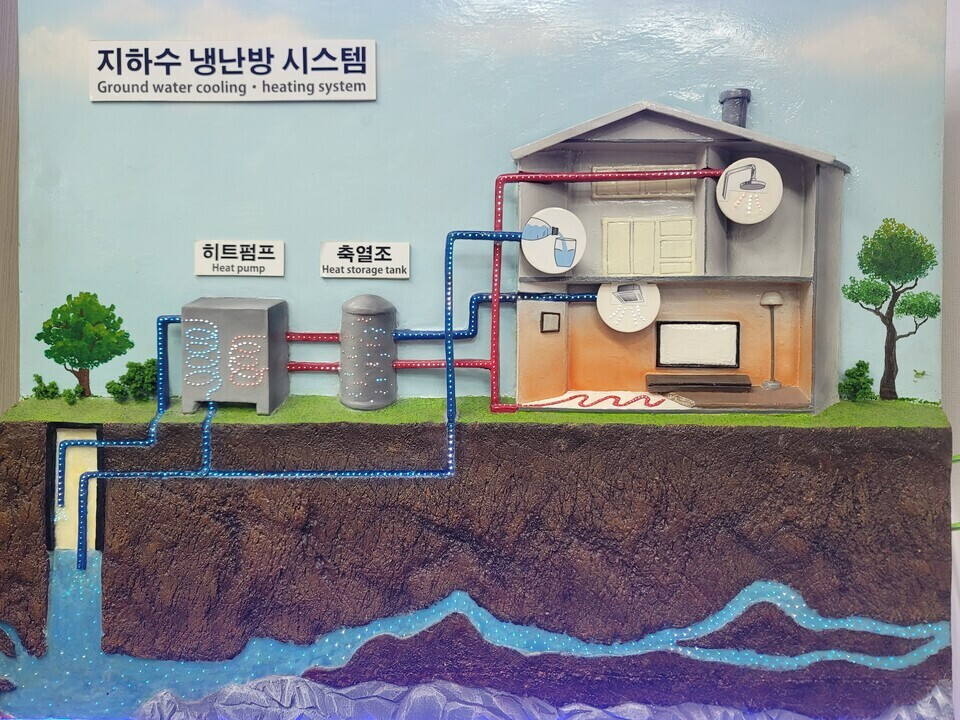
Unlike ambient air, groundwater maintains a remarkably stable temperature year-round—averaging around 12.8°C (55°F) based on observation data from Yangpyeong, Gyeonggi Province. This thermal consistency makes it an exceptionally efficient medium for both winter heating and summer cooling via heat pumps.

Researchers at the Korea Institute of Geoscience and Mineral Resources (KIGAM) estimate that scaling up groundwater heat applications could eliminate between 2.8 million and 4.2 million tons of carbon dioxide equivalent annually. This represents roughly 0.8% to 1.4% of the country's total 2030 Nationally Determined Contribution (NDC) target of 291 million tons. Furthermore, studies suggest that groundwater-based systems can deliver twice the carbon reduction efficiency of standard air-source heat pumps.

Industry experts stress that infrastructure modernization must accompany policy updates. Professor Kim Young-soo of Kangwon National University noted that transitioning from isolated building-level heat pumps to centralized district cooling and heating networks is essential for maximizing efficiency. He recommended embedding thermal energy supply mapping directly into municipal urban planning frameworks.

Another major focal point of the discussion was "discharged groundwater"—water that surfaces unintentionally during subway, tunnel, and deep underground construction projects. Data from the Korea Environmental Corporation reveals that South Korea generates roughly 580,000 tons of discharged groundwater daily (around 210 million tons per year).

Currently, only 53.6% of this water is put to any use, primarily for maintaining local stream flows, leaving a massive energy potential untapped. Real-world case studies have already proven the concept's financial viability. For instance, Korea University utilized discharged groundwater from a nearby subway station to handle its campus heating and cooling, cutting operational costs by nearly 64.8% compared to conventional systems. Similarly, Seoul Subway Line 4's Gireum Station achieved a 47% reduction in cooling expenses by routing underground discharge through its climate control mechanisms.

To capture these savings nationwide, environmental officials have proposed mandating groundwater energy utilization for large-scale public construction projects. Proponents also advocate for financial incentives—such as tax exemptions, utility fee discounts, and installation subsidies—to encourage private developers to adopt hydrothermal technology, alongside clear regulatory standards for water quality monitoring and equipment maintenance.

[Copyright (c) Global Economic Times. All Rights Reserved.]
  • #Cherry Garden
  • #HalalFood
  • #Halal
  • #Petlife
  • #Halalhorizone
  • #Hormuz Impasse
  • #Joseon
  • #globaleconomictimes
  • #micore
Kim Young Min Reporter
Kim Young Min Reporter 前 환경데일리 발행인, mkTaiwan 편집인.

Popular articles

  • Global Credit Spreads Widened to 17-Month High Amid AI Investment Concerns

  • Stepping into the Shoes of a Joseon Scholar: Daejeon Museum Launches Immersive 'Life Game' Exhibition

  • Bitcoin Slumps for a Second Day Amid Record Binance Hack, Tech Sell-Off, and Rising Oil Prices

I like it
Share
  • Facebook
  • X
  • Kakaotalk
  • LINE
  • BAND
  • NAVER
  • https://globaleconomictimes.kr/article/1065608674017150 Copy URL copied.
Comments >

Comments 0

Weekly Hot Issue

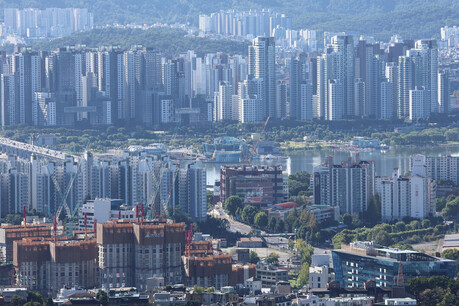
  • Seoul Housing Rally Cools as Price Drops Spread to Seven Districts and Listings Top 82,000
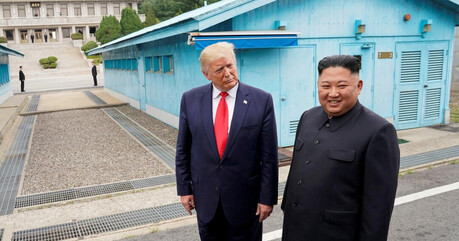
  • Pyongyang’s True Intentions as U.S.-North Korea Talks Fizzle Again Despite Trump’s Repeated Overtures
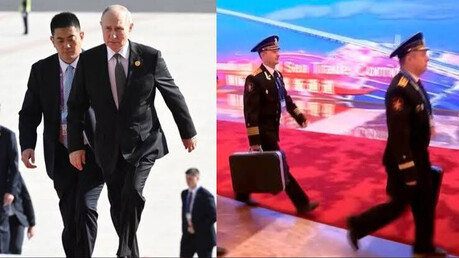
  • Putin Shakes Hands with a Smiling Trump... Behind Him Was the 'Black Nuclear Briefcase'
  • Nvidia Offers Early Pay Reviews to Calm Staff After Jensen Huang’s Exit
  • Health Insurer Proposes "Subscription-Plus-Bonus" Model to Curb Skyrocketing Weight-Loss Drug Costs
  • Massive Women’s Safety Network ‘Are We Dating the Same Guy?’ Halts New Posts Amid Legal and Platform Pressures

Most Viewed

1
South Korea and Ethiopia Sign Trilateral MOU to Introduce Liquid-Based Cytology (LBC) Technology for Cervical Cancer Diagnosis
2
Meeting Christmas Early!… Busan Dessert Sales Event "Daldal The Market" Held
3
World Citizens are Flying Directly to Busan... The Era of 4 Million Foreigners is Just Around the Corner
4
Eating 100g of Baechu Kimchi Daily Linked to Lower High-Cholesterol Risks
5
First Snow and Freeze Hit Korea as Winter Officially Begins on 'Ipdeong'
체리가든 스토리
nutri huevos
로타리
동포저널

Hot Issue

Historic US-China-Russia Summit Yields Grand Rhetoric, Few Concrete Results

KOSPI Clings to 5,000-Point Mark Amid Heavy Foreign Selling; Year-End Rally Seen as Unlikely

Commuters Face Potential Delays as Seoul Subway Workers Launch Work-to-Rule Action

Fashion Runway Show 2026

Let’s recycle the old blankets in Jeju Island’s closet instead of incinerating them.

Global Economic Times
korocamia@naver.com
CEO : LEE YEON-SIL
Publisher & Editor : KO YONG-CHUL
Registration number : Seoul, A55681
Registration Date : 2024-10-24
Youth Protection Manager: KO YONG-CHUL
Singapore Headquarters
5A Woodlands Road #11-34 The Tennery. S'677728
Korean Branch
Phone : +82(0)10 4724 5264
#304, 6 Nonhyeon-ro 111-gil, Gangnam-gu, Seoul
Copyright © Global Economic Times All Rights Reserved
  • News K
  • 반달곰 프로젝트
  • 광고문의
Search
Category
  • All articles
  • Synthesis
  • World
  • Business
  • Industry
  • ICT
  • Distribution Economy
  • Well+Being 
    • 전체
    • Pet Life
    • Halal Horizon
  • Travel
  • Eco-News
  • Education
  • Korean Wave News
  • Opinion
  • Arts&Culture
  • Sports
  • People & Life 
    • 전체
    • International Student Report
    • With Ambassador
  • Column 
    • 전체
    • Cho Kijo Column
    • Cherry Garden Story
    • Ko Yong-chul Column
    • Kim Bong-seon's Photo Column
    • Kim Seul-Ong Column
    • Lee Yeon-sil Column
    • Professor Lee Soo-young’s Life Essays
  • Photo News
  • New Book Guide
  • Overseas Koreans
  • Multicultural News