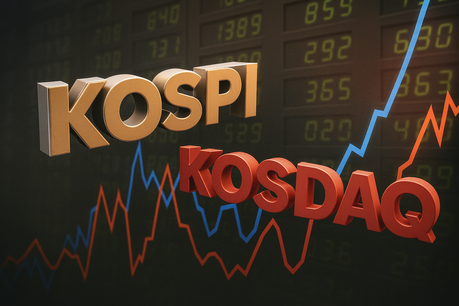



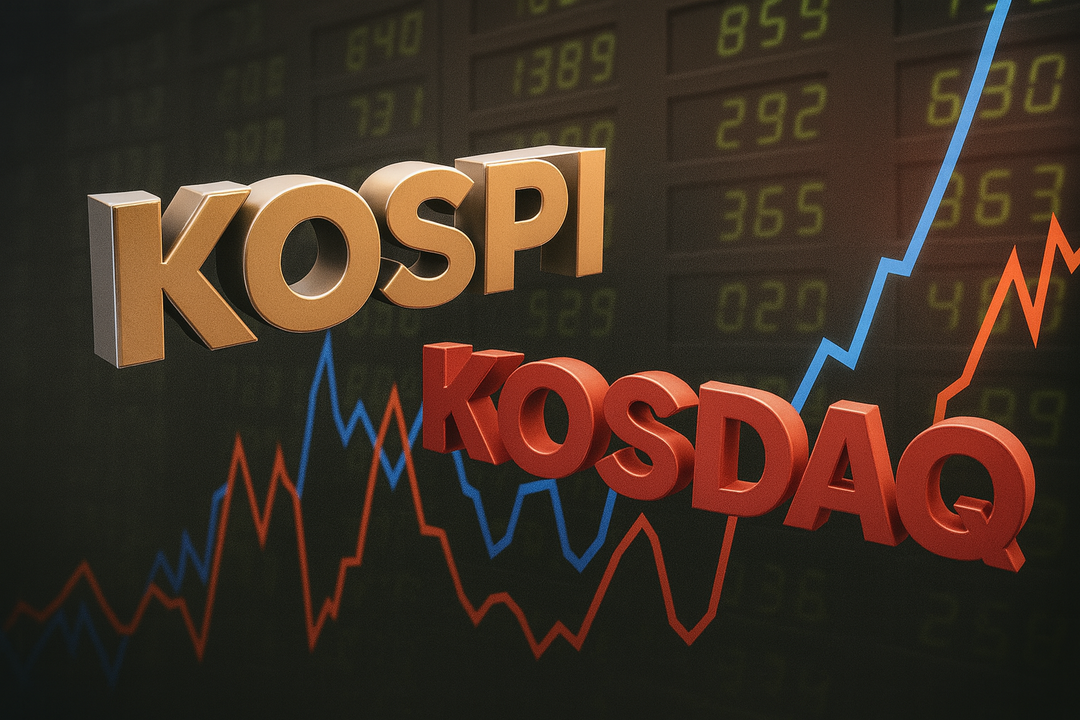
SEOUL, South Korea — South Korea’s benchmark KOSPI index managed to hold above the psychologically significant 5,000-point threshold for two consecutive trading sessions this week, though persistent foreign capital outflows continue to cast doubt on the sustainability of the recovery through the end of the year.
According to data from the Korea Exchange (KRX), the KOSPI closed at 5,137.89 on Thursday, rising 70.45 points, or 1.39 percent, from the previous session. Despite dipping to an intraday low of 4,963.61 shortly after the opening bell, the index rebounded to finish at its session high. The recovery follows Tuesday’s drop to 4,968.48, which marked the index’s lowest level in roughly nine months.
Institutional Buying Offsets Foreign Exodus
Market analysts characterize the recent rebound as fragile, noting that the index is being propped up largely by domestic institutions and corporate share buybacks rather than broad market conviction. Foreign investors have been net sellers for five consecutive trading days, offloading 541 billion won on November 13, followed by 1.33 trillion won and 1.42 trillion won on November 16 and 17, respectively.
On Wednesday and Thursday, combined net selling by foreign and retail investors was absorbed primarily by institutional buyers and "other corporations"—a category largely reflecting treasury stock purchases by major conglomerates such as SK Hynix.
Since reaching an all-time peak near the 9,000 level in June, the KOSPI has surrendered nearly nine months of gains, retreating to levels last seen in early February. KRX data indicates that foreign investors have dumped approximately 222 trillion won worth of South Korean equities since January 2, while retail investors, other corporations, and institutions have absorbed the supply with net purchases of 99 trillion won, 75 trillion won, and 48 trillion won, respectively.
Macro Headwinds and Market Volatility
Several global and domestic factors have driven the sustained foreign sell-off:
AI Valuation and Macro Pressures: Growing skepticism over the sustainability of circular financing in the artificial intelligence sector, coupled with heavy corporate bond issuance by Big Tech firms, has tightened global liquidity. Inflationary pressures stemming from the conflict in Iran have further fueled fears of prolonged high interest rates.
Structural Volatility: Profit-taking following the market's rapid ascent earlier this year, alongside heightened volatility triggered by single-stock leveraged exchange-traded funds (ETFs) and the liquidation of major foreign hedge funds, has forced mechanical rebalancing among overseas passive funds. The KOSPI 200 Volatility Index (VKOSPI) climbed back to 53.93 on Thursday, up from the 40-point range seen in September and October.
Cautious Outlook Ahead of Fed Decision
Brokerages remain cautious about forecasting a sharp year-end rebound, citing liquidity absorption from Anthropic’s high-profile Nasdaq initial public offering (IPO) and looming monetary policy risks. Minutes from the U.S. Federal Reserve’s October Federal Open Market Committee (FOMC) meeting, released on Wednesday, revealed broad consensus among policymakers regarding the need for additional rate hikes—with some members even floating the possibility of a 50-basis-point "big step" increase next month from the current 3.75–4.00 percent range.
Despite near-term headwinds, market strategists suggest the index may be nearing a cyclical bottom, pointing to attractive valuations and upcoming corporate governance reforms.
Na Jeong-hwan, a senior researcher at NH Investment & Securities, noted that the market pullbacks in July and October reflected doubts over future growth momentum rather than deteriorating fundamentals. Projecting a cautious year-end target in the mid-6,000s and an upper bound of 9,200 next year, Na highlighted that liquidity conditions should improve once the Anthropic IPO concludes. He also pointed to the full implementation of South Korea’s revised Commercial Act in January—which mandates electronic shareholder meetings, fiduciary duty of directors to shareholders, expanded separate election of audit committee members, and the cancellation of treasury shares—as a key catalyst to resolve the long-standing "Korea Discount."
Kim Hak-kyun, head of research at Shinyoung Securities, echoed the view that downside risks are becoming limited. Looking at the seven major bear markets in South Korea since the 1980s, Kim noted that the index has historically fallen an average of 51 percent from peak to trough. With the current downturn already marking a roughly 45 percent correction from its June high, he suggested the market is likely approaching bottom territory.
[Copyright (c) Global Economic Times. All Rights Reserved.]