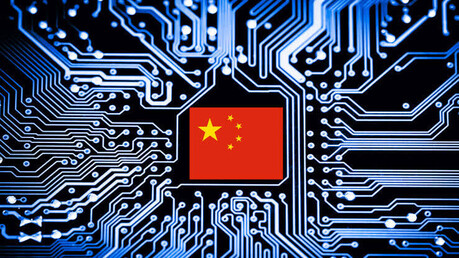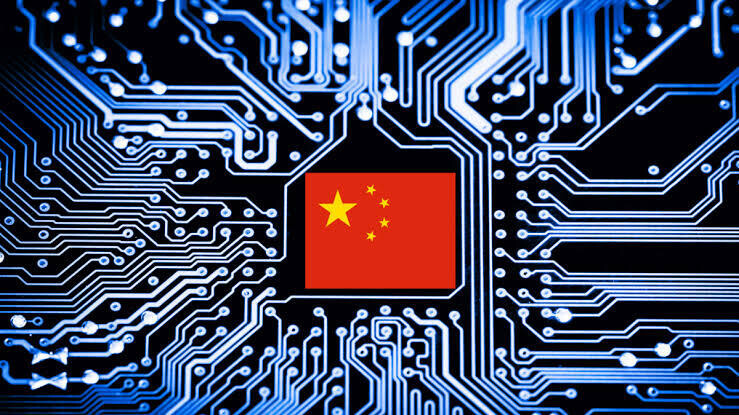
China’s artificial intelligence sector is facing mounting development bottlenecks as fresh U.S. export controls on cloud computing converge with aggressive anti-cloning defenses from leading American AI labs.
According to recent industry reports, key Chinese developers are being forced to push back major model launches. Zhipu AI (Z.ai), which initially aimed to debut its upcoming GLM-5.5 model before the end of the year, is now expected to delay the release until at least the first quarter of next year. Rival firm Moonshot AI faces similar headwinds; internal projections indicate that losing access to foreign data centers could stretch its product release cadence from six months to more than a year, potentially pushing its flagship Kimi K4 model to mid-next year.
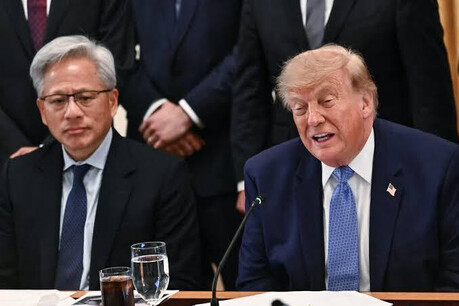
The slowdown stems from a dual squeeze on hardware and training data. Earlier this month, the U.S. Department of Commerce enacted rules closing a major loophole that allowed Chinese firms to remotely rent advanced Nvidia processors—such as the flagship Blackwell chips—through third-party data centers abroad. Under the new mandate, which took effect following a turbulent leadership week at Nvidia that saw CEO Jensen Huang briefly step down before returning days later, foreign data centers must secure a U.S. license to provide high-tier compute to Chinese entities, with a 90-day grace period for existing contracts.
The impact has been immediate. Moonshot AI reportedly walked away from a $150 million agreement to access Blackwell hardware via an Indonesian data center. Meanwhile, morale inside China's AI research community has taken a hit, with some engineers expressing pessimism over the future of domestic model training and looking to exit the sector.
Simultaneously, Chinese labs are losing a crucial shortcut used to keep pace with Western rivals: "model distillation," a technique where developers train smaller models using outputs generated by top-tier systems. Since September, OpenAI and Anthropic have intensified countermeasures against unauthorized data scraping. Industry insiders point out that newer releases—specifically OpenAI’s GPT-6 and Anthropic’s Claude Fable lineup—utilize subtle statistical watermarking, throttle output quality for high-frequency accounts, and downgrade responses when distillation patterns are detected.
While internal teams at Chinese firms have tried workarounds—such as prompting U.S. models to critique and refine outputs generated by local models—researchers admit that replicating the deep reasoning capabilities of frontier American AI is becoming increasingly unfeasible. Internal estimates at DeepSeek warn that a total cutoff from U.S. model distillation could widen the capability gap between American and Chinese AI from a few months to nearly three-quarters of a year.
Cut off from foreign compute and frontier model outputs, Chinese tech leaders are accelerating a shift toward homegrown hardware. Executives at both Alibaba and MiniMax have recently emphasized an urgent pivot to domestic processors made by Huawei and Alibaba. However, analysts note that China’s self-reliance push still faces a severe manufacturing ceiling, as its top chipmaker, SMIC, remains barred from acquiring the advanced lithography tools needed to scale cutting-edge chip production.
[Copyright (c) Global Economic Times. All Rights Reserved.]