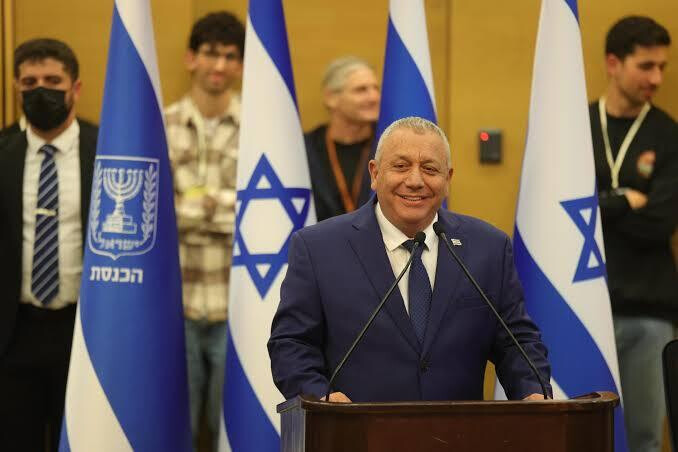
JERUSALEM — Efforts to unseat Israeli Prime Minister Benjamin Netanyahu gained significant traction this week as opposition leader Gadi Eisenkot accelerated coalition talks, aiming to unveil a new government by December 6 while beginning the preliminary distribution of key cabinet ministries.
Eisenkot, head of the Yashar Party, was tapped by President Isaac Herzog on November 7 to form a governing coalition after securing endorsements from 67 lawmakers in the 120-seat Knesset. While Israeli law allows for a two-week extension until December 20, insiders indicate Eisenkot is pushing to finalize agreements before the initial December 6 cutoff, bolstered by a breakthrough that bridges ideological divides within his 48-seat core bloc.
A Crucial Shift in Coalition Arithmetic
To reach the 61-seat majority required to govern, Eisenkot’s alliance—comprising Yashar (21 seats), Beyahad (12), the Democrats (8), and Yisrael Beiteinu (7)—must secure at least 13 additional seats. Until recently, assembling that majority appeared stalled due to staunch resistance from right-wing Jewish members against partnering with either ultra-Orthodox or Arab factions.
The deadlock broke on November 24 when Yisrael Beiteinu signed a formal coalition pact with Yashar, dropping its long-standing veto against governments reliant on Arab political backing. Under the emerging framework, Yisrael Beiteinu agreed to a mechanism in which the eight-seat Islamist Ra'am party would facilitate the government's swearing-in by abstaining during the Knesset confidence vote, provided the cabinet itself remains predominantly Jewish.
Simultaneously, Eisenkot—a former Israel Defense Forces Chief of Staff—has softened his signature campaign platform of universal military conscription. Reports suggest he is nearing an understanding on military exemptions for religious seminary students with United Torah Judaism (UTJ), an ultra-Orthodox party holding seven seats. Combining the core bloc’s 48 seats with UTJ's seven and external parliamentary support from Ra'am’s eight seats would provide Eisenkot with a viable path to power.
Holdouts and Cabinet Allocations
Despite the optimism, the coalition's fate still hinges on Beyahad. Co-leader and former Prime Minister Naftali Bennett is reportedly weighing whether his 12-seat faction can stomach a governing model reliant on ultra-Orthodox concessions and external Arab support. Should Beyahad walk away, the mathematical majority would collapse.
Even with Beyahad's final decision pending, the four core parties have reportedly moved ahead with carving up ministerial portfolios:
Yisrael Beiteinu: Rewarded for being the first to sign a coalition deal, the party is slated to receive the Defense, Justice, and Immigration and Absorption ministries. Party chief Avigdor Lieberman is poised to take the Defense helm, while the party successfully outmaneuvered both Yashar and the left-wing Democrats to claim the influential Justice portfolio.
Beyahad: As the bloc's second-largest faction, it has been penciled in for the top diplomatic and economic posts, with co-leaders Naftali Bennett and Yair Lapid expected to serve as Finance Minister and Foreign Minister, respectively.
Yashar Party: Eisenkot’s own party is projected to retain control over the Education and National Security ministries.
Political observers note that while delicate negotiations remain, Yisrael Beiteinu’s pivot has fundamentally altered the political landscape, bringing Israel closer to a post-Netanyahu administration.
[Copyright (c) Global Economic Times. All Rights Reserved.]