![[등록] 2026-09-01 15:48:31](/support/_updata/banner2/tl181982910_6749.png)


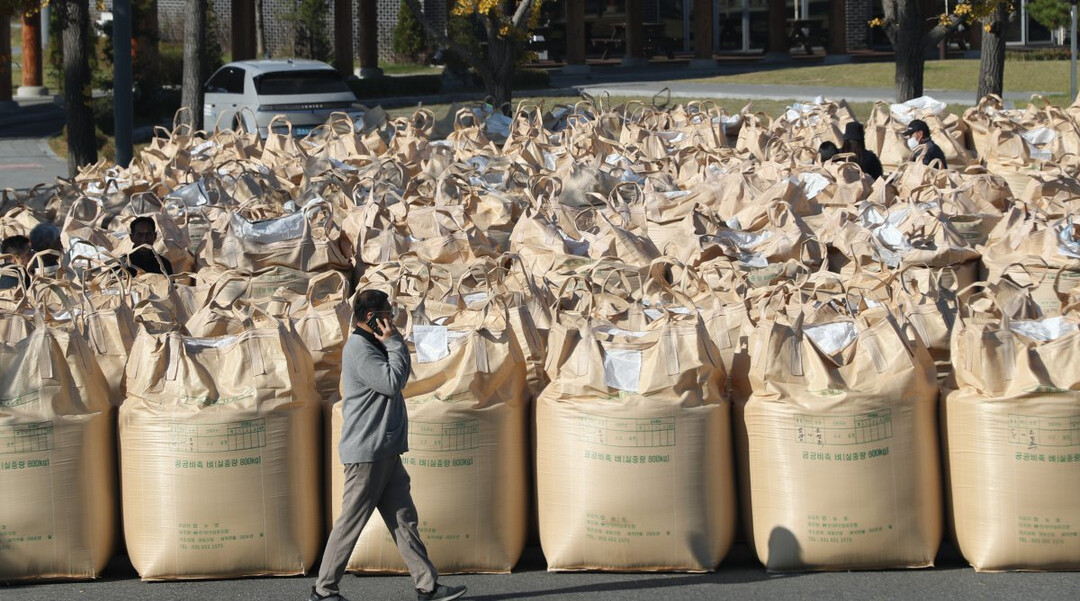
Seoul, South Korea - Bolstered by the global fervor for K-food, South Korea's rice exports witnessed an extraordinary surge in the past year, exceeding a fourfold increase compared to the previous year. According to data released by the Ministry of Agriculture, Food and Rural Affairs (MAFRA) and the Korea Agro-Fisheries & Food Trade Corporation (aT) on April 23rd, 2025, the nation exported 29,132 tons of domestically produced rice in 2024. This figure marks a remarkable 357% increase from the 6,379 tons exported in 2023 and excludes overseas aid provisions.
The exported rice reached 48 countries, with Turkey being the largest importer, receiving 20,000 tons. Other significant destinations included the United States (2,215 tons), Mongolia (1,886 tons), and China (1,000 tons). This expansion underscores the growing international recognition of Korean rice quality and taste, fueled by the widespread popularity of Korean cuisine and cultural content.
The upward trend in rice exports has continued into the current year. Notably, New Zealand eased its quarantine requirements on March 9th, significantly simplifying the export process for small packages of Korean rice (up to 25kg). Furthermore, 2 tons of "Ttaengkkeut Haetsal" rice harvested in Haenam, South Jeolla Province, were exported to Japan last month. In response to soaring rice prices in Japan, the National Agricultural Cooperative Federation (NACF) announced plans for an additional 20-ton shipment of consumer rice.
An NACF representative attributed this success to proactive efforts to supply Korean rice to local Korean communities and Korean companies operating overseas, alongside increased Korean agricultural product promotion events. The representative further noted that the "K-food boom" has significantly contributed to the perception of Korean rice as superior in taste and stickiness, consequently driving up export volumes. Processed rice products, including frozen gimbap (seaweed rice rolls) and tteokbokki (spicy rice cakes), have also seen substantial export growth, reaching $299.2 million in 2024, a 38.4% year-on-year increase, highlighting the diversification of rice-based exports.
This surge in rice exports offers a potential solution to South Korea's persistent issue of domestic rice oversupply. MAFRA estimates that the domestic rice market faces a structural surplus, with over 200,000 tons of excess production annually. Increased exports provide an avenue to channel this surplus into new international markets, thereby reducing the financial burden associated with government rice purchases and storage.
Moreover, this development offers much-needed relief to South Korean rice farmers grappling with declining domestic consumption. Statistics Korea reported that the per capita annual rice consumption in 2024 averaged 55.8 kg, a 1.1% decrease from the previous year. This figure is approximately half the consumption level recorded in 1994 (120.5 kg) and the lowest since record-keeping began in 1962.
In response to these trends, MAFRA is committed to bolstering rice exports further by establishing high-quality rice production complexes and intensifying promotional activities for Korean rice varieties both domestically and internationally. The ministry plans to pilot one such production complex in each province this year, with a goal of expanding to two complexes per province by 2029.
A MAFRA official stated the ministry's dedication to "making this year the first year of promoting major Korean rice varieties" by conducting taste tests for domestic consumers and actively disseminating the results both domestically and abroad to showcase the excellence of Korean rice in the global market. This strategic focus on quality and international outreach signifies South Korea's commitment to transforming its rice sector into a dynamic and export-oriented industry.
[Copyright (c) Global Economic Times. All Rights Reserved.]