• 2026.06.07 (Sun)
  • All articles
  • LOGIN
  • JOIN
Global Economic Times
fashionrunwayshow2026
  • Synthesis
  • World
  • Business
  • Industry
  • ICT
  • Distribution Economy
  • Well+Being
  • Travel
  • Eco-News
  • Education
  • Korean Wave News
  • Opinion
  • Arts&Culture
  • Sports
  • People & Life
    • International Student Report
    • With Ambassador
  • Column
    • Cho Kijo Column
    • Cherry Garden Story
    • Ko Yong-chul Column
    • Kim Seul-Ong Column
    • Lee Yeon-sil Column
  • Photo News
  • New Book Guide
MENU
 
Home > Distribution Economy

Economists Predict Another Fed Rate Cut Ahead of Final FOMC of the Year

Global Economic Times Reporter / Updated : 2025-12-08 18:47:27
  • -
  • +
  • Print

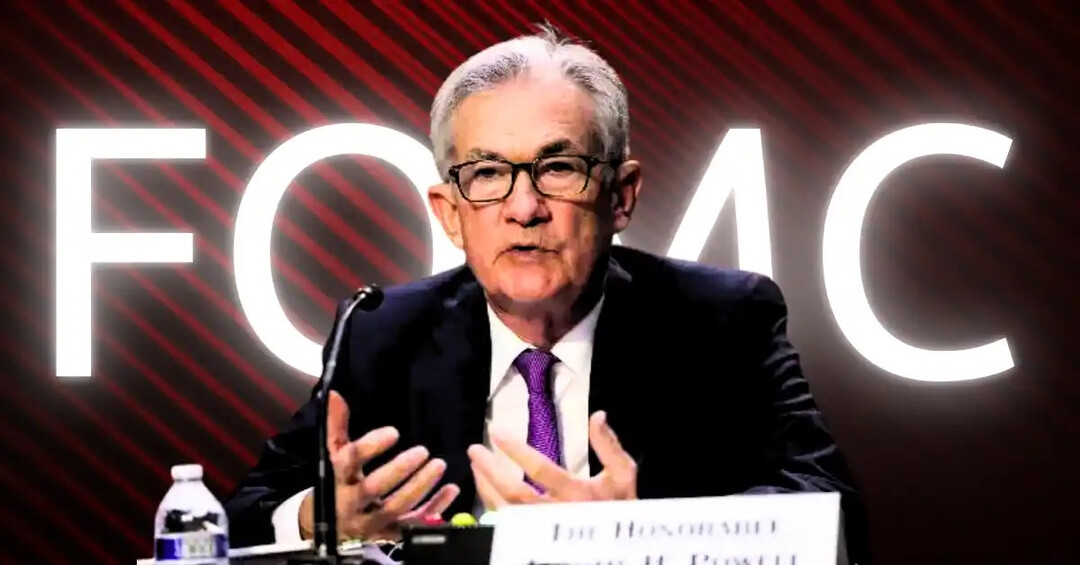
(C) Coinpedia
 
SEOUL - The U.S. Federal Reserve (Fed) is set to convene its final Federal Open Market Committee (FOMC) meeting of the year on December 9-10 (local time) to determine the benchmark interest rate.

The market widely anticipates that the Fed will enact a third consecutive 0.25 percentage point rate cut at this meeting. This expectation is strongly supported by a recent survey of academic economists.

Rate Cut Consensus Despite Deep Internal Divisions

The Financial Times (FT) reported on December 7 (local time) that economists surveyed by the University of Chicago Booth School of Business overwhelmingly expect the Fed to lower borrowing costs, despite deep internal disagreements within the FOMC.

The survey found that 85% of the 40 economists polled believe the Fed will cut rates to address concerns over the weakening U.S. labor market.

However, the consensus breaks down when looking at the FOMC's internal dynamics. Most economists expect the vote on the rate decision to be divided:

Only one economist anticipated a unanimous vote among the 12 voting FOMC members in favor of the rate cut.
60% of respondents predicted that there would be two dissenting votes.
A third of respondents expected three or more dissenting votes.
The FT noted that the last time three or more dissents occurred at an FOMC meeting was in 1992, underscoring the potential gravity of the current situation.

The Dual Mandate Dilemma: Inflation vs. Employment

The Fed's dual mandate requires it to pursue 'maximum employment' and 'price stability' (targeting 2% inflation). Since spring 2021, inflation has persistently remained above the 2% target, forcing FOMC members to debate whether the weakening job market or persistent inflation should take priority in their rate decision.

Stephen Cecchetti, a professor at Brandeis University, commented that dissenting votes, particularly if based on the failure to meet the inflation target, could enhance the credibility of the goal. Conversely, he suggested that a significant difference of opinion raises questions about the common goals of the FOMC.

The prior rate cut in October (a 0.25 percentage point reduction) saw a 10-2 vote, which, while not uncommon for dissents, revealed a striking split: Steven Myron, a Fed governor dubbed 'Trump's economic advisor,' argued for a 'Big Cut' (0.5 percentage point reduction), while Jeffrey Schmid, President of the Kansas City Federal Reserve Bank (FRB), advocated for maintaining the current rate (a pause/no cut). This wide divergence—between a larger cut and a pause—was seen as unusual.

The Booth School survey highlighted the continued tension over the dual mandate:

48% of respondents felt price control should be the priority.
Only 5% believed the focus should be on jobs.
The remainder desired the Fed to give equal weight to both mandates.


Broader Economic Implications

Beyond the immediate rate decision, the survey also explored the broader economic outlook. When asked about the potential impact of a 20% drop in the value of the S&P 500 index, nearly two-thirds of the economists believed it would only weaken U.S. growth but not trigger a severe recession. However, one-third expected the drop to lead to a significant decline in consumption and investment, resulting in a recession.

As the FOMC prepares for its final meeting, the decision hinges not just on economic data, but on the delicate balancing act between stimulating a cooling labor market and maintaining the commitment to inflation control, against a backdrop of the deepest internal policy divide in decades.

[Copyright (c) Global Economic Times. All Rights Reserved.]

  • #Globaleconomictimes
  • #Korea
  • #Seoul
  • #Samsung
  • #LG
  • #Bitcoin
  • #Meta
  • #Business
  • #Economic
  • #The Woori Bank
Global Economic Times Reporter
Reporter Page

Popular articles

  • IRANIAN STATE MEDIA DEMONSTRATES ASSAULT RIFLES ON-AIR, TARGETING UAE FLAG AMID RISING REGIONAL PRESSURES

  • Tesla Model Y Becomes First to Pass Grueling New U.S. Autonomous Safety Tests

  • Samsung Electronics Shifts Strategy in China: Moving from Hardware Sales to Platform-Based Business

I like it
Share
  • Facebook
  • X
  • Kakaotalk
  • LINE
  • BAND
  • NAVER
  • https://globaleconomictimes.kr/article/1065606323918366 Copy URL copied.
Comments >

Comments 0

Weekly Hot Issue

  • Tesla and BYD Penetrate South Korea’s Stronghold as Domestic Auto Sales Stumble
  • Incheon Semiconductor High School Partners with Chungnam National University to Foster Next-Gen Tech Talent
  • Murata Unveils Next-Gen Resin Electrode MLCC for Automotive Applications
  • L&F Plus Secures KRW 220 Billion from National Growth Fund to Anchor South Korea’s First Mass LFP Cathode Production
  • Nvidia CEO Jensen Huang to Arrive in South Korea for "Sam-So" Meeting with Tech Tycoons
  • Samsung Electronics Super-Enterprise Union Loses Majority Status Amid Backlash Over Bonus Disparities

Most Viewed

1
From a moment of collective sacrifice to a moment of collective democracy: The Timing of the Election in Ethiopia and Korea
2
[Interview] "Halal is Not a Religious Regulation, but a 'Trust Infrastructure'… Creating a Premium 'K-Halal' Centered on Data and Platforms"
3
Bomb Attack Targets Moving Train in Pakistan: At Least 29 Dead, 102 Injured
4
Business Sentiment Hits 43-Month High as Supply Chains Ease and Exports Surge
5
KOSPI Smashes Through 8,400 Barrier for First Time in History
광고문의
임시1
임시3
임시2

Hot Issue

Murata Unveils Next-Gen Resin Electrode MLCC for Automotive Applications

Samsung to Embed Vital Signs and Heart Health Scores in Upcoming Galaxy Watch9 Lineup

L&F Plus Secures KRW 220 Billion from National Growth Fund to Anchor South Korea’s First Mass LFP Cathode Production

Samsung Electronics Super-Enterprise Union Loses Majority Status Amid Backlash Over Bonus Disparities

Fashion Runway Show 2026

Global Economic Times
korocamia@naver.com
CEO : LEE YEON-SIL
Publisher : KO YONG-CHUL
Registration number : Seoul, A55681
Registration Date : 2024-10-24
Youth Protection Manager: KO YONG-CHUL
Singapore Headquarters
5A Woodlands Road #11-34 The Tennery. S'677728
Korean Branch
Phone : +82(0)10 4724 5264
#304, 6 Nonhyeon-ro 111-gil, Gangnam-gu, Seoul
Copyright © Global Economic Times All Rights Reserved
  • 에이펙2025
  • APEC2025가이드북TV
  • 반달곰 프로젝트
Search
Category
  • All articles
  • Synthesis
  • World
  • Business
  • Industry
  • ICT
  • Distribution Economy
  • Well+Being
  • Travel
  • Eco-News
  • Education
  • Korean Wave News
  • Opinion
  • Arts&Culture
  • Sports
  • People & Life 
    • 전체
    • International Student Report
    • With Ambassador
  • Column 
    • 전체
    • Cho Kijo Column
    • Cherry Garden Story
    • Ko Yong-chul Column
    • Kim Seul-Ong Column
    • Lee Yeon-sil Column
  • Photo News
  • New Book Guide
  • Multicultural News
  • Jobs & Workers