• 2026.07.18 (Sat)
  • All articles
  • LOGIN
  • JOIN
Global Economic Times
fashionrunwayshow2026
  • Synthesis
  • World
  • Business
  • Industry
  • ICT
  • Distribution Economy
  • Well+Being
  • Travel
  • Eco-News
  • Education
  • Korean Wave News
  • Opinion
  • Arts&Culture
  • Sports
  • People & Life
    • International Student Report
    • With Ambassador
  • Column
    • Cho Kijo Column
    • Cherry Garden Story
    • Ko Yong-chul Column
    • Kim Seul-Ong Column
    • Lee Yeon-sil Column
  • Photo News
  • New Book Guide
MENU
 
Home > People & Life

The Gopher Miracle: How a 24-Hour Experiment Transformed a Volcanic Wasteland into a Lush Forest

Yim Kwangsoo Correspondent / Updated : 2026-07-18 08:49:06
  • -
  • +
  • Print


The 1980 eruption of Mount St. Helens remains one of the most destructive natural disasters in United States history. In a matter of moments, the cataclysmic blast obliterated hundreds of square miles of thriving Pacific Northwest forest, leaving behind a seemingly sterile landscape choked with volcanic ash and pumice. At the time, experts grimly predicted that the ecosystem would take centuries to recover.

However, a radical and somewhat eccentric experiment conducted by scientists just three years after the eruption has yielded a miraculous ecological turnaround, the profound effects of which are still visible more than 40 years later.

The Unsung Heroes of Soil Regeneration

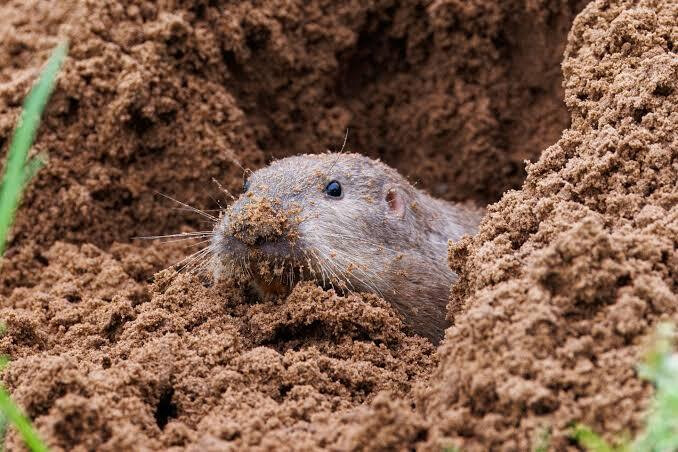
In May 1983, a team of researchers decided to test an unusual hypothesis on the barren pumice plains. They released pocket gophers—burrowing rodents often dismissed as garden pests—into the desolate volcanic zone for just a single day.

The rationale behind this experiment was rooted in the physical cycling of soil. Scientists anticipated that as the gophers dug their intricate tunnel systems, they would churn the earth, bringing old, fertile soil buried beneath the thick layer of volcanic ash back to the surface. Crucially, this pre-eruption soil was rich in beneficial bacteria and microscopic fungi essential for plant life.

The results of this 24-hour trial were nothing short of astonishing. Prior to the introduction of the gophers, the experimental plot was a wasteland, supporting a mere dozen plants. Yet, just six years after the rodents spent a single day digging in the area, the zone had undergone a dramatic greening, boasting more than 40,000 thriving plants. In stark contrast, neighboring control areas where no gophers were released remained bleak, desolate, and virtually devoid of life for decades.

A 40-Year Legacy Written in Fungi

The true scope of this success has only recently come to light. According to a new study published in the scientific journal Frontiers, the biological legacy of that brief 1983 experiment continues to drive the forest's health 43 years later.

Researchers discovered that the microbial communities revived by the gophers—specifically mycorrhizal fungi—are still actively thriving in the soil today. Mycorrhizal fungi form a vital symbiotic relationship with plant roots, acting as an extended underground network that helps trees and vegetation efficiently absorb water and essential nutrients from the soil, even in harsh conditions.

"In some of these areas, we saw trees bounce back almost immediately," noted Emma Aronson, a co-author of the study. She emphasized that contrary to the initial, widespread belief that all forest life had been permanently erased, the microscopic engine restarted by the gophers allowed the ecosystem to regenerate at an unprecedented pace.

The Power of Invisible Networks

This groundbreaking research underscores a fundamental principle of conservation biology: the immense power of unseen, interdependent relationships within an ecosystem. While massive replanting efforts often receive the most public attention, this study proves that microscopic fungi and burrowing mammals are the true architects of habitat restoration.

As climate change and human activity accelerate land degradation worldwide, the lessons learned from Mount St. Helens provide a vital blueprint. It demonstrates that nature possesses an extraordinary capacity to heal itself, provided it is given a helping hand from the tiny, overlooked organisms that call the soil home.

[Copyright (c) Global Economic Times. All Rights Reserved.]

  • #Hormuz Impasse
  • #globaleconomictimes
  • #micorea
  • #mykorea
  • #nammidonganews
  • #singaporenewsk
  • #Samsung
  • #Daewoo
  • #Hyos
Yim Kwangsoo Correspondent

Popular articles

  • Masayoshi Son: AI-Driven Cyber Threats Pose "Worst Crisis for Japan Since the Black Ships"

  • Government Slashes Petroleum Price Caps by 150 Won per Liter amid Easing Middle East Tensions

  • South Korea to Ban Unapproved Biocidal Products Starting July 1

I like it
Share
  • Facebook
  • X
  • Kakaotalk
  • LINE
  • BAND
  • NAVER
  • https://globaleconomictimes.kr/article/1065570475003056 Copy URL copied.
Comments >

Comments 0

Weekly Hot Issue

  • Zeekr Celebrates 5th Anniversary by Setting New Guinness World Record for Electric Vehicle Drifting
  • Uber Secures $14 Billion Deal to Acquire Delivery Hero; Vows Continued Strategic Investment in South Korea’s Baemin
  • Robots Preserving the Taste of Kyochon’s ‘Honey Combo’: Automated Frying and Batter Dispensing Expand Nationwide
  • Seoul Restructures Welfare Paradigm with Tiered Basic Pension and Bold Blueprint for Global Bio-Pharma Leadership
  • Mexican Cinema Legend Elsa Aguirre Passes Away at 96
  • BTS Partners with the British Museum to Illuminate Korean Heritage Through 'Arirang' Gallery Trail

Most Viewed

1
Foreign Investors Return But Sell Off 'Samsung & Hynix' as Price Target Cuts Fuel KOSPI Peak Concerns
2
[Special Feature] Laying the Foundation for Korea's Informatization: Looking Back at the 1st Administrative Computer Network Project - Part 1
3
Baek Geum-ja Wooriot to Host 'Musical Costume Fashion Gala Show' at DDP
4
Cuba’s National Power Grid Collapses Amid Escalating Humanitarian Crisis
5
Hanwha Aerospace Forges Alliance with 49 Partners to Boost South Korea's Aviation Engine Ecosystem
광고문의
임시1
임시3
임시2

Hot Issue

South Korea to Tighten Rules on Single-Stock Leveraged Products; Minimum Deposit Raised to 30 Million Won

KCCI Jeju Forum Opens: Chairman Chey Tae-won Urges Businesses to Catch the AI Wave Before It Becomes an Insurmountable Wall

Hyundai Motor Group to Acquire 100% Stake in Boston Dynamics, Accelerating Humanoid and Physical AI Commercialization

AI Drones Take to the Skies in Revolutionary Hunt for Mosquitoes

Fashion Runway Show 2026

Global Economic Times
korocamia@naver.com
CEO : LEE YEON-SIL
Publisher : KO YONG-CHUL
Registration number : Seoul, A55681
Registration Date : 2024-10-24
Youth Protection Manager: KO YONG-CHUL
Singapore Headquarters
5A Woodlands Road #11-34 The Tennery. S'677728
Korean Branch
Phone : +82(0)10 4724 5264
#304, 6 Nonhyeon-ro 111-gil, Gangnam-gu, Seoul
Copyright © Global Economic Times All Rights Reserved
  • 향기네무료급식
  • BCB부천방송
  • 반달곰 프로젝트
Search
Category
  • All articles
  • Synthesis
  • World
  • Business
  • Industry
  • ICT
  • Distribution Economy
  • Well+Being
  • Travel
  • Eco-News
  • Education
  • Korean Wave News
  • Opinion
  • Arts&Culture
  • Sports
  • People & Life 
    • 전체
    • International Student Report
    • With Ambassador
  • Column 
    • 전체
    • Cho Kijo Column
    • Cherry Garden Story
    • Ko Yong-chul Column
    • Kim Seul-Ong Column
    • Lee Yeon-sil Column
  • Photo News
  • New Book Guide
  • Multicultural News
  • Jobs & Workers