SEOUL — South Korea’s top economic policymaker expressed renewed confidence on Tuesday that the nation can achieve a 3% potential growth rate during President Lee Jae-myung’s term, pointing to capital expansion in semiconductors, artificial intelligence-driven productivity, and structural reforms in the service industry as key drivers.
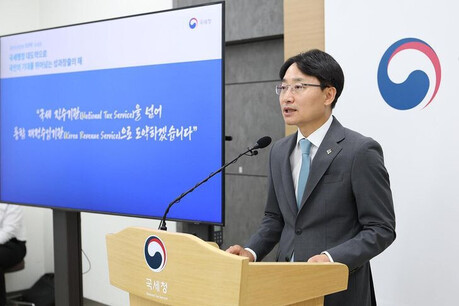
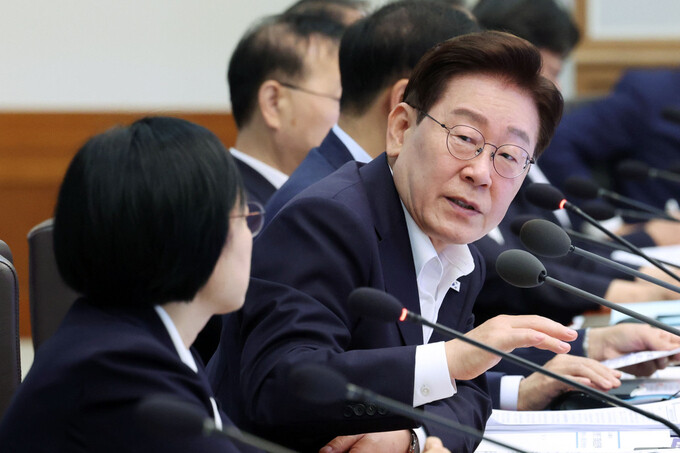
During a Cabinet meeting chaired by President Lee on November 24, Deputy Prime Minister and Minister of Economy and Finance Lee Hyoung-il outlined the core framework for the government's 2027 economic policy. The blueprint centers on fostering sustainable growth while narrowing socioeconomic divides through three pillars: stabilizing household livelihoods, securing new growth engines, and bolstering global competitiveness.
AI and Chip Investments Counter Demographic Headwinds
The administration previously unveiled its "3-4-5 Vision," aiming for a 3% potential growth rate, a top-four global export ranking, and a per capita gross national income (GNI) of $50,000. With annual exports already crossing the $1 trillion mark this year and per capita GNI projected to hit $50,000 by 2028 after surpassing $40,000 this year, policymakers view the 3% potential growth target as the primary hurdle.
Addressing President Lee’s observation that a 3% figure had widely been viewed as unattainable, Deputy Prime Minister Lee cited recent International Monetary Fund (IMF) projections indicating that South Korea’s potential growth could reach 2.5% on the back of robust capital investment—even without accounting for the economic impact of artificial intelligence.
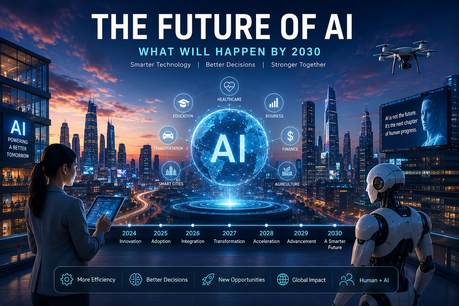
"If AI adoption spreads across all sectors of the economy, we can anticipate substantial additional gains in productivity," the finance minister told the Cabinet.
Economists measure potential growth—the maximum rate an economy can expand without fueling inflation—through three components: total factor productivity, capital, and labor. After falling roughly 6 percentage points over the past three decades into the 1% range, South Korea’s potential growth faced fears of dropping below 1% due to rapid population aging and a shrinking workforce. According to the finance ministry, aggressive capital expenditures in the semiconductor industry and technological advancements in AI are expected to offset the structural decline in labor supply.
Service Industry Viewed as Key to Inclusive Growth
While high-tech manufacturing and AI are expected to lift headline growth figures, officials warned that growth concentrated in specific industries could exacerbate gaps across regions and generations. To ensure broader job creation and equitable distribution of economic gains, the government plans to prioritize the service sector in 2027.
Speaking to reporters on Monday ahead of the Cabinet session, Deputy Prime Minister Lee noted that the service industry remains the country's largest engine for employment. As part of its upcoming push, the administration is expected to renew efforts to pass the long-delayed Framework Act on Service Industry Development, a bill that has been pending in the National Assembly for 15 years.
[Copyright (c) Global Economic Times. All Rights Reserved.]