• 2026.11.24 (Tue)
  • All articles
  • LOGIN
  • JOIN
Global Economic Times
한인동포뉴스(상단)
  • Synthesis
  • World
  • Business
  • Industry
  • ICT
  • Distribution Economy
  • Well+Being
    • Pet Life
    • Halal Horizon
  • Travel
  • Eco-News
  • Education
  • Korean Wave News
  • Opinion
  • Arts&Culture
  • Sports
  • People & Life
    • International Student Report
    • With Ambassador
  • Column
    • Cho Kijo Column
    • Cherry Garden Story
    • Ko Yong-chul Column
    • Kim Bong-seon's Photo Column
    • Kim Seul-Ong Column
    • Lee Yeon-sil Column
    • Professor Lee Soo-young’s Life Essays
  • Photo News
  • New Book Guide
MENU
 
Home > Business

South Korea Must Launch 1 Trillion Won Mega-Funds to Rescue Late-Stage Tech Startups, Experts Warn

Nathan Ko Special Correspondent / Updated : 2026-11-24 18:14:18
  • -
  • +
  • Print


SEOUL — Despite ranking among the world’s top five venture capital markets by volume, South Korea faces a critical funding bottleneck that threatens its global competitiveness in artificial intelligence and deep tech, financial leaders warned on Tuesday.

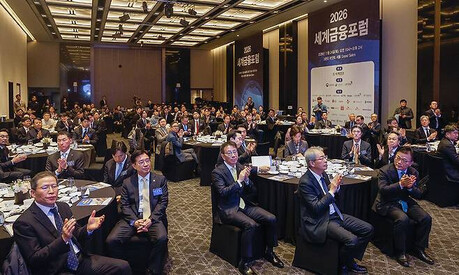
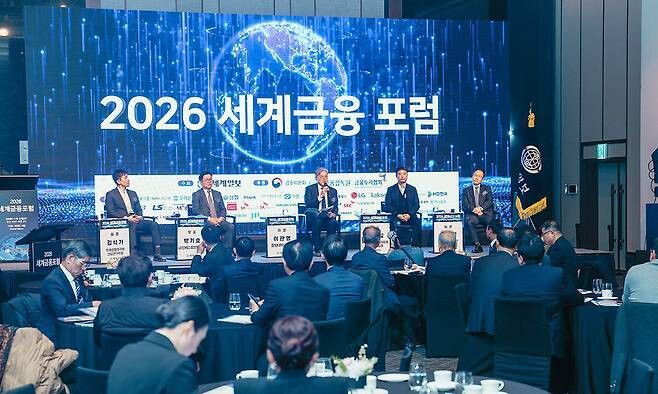
At the 2026 World Finance Forum in Seoul, industry executives and policy researchers agreed that while early-stage startups enjoy robust support, domestic firms lack the massive late-stage capital—known as "scale-up" funding—required to evolve into global unicorns. Currently, South Korea accounts for just 2.2 percent of the global scale-up investment market.

"Domestic venture capital has grown successfully over the past four decades, with new investments reaching 8.9 trillion won ($6.4 billion) in the first half of this year alone," said Park Ki-ho, CEO of LB Investment, during a keynote session. "However, because we lack mega-funds capable of absorbing late-stage risks, foreign capital ends up stepping into the void and taking the lead on our most promising companies."

The funding gap is starkly visible in the capital-intensive AI sector. While U.S. AI chipmaker Groq secured over 1.04 trillion won in a single scale-up round—and global giants like OpenAI and Anthropic raise tens of billions of dollars—South Korea’s leading AI semiconductor startup, FuriosaAI, has raised roughly 820 billion won in total.

To close this gap in strategic sectors such as AI semiconductors, robotics, advanced materials, and biotech, panelists called for the creation of 1-trillion-won-scale funds backed by public-private partnerships.

Experts emphasized that public policy funds must act as a stronger catalyst by taking on greater financial risk. Song Hong-sun, a senior research fellow at the Korea Capital Market Institute, noted that government-backed subordinated tranches—which absorb initial losses to protect private investors—currently sit at around 3 percent on a risk-adjusted basis. "To genuinely crowd in private institutional money like pension funds, public subordinated capital needs to expand to 15 to 20 percent," Song argued.

Kim Bong-seop, head of the industrial finance division at Korea Growth Investment Corp., agreed that subordinated risk-sharing remains essential, though he suggested allowing policy funds to share in more of the upside returns to keep the public-private ecosystem sustainable.

Beyond capital injection, speakers stressed the urgent need to fix South Korea’s exit bottlenecks. With domestic startups taking an average of 14.5 years to reach an initial public offering (IPO), reliance on public listings has stalled the venture capital cycle. Panelists urged the government and conglomerates to revitalize the mergers and acquisitions (M&A) market and expand large-scale secondary funds, allowing early investors to cash out and reinvest into the next generation of innovators.

Park proposed a phased roadmap to overhaul the ecosystem: expanding exit infrastructure by next year, securing large-scale growth capital by 2028, and establishing a self-sustaining strategic industry framework by 2030.

[Copyright (c) Global Economic Times. All Rights Reserved.]

  • #Cherry Garden
  • #HalalFood
  • #Halal
  • #Petlife
  • #Cats
  • #Dogs
  • #Halalhorizone
  • #Hormuz Impasse
  • #Joseon
  • #globaleconomicti
Nathan Ko Special Correspondent

Popular articles

  • LG Electronics and Skyscanner Partner to Bring Smart Travel Planning to Living Rooms

  • South Korean Authorities Launch First-Ever Statutory Probe into GS E&C Security Breach

  • KakaoBank Expands 'Global Territory' by Becoming Second-Largest Shareholder of Mongolia’s M Bank

I like it
Share
  • Facebook
  • X
  • Kakaotalk
  • LINE
  • BAND
  • NAVER
  • https://globaleconomictimes.kr/article/1065604331375764 Copy URL copied.
Comments >

Comments 0

Weekly Hot Issue

  • Daejeon Households Squeezed by 'Triple Whammy' of Rising Rents, Rates, and Living Costs
  • South Korean Finance Experts Call for Shift from Capital Volume to Productivity and Risk-Sharing
  • NTS Nominee Ahn Deok-soo Vows to Launch Special Task Force to Track Hidden Assets of Habitual Tax Evaders
  • The 2030 AI Perception Gap: Why Tech Insiders See a Radical Future That the Public Doesn’t
  • South Korea Braces for Worse Winter Fine Dust, Launches Strict Seasonal Measures
  • Meta Reconsiders 2030 Net-Zero Target as AI Data Center Expansion Drives Surge in Emissions

Most Viewed

1
South Korea and Ethiopia Sign Trilateral MOU to Introduce Liquid-Based Cytology (LBC) Technology for Cervical Cancer Diagnosis
2
South Korean Burger Chain Lotteria Expands Singapore Footprint with Halal Certification and New Teriyaki Lineup
3
AI Semiconductor Stocks Plummet: Philadelphia Index Drops 5.28% and Micron Plunges 7.59% Amid Executive Shakeup and Export Restrictions
4
"Stay Out, Get Paid, or Have Police Stay With You": Shenzhen Imposes Strict Security Ahead of APEC Summit
5
Taiwan Bans Short-Selling Below Previous Close Starting Nov. 23, Raises Margin Ratio to 150%
체리가든 스토리
nutri huevos
로타리
동포저널

Hot Issue

Inside the 11-Day Blitz: How the White House and Tech Titans Engineered Jensen Huang’s Nvidia Comeback

Quiet Power Behind the Chip Giant: Lori Huang Co-Steers $109 Billion Nvidia Fortune Amid Company Turmoil

Fading Hype and Ethics Scrutiny Shadow Trump’s Second Meme Coin Gala

Fashion Runway Show 2026

Let’s recycle the old blankets in Jeju Island’s closet instead of incinerating them.

Global Economic Times
korocamia@naver.com
CEO : LEE YEON-SIL
Publisher & Editor : KO YONG-CHUL
Registration number : Seoul, A55681
Registration Date : 2024-10-24
Youth Protection Manager: KO YONG-CHUL
Singapore Headquarters
5A Woodlands Road #11-34 The Tennery. S'677728
Korean Branch
Phone : +82(0)10 4724 5264
#304, 6 Nonhyeon-ro 111-gil, Gangnam-gu, Seoul
Copyright © Global Economic Times All Rights Reserved
  • News K
  • 반달곰 프로젝트
  • 광고문의
Search
Category
  • All articles
  • Synthesis
  • World
  • Business
  • Industry
  • ICT
  • Distribution Economy
  • Well+Being 
    • 전체
    • Pet Life
    • Halal Horizon
  • Travel
  • Eco-News
  • Education
  • Korean Wave News
  • Opinion
  • Arts&Culture
  • Sports
  • People & Life 
    • 전체
    • International Student Report
    • With Ambassador
  • Column 
    • 전체
    • Cho Kijo Column
    • Cherry Garden Story
    • Ko Yong-chul Column
    • Kim Bong-seon's Photo Column
    • Kim Seul-Ong Column
    • Lee Yeon-sil Column
    • Professor Lee Soo-young’s Life Essays
  • Photo News
  • New Book Guide
  • Overseas Koreans
  • Multicultural News