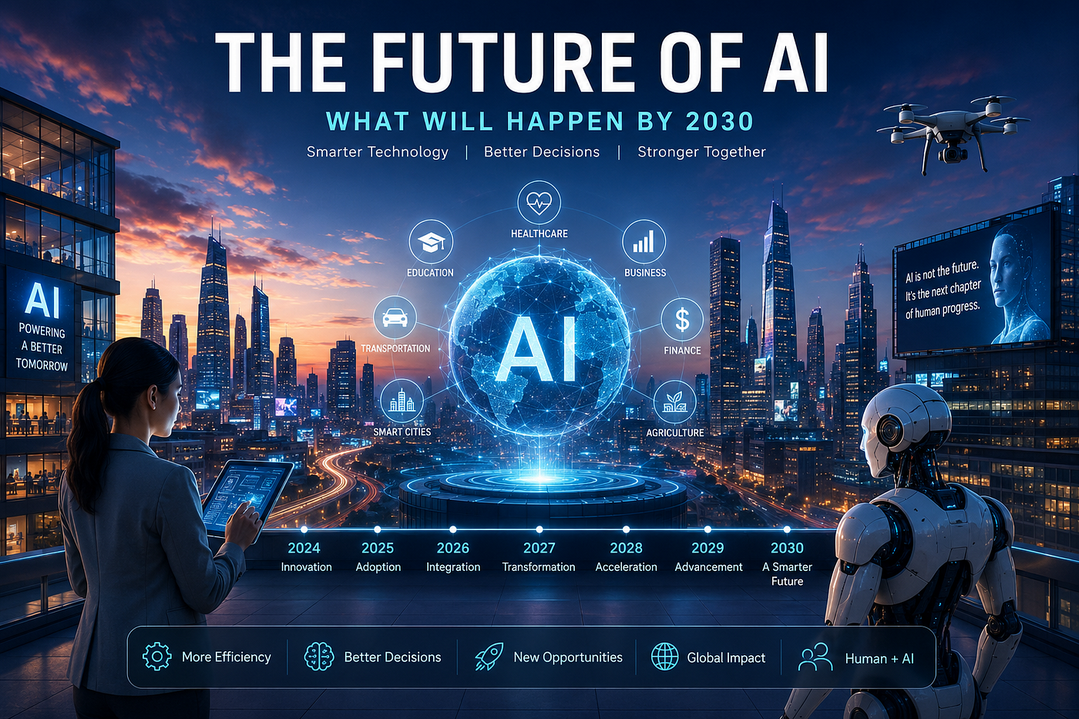
Nearly a decade ago, Alibaba founder Jack Ma sparked skepticism when he predicted that a robot would grace the cover of Time magazine as "CEO of the Year" within three decades. Today, with breakthroughs in generative artificial intelligence and humanoid robotics accelerating at breakneck speed, Ma’s once-fanciful forecast feels increasingly plausible.
Yet, just how drastically will AI reshape our economy and daily labor by 2030? According to a recent study by AI safety and research firm Anthropic, the answer depends heavily on how close you are to the technology.
A Tale of Two Futures
In its report, "The AI Expectations Gap," Anthropic surveyed nearly 11,000 U.S. adults alongside more than 1,300 of its own employees. While both groups shared similar views on what AI can do today, their projections for 2030 diverged sharply.
For instance, 91% of Anthropic insiders believe AI will be capable of Nobel-caliber scientific breakthroughs by the end of the decade, compared to just 39% of the general public. Familiarity proved to be the decisive factor: among people who have never used AI, only 28% believe it will soon master complex, multi-step tasks, whereas that figure jumps to 56% for regular workplace users and 96% for AI developers.
The Productivity Paradox
The divide is equally stark regarding the future of work. Everyday American workers estimate that AI will be able to handle roughly 28% of their job duties by 2030. Anthropic staffers, however, put that number at 75%—noting that AI already writes half of their own model-development code and could handle 95% within four years.
This rapid automation points toward a looming economic paradox. Extrapolating from insider expectations, Anthropic’s models suggest annual U.S. economic growth could surge to an unprecedented 17.1%, doubling the economy every four and a half years. However, explosive productivity does not guarantee shared prosperity. Workers who anticipate heavy automation in their fields also project the unemployment rate to climb past 12%—exceeding the worst days of the 2008 financial crisis.
Adapting to the Next Era
Whether 2030 mirrors the aggressive timelines of Silicon Valley insiders remains to be seen. Still, the data underscores a critical reality: those actively building and deploying AI foresee a far more disruptive horizon than those watching from the sidelines.
To navigate this transition, organizations can no longer rely on traditional training models. Businesses must restructure workflows to pair AI efficiency with distinctly human strengths—such as strategic judgment, ethical decision-making, and complex problem framing. For individual workers, relying solely on legacy expertise is becoming a liability. Staying competitive in the coming decade will require actively integrating AI tools into daily workflows while continuously adapting to newly emerging roles.
As the gap between current reality and future potential narrows, the pressing question for today’s workforce is no longer if AI will transform their industry, but whether they are prepared when it does.
[Copyright (c) Global Economic Times. All Rights Reserved.]