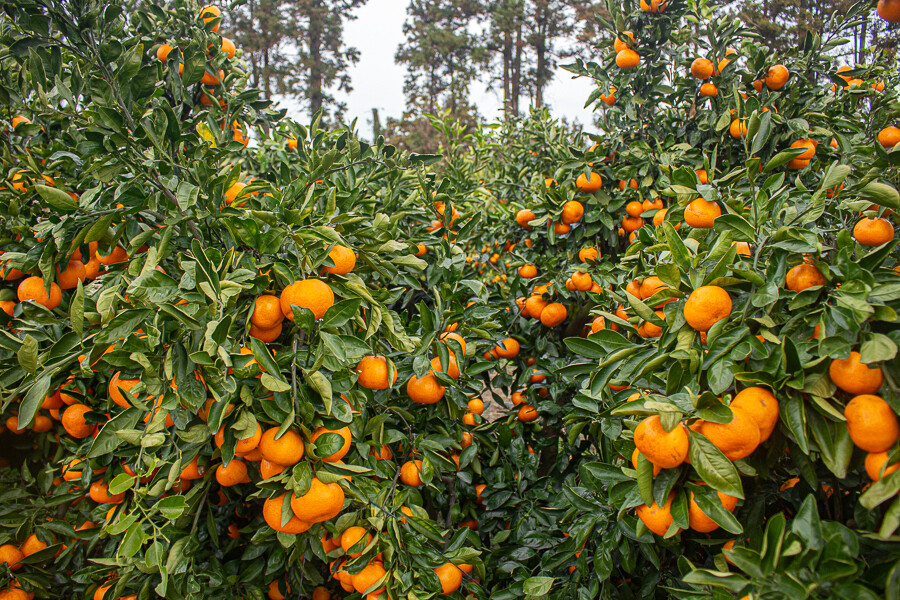
SEOGWIPO, South Korea — Jeju Island is pioneering a shift toward carbon-neutral agriculture by replacing fossil fuels with solar energy to grow its signature citrus fruit. At the Jeju Agricultural Research and Extension Services (JARES) in Seogwipo, rows of "Gaeulhyang" tangerines are ripening ahead of an early-December harvest inside greenhouses powered entirely by renewable energy.
Traditionally, greenhouse citrus farmers on the island rely heavily on kerosene heaters and conventional power grids to maintain optimal growing conditions. To reduce both greenhouse gas emissions and rising utility costs for local growers, JARES launched a demonstration project to produce "RE100 tangerines"—citrus cultivated using 100% renewable electricity. Following its initial harvest in January, the institute is now preparing for its second yield.
While the interior of the research facility resembles a standard vinyl greenhouse, its exterior is equipped with a self-sustaining energy ecosystem. Solar panels generate electricity to run heat pumps, ventilation fans, water pumps, and automated roof openers. Excess energy is stored in an Energy Storage System (ESS) to keep operations running overnight. According to Yang Cheol-jun, head of JARES’s Smart Technology Team, the facility can temporarily tap into the external power grid during prolonged periods of bad weather, provided the total renewable energy generated—as verified by the Korea Energy Agency—matches or exceeds total consumption.
To determine the most practical setup for local farms, researchers are testing three distinct solar configurations across three experimental greenhouses:
Traditional Panel-Type (20kW): Mounted on external support structures.
Film-Type (24kW): Lightweight, flexible solar sheets attached directly to the greenhouse roof, eliminating the need for extra land and preserving the rural landscape.
Disaster-Resistant Film-Type (21kW): A reinforced version engineered to endure Jeju’s severe typhoons and heavy winter snowfalls.
Researchers are carefully balancing energy output against crop health, particularly evaluating how roof-mounted solar films affect sunlight penetration and fruit growth. Before these systems can be widely adopted, the disaster-resistant model must secure official government safety certifications, and initial installation expenses need to be reduced.
Jeju authorities aim to conclude the current testing phase by next year and roll out pilot programs to commercial farms in 2028. The citrus initiative is part of a broader provincial push to decarbonize primary industries, following recent introductions of "RE100 eggs" and "RE100 milk."
[Copyright (c) Global Economic Times. All Rights Reserved.]