![[등록] 2026-09-01 15:48:31](/support/_updata/banner2/tl181982910_6749.png)


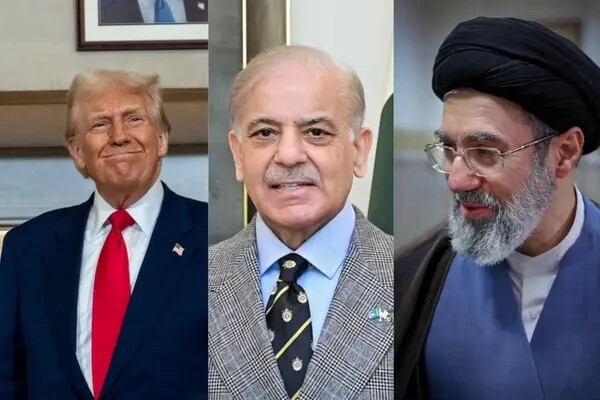
Military tensions between the United States and Iran, which had pushed the Middle East to the brink of catastrophe, are seeing a dramatic breakthrough. With US President Donald Trump announcing an imminent end-of-war agreement with Iran, the two sides are reportedly close to finalizing a deal centered on extending the truce by 60 days and reopening the Strait of Hormuz without transit fees.
Axios, a US online political news outlet, reported on the 23rd (local time), citing multiple senior Washington sources, that the US and Iran are on the verge of signing a Memorandum of Understanding (MOU) valid for 60 days as a provisional measure to end the hostilities. The MOU is designed to be extendable by mutual agreement, raising hopes that it will serve as a stepping stone toward a permanent peace treaty.
This dramatic shift toward a deal is the fruit of intense, behind-the-scenes international mediation. A Pakistani mediation delegation made a surprise visit to Tehran the previous day for high-level talks, while President Trump led the negotiations through a series of phone calls with leaders of mediating nations. Shortly after Trump officially announced that an end-of-war agreement with Iran was imminent, the Iranian Foreign Ministry also confirmed it was "working to finalize the MOU," unveiling a three-step proposal that includes an official end to the war and a resolution to the Hormuz crisis.
The core of the draft MOU obtained by Axios is a so-called "security-for-economy swap." First, Iran agreed to fully open the Strait of Hormuz—the jugular vein of global maritime oil transport—without charging any transit fees. Crucially, to fully guarantee the freedom of navigation, Iran agreed to clear mines planted in the strait.
In return, the United States decided to lift the economic blockade that has stifled Iran. The main pillar is granting comprehensive sanctions waivers so that Iran can freely sell its oil on the international market. During the negotiations, Iran strongly demanded the immediate unfreezing of its foreign assets and permanent sanctions relief. However, the US side reportedly held its ground, emphasizing that "substantial concessions and actions from Iran must come first," offering the temporary 60-day waiver as leverage.
The most sensitive issue, Iran's nuclear program, has been deferred as a "future task" for now, though the two sides compromised by documenting a commitment to advanced dialogue. The draft includes a basic pledge by Iran not to engage in nuclear weapons development, along with a commitment to participate in full-scale negotiations to halt its uranium enrichment program and dismantle highly enriched uranium. According to sources, Iran has already verbally conveyed its bottom line to the US via mediators regarding how far it can concede on halting enrichment and relinquishing nuclear materials.
Military safeguards have also been put in place to address concerns over a security vacuum. Even after the truce takes effect, US forces stationed in the waters and bases surrounding Iran will not withdraw. The US military intends to maintain its presence during the 60-day extension to monitor Iran's compliance with the agreement, and will only consider a phased withdrawal after a final, comprehensive peace agreement is reached.
While experts view the approaching agreement positively for averting a worst-case military conflict, they point out that sparks of conflict remain. A diplomatic source in Washington analyzed, "This MOU is closer to an 'emergency brake' to avoid an all-out war. Since they must resolve deep-rooted challenges like dismantling the nuclear program and permanent sanctions relief within a short 60-day window, the real diplomatic test begins now."
[Copyright (c) Global Economic Times. All Rights Reserved.]