• 2026.06.05 (Fri)
  • All articles
  • LOGIN
  • JOIN
Global Economic Times
fashionrunwayshow2026
  • Synthesis
  • World
  • Business
  • Industry
  • ICT
  • Distribution Economy
  • Well+Being
  • Travel
  • Eco-News
  • Education
  • Korean Wave News
  • Opinion
  • Arts&Culture
  • Sports
  • People & Life
    • International Student Report
    • With Ambassador
  • Column
    • Cho Kijo Column
    • Cherry Garden Story
    • Ko Yong-chul Column
    • Kim Seul-Ong Column
    • Lee Yeon-sil Column
  • Photo News
  • New Book Guide
MENU
 
Home > Industry

Citrus Prices Soar Amidst Climate Change and Supply Shortages

Desk / Updated : 2024-12-06 17:39:59
  • -
  • +
  • Print


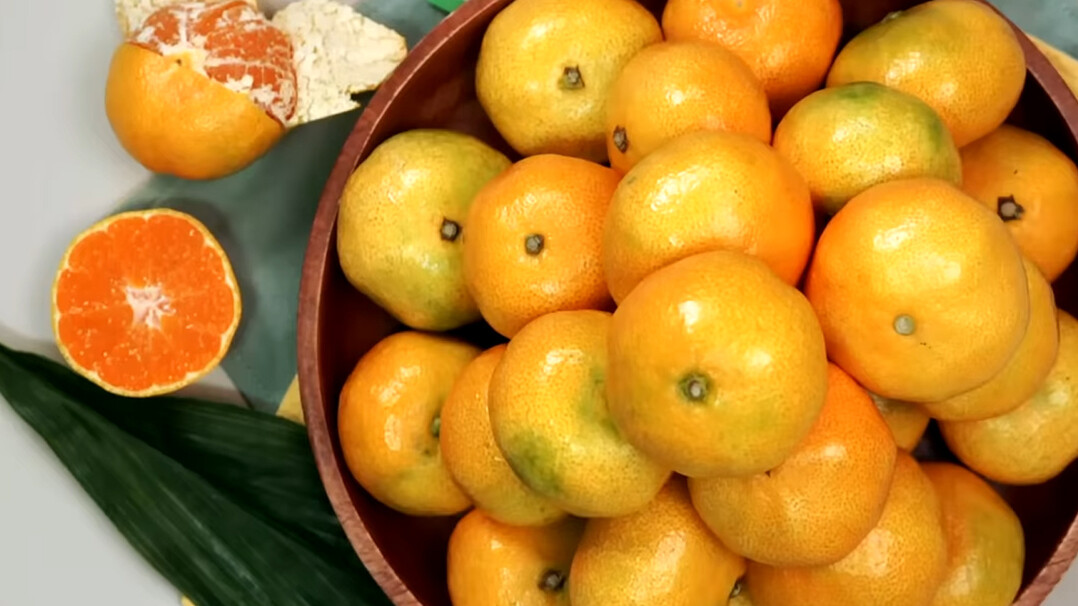
Seoul, South Korea – The cost of citrus fruits, a staple of Korean winters, has skyrocketed due to a combination of adverse weather conditions and declining production. According to the Ministry of Agriculture, Food, and Rural Affairs, the frequent heavy rains during the harvest season have hindered fruit growth, leading to significant price increases.

As of yesterday, the retail price of citrus fruits at the Garak Market in Seoul stood at 4,134 won per 10 pieces, reflecting a 20.7% increase compared to a month ago and a 17.0% jump from the same period last year.

The Korea Rural Economic Institute forecasts that citrus prices will remain high in the coming months. The institute's December fruit outlook report indicates a 17.9% decrease in citrus imports last month and an anticipated 8.6% decline in shipments this month due to reduced production.

While the Ministry of Agriculture predicts that citrus prices will stabilize to last year's levels by mid-December, with the commencement of sorting and shipping operations and the additional distribution of 20,000 tons of citrus from Jeju Island, they also anticipate that the overall supply of citrus fruits will remain stable. Although the production of Hallabong, a popular citrus variety, is expected to decrease by 0.9% year-on-year, the output of Cheonhyehyang and other citrus fruits is projected to increase by 5.4% and 3.7%, respectively. Additionally, the increased production of apples, persimmons, and grapes is expected to help stabilize citrus prices.

Meanwhile, the production of yuzu, another popular winter fruit, is also forecast to decline. According to the Goheung County Agricultural Technology Center's Yuzu Research Institute, this year's yuzu production is estimated at 8,400 tons, a 16% decrease from last year. Goheung is the largest producer of yuzu in South Korea, accounting for 60% of the national output.

The prices of radish and carrots have also surged compared to the previous year and the average. According to the Korea National Statistical Office, radish prices have increased by 62.5% and carrot prices by 29.9% year-on-year. This is attributed to the reduced supply caused by the unusual heatwave last summer.

The retail price of radish has reached 3,443 won per piece, marking an 18.9% increase from a month ago and a staggering 125.9% rise compared to the same period last year. The price of carrots has also climbed to 6,896 won per kilogram, representing a 67.9% increase from a year ago.

The Ministry of Agriculture stated that while the prices of these vegetables are high, the overall cost of kimchi, a traditional Korean fermented dish, is expected to remain lower than usual due to the decreased prices of cabbage, red pepper powder, and garlic, which account for approximately 65% of the total cost.

A ministry official noted that the supply of radishes is expected to gradually recover after January when winter radishes are fully harvested. To alleviate the burden on consumers, the government has decided to extend the allocation tariff on radishes and carrots for two more months until the end of February next year.

[Copyright (c) Global Economic Times. All Rights Reserved.]

  • #globaleconomictimes
  • #koyongchul
  • #cherrylee
  • #seoulkorea
  • #periodicoeconomico
  • #글로벌이코노믹타임즈
  • #GET
  • #GETtv
  • #liderdel
Desk
Desk

Popular articles

  • Banking War 2.0: South Korean Banks Race to Transition into 'AI-First' Institutions

  • Celltrion’s Zymfentra Sees Explosive 300% Growth, Hits Record Quarterly Prescriptions in the U.S.

  • China’s Foundry Offensive: Chasing Samsung’s No. 2 Spot via ‘Mature Node’ Dominance

I like it
Share
  • Facebook
  • X
  • Kakaotalk
  • LINE
  • BAND
  • NAVER
  • https://globaleconomictimes.kr/article/1065602286744205 Copy URL copied.
Comments >

Comments 0

Weekly Hot Issue

  • Nvidia CEO Jensen Huang to Arrive in South Korea for "Sam-So" Meeting with Tech Tycoons
  • Samsung Electronics Super-Enterprise Union Loses Majority Status Amid Backlash Over Bonus Disparities
  • Samsung to Embed Vital Signs and Heart Health Scores in Upcoming Galaxy Watch9 Lineup
  • Apple Honors Digital Excellence: 12 Exceptional Apps and Games Celebrated at the 2026 Design Awards
  • Nexon Revamps Signature Youth Coding Competition into AI-Driven 'Nexon Young Programmers Cup'
  • Tech University of Korea Gathers 200 Game and AI Researchers to Discuss Industrial Expansion

Most Viewed

1
From a moment of collective sacrifice to a moment of collective democracy: The Timing of the Election in Ethiopia and Korea
2
U.S. Holds Off on Immediate Comprehensive Semiconductor Tariffs, but Pressure Mounts for Samsung and SK Hynix to Accelerate Domestic Investments
3
[Interview] "Halal is Not a Religious Regulation, but a 'Trust Infrastructure'… Creating a Premium 'K-Halal' Centered on Data and Platforms"
4
‘600 Million Won Bonus’ at Samsung Electronics Triggers Deep Sense of Relative Deprivation Among Korean Workers
5
Musk’s SpaceX Secures Space Hegemony with Flawless Starship V3 Recovery Ahead of Historic IPO
광고문의
임시1
임시3
임시2

Hot Issue

Murata Unveils Next-Gen Resin Electrode MLCC for Automotive Applications

Samsung to Embed Vital Signs and Heart Health Scores in Upcoming Galaxy Watch9 Lineup

L&F Plus Secures KRW 220 Billion from National Growth Fund to Anchor South Korea’s First Mass LFP Cathode Production

Samsung Electronics Super-Enterprise Union Loses Majority Status Amid Backlash Over Bonus Disparities

Fashion Runway Show 2026

Global Economic Times
korocamia@naver.com
CEO : LEE YEON-SIL
Publisher : KO YONG-CHUL
Registration number : Seoul, A55681
Registration Date : 2024-10-24
Youth Protection Manager: KO YONG-CHUL
Singapore Headquarters
5A Woodlands Road #11-34 The Tennery. S'677728
Korean Branch
Phone : +82(0)10 4724 5264
#304, 6 Nonhyeon-ro 111-gil, Gangnam-gu, Seoul
Copyright © Global Economic Times All Rights Reserved
  • 에이펙2025
  • APEC2025가이드북TV
  • 반달곰 프로젝트
Search
Category
  • All articles
  • Synthesis
  • World
  • Business
  • Industry
  • ICT
  • Distribution Economy
  • Well+Being
  • Travel
  • Eco-News
  • Education
  • Korean Wave News
  • Opinion
  • Arts&Culture
  • Sports
  • People & Life 
    • 전체
    • International Student Report
    • With Ambassador
  • Column 
    • 전체
    • Cho Kijo Column
    • Cherry Garden Story
    • Ko Yong-chul Column
    • Kim Seul-Ong Column
    • Lee Yeon-sil Column
  • Photo News
  • New Book Guide
  • Multicultural News
  • Jobs & Workers