![[등록] 2026-09-01 15:48:31](/support/_updata/banner2/tl181982910_6749.png)


(C) Hrcopinion.co.kr
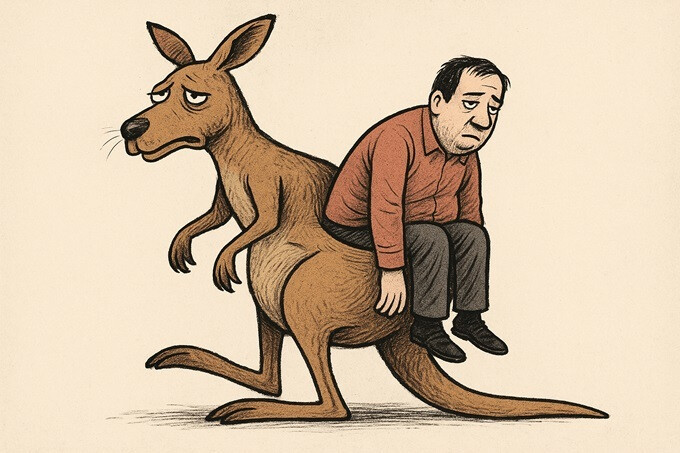
SEOUL — For many of South Korea’s young adults, the Lunar New Year holiday brings more than just traditional food and family reunions; it brings the dreaded "nagging" about independence. The question “When are you moving out?” has become a seasonal staple, yet for the "Kangaroo Tribe"—a term referring to adults who remain financially dependent on their parents—staying home is less about laziness and more about a cold, calculated survival strategy in a punishing economy.
The Housing Wall: A Record Number of Homeless Youth
According to the latest data from the Korea Statistical Information Service (KOSIS), the number of non-homeowning households headed by individuals under 39 reached 3.61 million in 2024—the highest since tracking began in 2015. In the hyper-competitive Seoul metropolitan area, that figure has soared to nearly 1 million households.
The barrier to entry is not just home ownership; even basic rental markets are becoming inaccessible. As of Q3 2025, the average monthly rent for young households hit a record high. For those who did manage to secure a deposit through loans, the burden is equally heavy. Interest expenses for the under-39 demographic are now the second highest across all age groups, trailing only those in their 40s who typically hold larger mortgages.
The Stagnation Trap: Costs Rise as Incomes Stall
The crisis is compounded by a widening gap between housing costs and earning power. While expenses surge, the income growth for households under 39 stood at a mere 0.9% in the third quarter of last year—the lowest across all demographics.
More concerning is the decline in "surplus funds"—the money left over for savings or investment after taxes and living expenses. This figure dropped by 2.7%, making young adults the only age group to see a consecutive two-quarter decline in their ability to build wealth.
"The moment my salary hits the bank, two-thirds of it vanishes within three days for rent, utilities, and transportation," says A, a 30-something professional living in Mapo-gu, Seoul. "The saying that you 'go broke just by breathing' isn't a joke to me; it's my daily reality."
The FOMO Cycle: From Investment to Debt
Caught between stagnant wages and skyrocketing real estate, many young Koreans have turned to high-risk investments as a desperate "escape hatch." Driven by FOMO (Fear Of Missing Out) and the belief that labor income can no longer bridge the wealth gap, a dangerous cycle has formed.
The Korea Financial Investment Association reported that margin debt—money borrowed from brokers to buy stocks—surpassed 16 trillion won for the first time last December. This "investing on soul-credit" (locally known as Yeong-kkeul) has led to a spike in delinquency. Data from South Korea's five major commercial banks shows that the 20-something demographic now holds the highest household loan delinquency rate at 0.41%.
"Young people feel a profound sense of anxiety that they can never catch up to housing prices through traditional savings," says an official from the financial investment industry. "This pushes them toward high-leverage investments in stocks and virtual assets, which often results in losses that force them back into financial dependence on their parents."
The Path Forward: Incremental Independence
Financial experts warn that the dream of "perfect independence" might be counterproductive in the current climate. Instead, they suggest a phased approach to leaving the nest:
Restructuring Expenditure: Prioritize reducing fixed monthly costs before attempting to move.
Safety Nets First: Rather than high-risk trading, utilize government-subsidized "Youth Savings" programs to build a baseline of stability.
The 6-Month Rule: Experts recommend securing a cash flow capable of covering six months of independent living expenses before signing a lease.
As the "Kangaroo Tribe" continues to grow, it serves as a stark reflection of a socio-economic structure where the traditional milestones of adulthood—marriage, moving out, and home ownership—are increasingly viewed as luxury goods rather than natural life stages.
[Copyright (c) Global Economic Times. All Rights Reserved.]