![[등록] 2026-09-01 15:48:31](/support/_updata/banner2/tl181982910_6749.png)


nation's high-speed rail strategy.
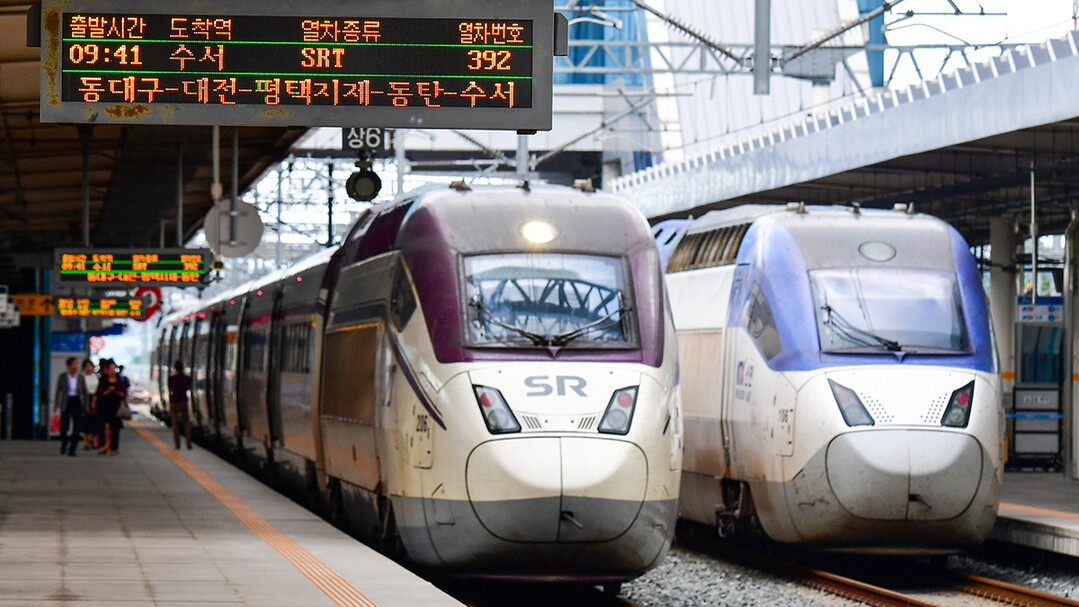
EOUL — South Korea is set to address the chronic shortage of high-speed rail seats
during peak periods by physically linking its two flagship bullet train services. The
Ministry of Land, Infrastructure and Transport (MOLIT) announced today that "Joint
Operation Trains," which connect KTX and SRT units into a single long-haul convoy, will
begin pilot operations on Friday, May 15.
This initiative represents the second phase of the government’s ambitious plan to integrate the nation's high-speed rail network, currently divided between the state-run Korea Railroad Corporation (KORAIL) and SR Corp. By coupling the KTX (Korea Train eXpress) and SRT (Super Rapid Train), authorities aim to maximize track efficiency and offer a more seamless travel experience for passengers commuting between Seoul and the southern provinces.
The primary benefit of this "heavy-duty" coupling—often referred to as 'Jung-ryeon'
(double-heading) in Korean—is a dramatic surge in capacity. According to ministry officials, the available seating on certain stretches of the Honam and Gyeongbu lines could increase by as much as 100%. This is expected to provide significant relief for travelers who frequently face "sold out" notices during weekends and public holidays.
Beyond capacity, the move brings a welcome financial reprieve for passengers. In a bid to
harmonize the fare structures of the two operators, KTX tickets for routes serviced at Suseo Station will be discounted by approximately 10%, bringing them in line with current SRT pricing. However, officials noted that these discounted fares will not be eligible for standard rail mileage accumulation.
The road to this launch involved rigorous technical preparation. Since December last year,
KORAIL and SR have been conducting compatibility tests between the two different train
models. Between late April and May 14, five full-scale trial runs were executed to ensure
that braking, signaling, and emergency control systems function flawlessly when the two
distinct units are merged.
Minister of Land, Infrastructure and Transport, Kim Yun-deok, is scheduled to personally
board the inaugural pilot train on May 15 to oversee safety protocols and assess passenger convenience. "We will meticulously review the results of these pilot runs to ensure operational safety and efficiency," Minister Kim stated. "Our goal is to establish an
optimized integrated operation plan and complete the full merger of the high-speed rail
systems by September."
As the trial begins on the Honam and Gyeongbu lines, the government plans to inject
additional SRT carriages into the rotation to further bolster supply. If successful, this
integration is expected to redefine the logistics of South Korean rail travel, making it both
more affordable and accessible to the general public.
[Copyright (c) Global Economic Times. All Rights Reserved.]